Hoardings fall from Ekana Stadium roof during Australia-Sri Lanka WC match
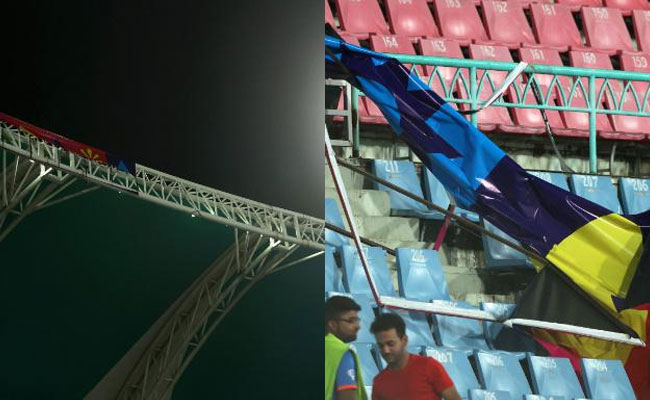
Lucknow (PTI): Strong winds caused several hoardings to fall from the roof of the Ekana Stadium on to the seats below during the World Cup match between Australia and Sri Lanka here on Monday.
After rain stopped play for a bit, there was a dust storm and heavy winds led to several iron angles with branding material from the roof falling on people sitting at the lower levels.
The situation could have been disastrous but luckily the stands were relatively empty. It did, however, cause panic among those who were watching the game as the public announcement asked spectators to move to safety of the higher seats.
By the time the second innings began the security had moved all spectators to the higher level.
The stadium hosted its maiden World Cup game -- Australia versus South Africa -- last week.
The marquee India versus England match is scheduled to be played at the Ekana Stadium on October 29.
Due to strong winds, hoardings are falling all over Lucknow's Ekana Stadium.
— Ali Taabish Nomani (@atnomani) October 16, 2023
Spectators running for safety.#CWC23 #AUSvSL #WorldCup2023 #Lucknow @BCCI @ICC pls remove these banners before the next match. pic.twitter.com/xxoqK775jK
CWC 2023: Hoardings fall in crowd due to strong wind in Lucknow stadium during AUS vs SL clash
— CrickologyNews (@CrickologyNews) October 16, 2023
The match was halted due to rain and strong winds during the first innings. pic.twitter.com/icsiKGMtXI
Let the Truth be known. If you read VB and like VB, please be a VB Supporter and Help us deliver the Truth to one and all.
Allahabad HC orders probe into 'reinstatement' of teacher in UP's Barabanki
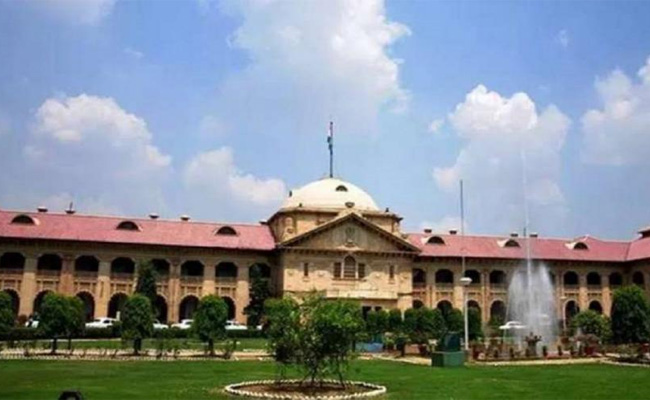
Lucknow (PTI): The Lucknow Bench of the Allahabad High Court on Friday ordered a probe by the special task force (STF) into alleged irregularities in the rejoining of a teacher at City Intermediate College in Barabanki, observing that the reinstatement appeared to be prima facie illegal.
The court also directed the recovery of the salary paid to the teacher during the disputed period.
A bench of Justice Rajeev Singh passed the order on a petition filed by the college management committee. The court expressed doubts over the roles of the District Inspector of Schools (DIOS), Barabanki, the college principal and the teacher concerned and hence, directed a detailed inquiry into the matter.
Taking note of alleged manipulation of records and misleading submissions, the court ordered the immediate transfer of the Barabanki DIOS to ensure a fair probe. It also directed the initiation of disciplinary proceedings against the then joint director of education of the Ayodhya division.
In its order, the court found that the teacher, Abhay Kumar, was initially appointed as an assistant teacher in 2018 but joined an Eklavya Model Residential School in Chhattisgarh as a lecturer in June 2024 without obtaining permission from the management. His subsequent request to retain the lien was rejected.
Despite this, he was allowed to rejoin the Barabanki College in September 2025 on the directions of the joint director of education and the DIOS, and was even paid the salary for October 2025. The court termed the rejoining "wholly illegal" and lacking any legal basis.
The bench also expressed concern over lapses in communication within the education department and directed the Uttar Pradesh chief secretary to ensure that official orders are communicated through email and WhatsApp as well, to prevent disputes.
The matter is next listed for hearing on May 28 when a compliance report is sought.