Hockey: India U-23 play out 1-1 draw vs Belgium
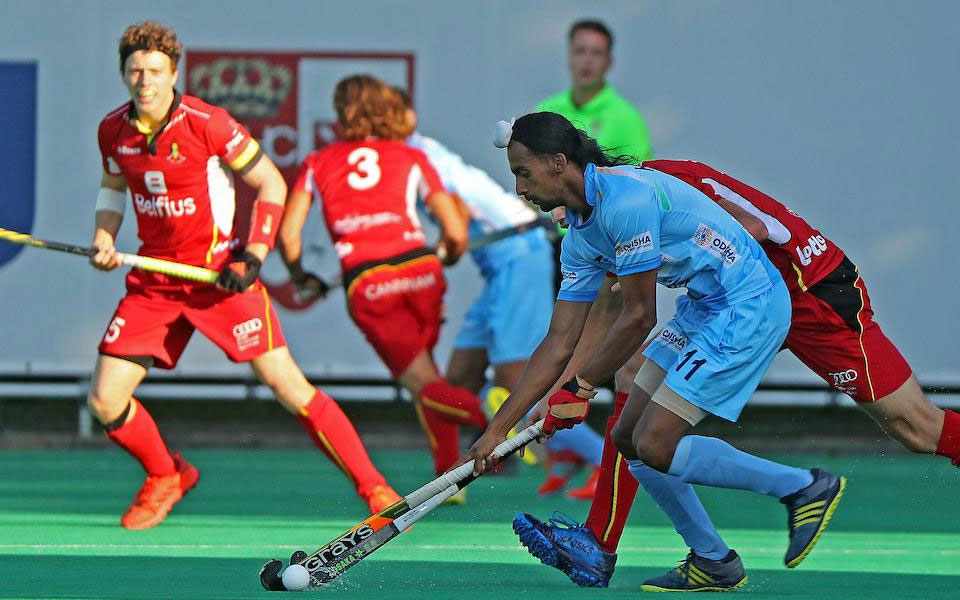
Antwerp (Belgium), July 18 : India's U-23 men's team were held to a 1-1 draw by Belgium in their third round robin match of the Five Nations Tournament here.
India had a mixed bag of results in their first two matches of the tournament as they beat Ireland 5-0 in their first match, but lost 1-3 to Great Britain in the second match.
However, a strong performance against the hosts was needed and the Indian forwards did not disappoint as they produced an attacking display in the first two quarters on Tuesday.
The junior team were rewarded for their constant pressure on Belgium when striker Mohammad Umar found space in the striking circle and put the ball into the back of the net at the stroke of half-time.
The third quarter, however, saw the hosts produce a quick reply to India taking the lead, as Syril Frying cancelled out the lead in the 34th minute to level the scores.
Both the teams had their chances in the final quarter of the match, but neither could capitalise the chances and the match ended in a draw, which means that India will need to win their last round robin match against the Netherlands on Friday to have a chance of qualifying for the Final match of the U-23 Five Nations Tournament.
Let the Truth be known. If you read VB and like VB, please be a VB Supporter and Help us deliver the Truth to one and all.
Rickelton's ton in vain as SRH beat MI by 6 wickets
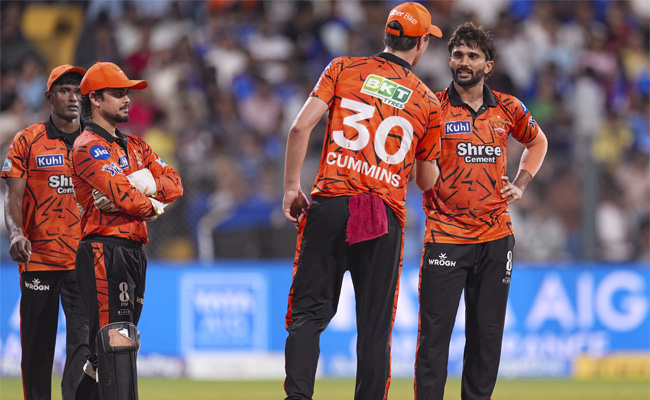
Mumbai (PTI): Ryan Rickelton's whirlwind unbeaten ton was overshadowed by Heinrich Klaasen's unbeaten 65 as Sunrisers Hyderabad defeated Mumbai Indians by six wickets in an IPL match here on Wednesday.
Chasing an imposing 244-run target, Travis Head (76 off 30) and Abhishek Sharma (45 off 24) shared 129 runs for the opening wicket to set the platform for SRH.
Klaasen (65 not out off 30 balls) then displayed his all-round hitting abilities to guide SRH home with the help of Nitish Kumar Reddy (21) and Salil Arora (30 not out off 10) in 18.4 overs.
Earlier, Rickelton's knock powered MI to 243 for five.
MI rode on a 93-run stand between Rickelton (123 not out off 55 balls) and Will Jacks (46 off 22) in 7.1 overs for the opening stand to power the side.
MI skipper Hardik Pandya scored a valuable 31 off 15 balls before being dismissed.
Praful Hinge (2/54), Eshan Malinga (1/29), Sakib Hasan (1/39) and Nitish Kumar Reddy (1/31) were the wicket-takers for SRH.
Brief Scores:
Mumbai Indian: 243 for 5 in 20 overs (Ryan Rickelton 123 not out; Praful Hinge 2/54).
Sunrisers Hyderabad: 249 for 4 in 18.4 overs (Travis Head 76, Heinrich Klaasen 65 not out; AM Ghazanfar 2/51).