I ended Gambhir's white-ball career, claims Muhammad Irfan
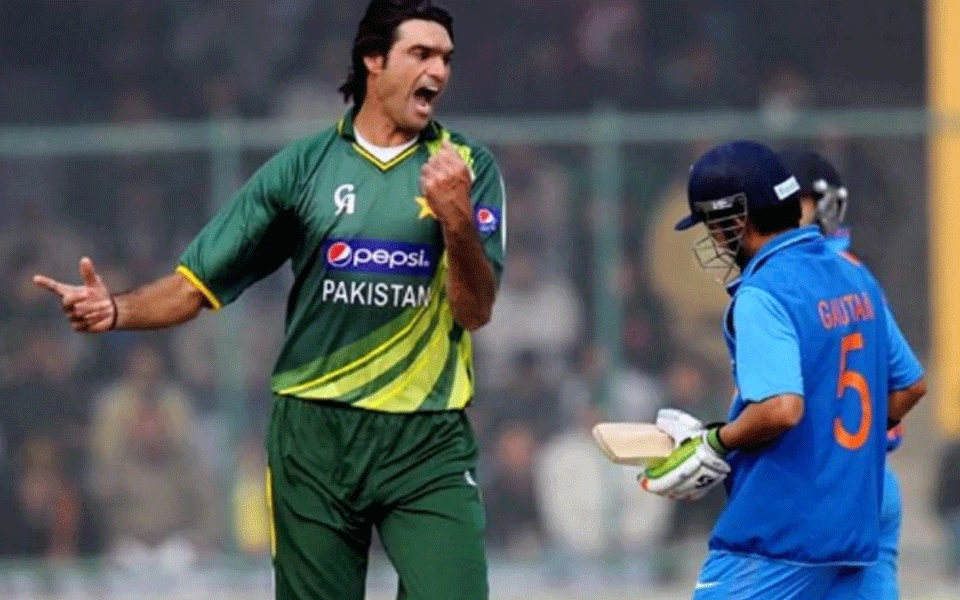
Karachi: Pakistan's out-of-favour left-arm pacer Muhammad Irfan has recalled how Gautam Gambhir's distinct discomfort while facing him during the 2012 bilateral series literally finished the Indian opener's white-ball career.
Standing tall at 7ft 1 inch, Irfan dismissed Gambhir four times during that limited overs series (T20s and ODIs) and the southpaw played only one more white-ball series for India (vs England) before being dropped.
"When I played against India, they were not comfortable batting against me. Some of them told me in the 2012 series in India that they couldn't sight my ball properly because of my height and also didn't read my pace," Irfan told the 'Samaa' channel.
Irfan claimed that it was that particular series that ended Gambhir's career.
"He (Gambhir) didn't like to face me in match or when both teams had nets, I always felt he avoided eye to eye contact with me. I remember I got out him four times in the 2012 limited over series and he was unnerved against me," Irfan said.
Gambhir played his last T20 for India against Pakistan at Ahmedabad in that series.
He also appeared in just one more ODI series against England after facing Pakistan in the winter of 2012/2013 and was never picked in white ball format by India again.
To a question, Irfan said he wouldn't say anyone was "scared of him" but when he went out, people congratulated him for ending Gambhir's white ball career.
He recalled in the interview that Virat Kohli had told him while batting against him, that he didn't read his pace properly.
"He told me he thought I would be around 130-135 kph but I had increased my pace and I was bowling around 145 kph and he had problems picking me up. Once when he was batting he tried to pull a good length ball and missed.
"Yuvraj (Singh), who was at the other end told him in Punjabi. Don't try to pull him, rather try to cut him. Off my third ball, he went for a pull and was caught behind. Yuvi Paji told him... now go back," Irfan recalled.
Let the Truth be known. If you read VB and like VB, please be a VB Supporter and Help us deliver the Truth to one and all.
Rickelton's ton in vain as SRH beat MI by 6 wickets
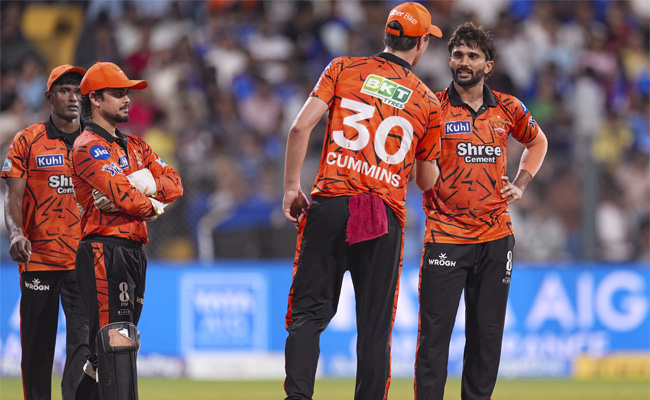
Mumbai (PTI): Ryan Rickelton's whirlwind unbeaten ton was overshadowed by Heinrich Klaasen's unbeaten 65 as Sunrisers Hyderabad defeated Mumbai Indians by six wickets in an IPL match here on Wednesday.
Chasing an imposing 244-run target, Travis Head (76 off 30) and Abhishek Sharma (45 off 24) shared 129 runs for the opening wicket to set the platform for SRH.
Klaasen (65 not out off 30 balls) then displayed his all-round hitting abilities to guide SRH home with the help of Nitish Kumar Reddy (21) and Salil Arora (30 not out off 10) in 18.4 overs.
Earlier, Rickelton's knock powered MI to 243 for five.
MI rode on a 93-run stand between Rickelton (123 not out off 55 balls) and Will Jacks (46 off 22) in 7.1 overs for the opening stand to power the side.
MI skipper Hardik Pandya scored a valuable 31 off 15 balls before being dismissed.
Praful Hinge (2/54), Eshan Malinga (1/29), Sakib Hasan (1/39) and Nitish Kumar Reddy (1/31) were the wicket-takers for SRH.
Brief Scores:
Mumbai Indian: 243 for 5 in 20 overs (Ryan Rickelton 123 not out; Praful Hinge 2/54).
Sunrisers Hyderabad: 249 for 4 in 18.4 overs (Travis Head 76, Heinrich Klaasen 65 not out; AM Ghazanfar 2/51).