I have a role to play in SA cricket and RCB: AB de Villiers
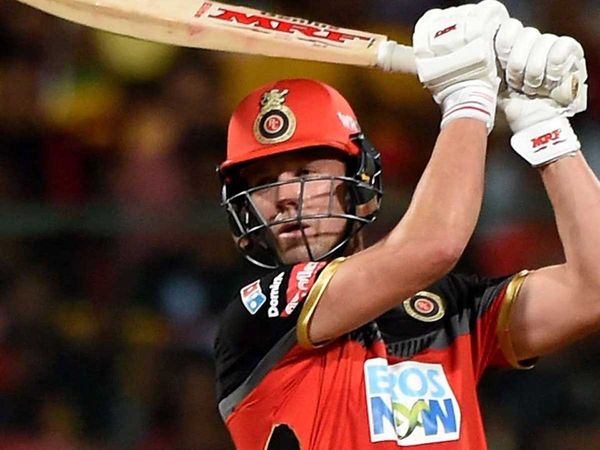
Johannesburg, Jan 4: He isn't sure what future holds in store for him but former South Africa captain AB de Villiers is confident that he will have a role to play in national team and his IPL franchise RCB's future set-up.
One of contemporary cricket's greatest batters, De Villiers had retired from all forms of game in November last year, putting an end to his glorious 17-year career in top-flight.
"I still believe that I have a role to play in SA cricket and also over there in the IPL with the Royal Challengers Bangalore (RCB)," he was quoted as saying by 'Times LIVE'.
Besides a staggering 20,017 international runs across all formats under his belt, De Villiers also holds the record for fastest 50, 100 and 150 in ODIs. He has also played 156 matches for RCB and scored 4,491 runs.
"I have no idea what will come next but I will take it one day at a time and see," he added.
The 37-year-old De Villiers, who has played 114 Tests, 228 ODIs and 78 T20s for South Africa, said he has been "looking after and mentoring some youngsters with potential and ability for the last few years."
"No one knows about it and hopefully I can look back one day in the future knowing that I have made a big difference in the lives of a few players.
"That is my focus for now and I don't know if it's going to be professional or on a casual basis, but we will see where we go with that."
De Villiers, who had announced his retirement from international cricket in 2018, opened up about the personal challenges that he faced in the last couple of years with the COVID-19 pandemic also taking a toll.
"Having to go to the IPL twice last year where we had to deal with a lot of travelling restrictions, Covid-19 testing, missed and cancelled flights, and having to organise school for the kids was very challenging," he said.
"I decided over the past few years that I am not going to travel without my kids any more and the split IPL really made it very complicated. Probably the biggest challenge was to stay sane, motivated and keeping the energy."
"I also picked up Covid-19 at some stage and I was really sick for 10 to 12 days and luckily I got through it. Those were the challenges and there were basic stresses of life with the pandemic floating around."
The IPL was suspended in 2020 after multiple COVID cases were detected inside the bio-bubble in India. It was completed later in the year after being shifted to the UAE.
"By a long way, the travelling arrangements and the IPL have been the biggest challenge this year and finding that energy to still want to be the best in the world was difficult," De Villiers said.
He said the game has "always been about enjoyment" for him.
"And the minute where I felt the difficulty of travelling and being there at the IPL for two and half to three months a year, specifically with this one that was spilt into two, bubbles and this and that made things very complicated with regards to cricket and the enjoyment thereof.
"I found myself on the park where scoring runs and doing well for the team didn't really match with everything that goes with it any more and that's where the balance started leading towards hanging my gloves up.
He only moved on when he knew that enjoyment was gone.
"I have never been the guy who is going to push every single bit of energy of my ability and my cricketing skill, I have always played for the enjoyment of the game. And the minute that sort of started going down, I knew it was time for me to move on."
Let the Truth be known. If you read VB and like VB, please be a VB Supporter and Help us deliver the Truth to one and all.
Tribal man brings dead sister's skeleton to bank to withdraw money from her account
Keonjhar (PTI): A tribal man in Odisha's Keonjhar district on Monday brought the skeleton of his dead sister to a bank to withdraw the money deposited in her name, police said.
The incident occurred at Maliposi branch of Odisha Grameen Bank located at Patana block of Keonjhar district. The man was identified as Jeetu Munda (50) of Dianali village. He was seeking to withdraw Rs 20,000 from the bank account of his elder sister, Kalra Munda (56), who died on January 26, 2026.
"I have run several times to the bank, and the people there told me to bring the account holder to withdraw money deposited in her name. Though I told them that she had died, they did not listen to me and insisted on bringing her to the bank. Therefore, out of frustration, I dug the grave and brought out her skeleton as proof of her death," an illiterate Jeetu Munda told reporters.
Patana Police Station Inspector in charge (IIC) Kiran Prasad Sahu, who reached the bank after getting information, said, "Jeetu is an illiterate tribal man. He does not know what the legal heir or nominee is. The bank officials have failed to make him understand the procedure to withdraw money from the dead person's account."
However, after the incident, the police assured Jeetu Munda that they would facilitate the withdrawal of money from the bank account of his dead sister. Later, the skeleton was again buried at the graveyard in presence of police.
Meanwhile, local Block Development Officer (BDO) Manas Dandpat said that he was not approached by anyone for the legal heir of late Kalra Munda. "Today only, I came to know about it. We will see what can be done to resolve the issue," the BDO said.
Meanwhile, bank sources said that the nominee in Kalra Munda's bank account was also dead. Therefore, Jeetu Munda was the lone claimant over the money deposited in her name.
The local administration has directed the bank officers to make arrangements and ensure that Jeetu Munda, who is the only claimant as per the rules, gets the money as soon as possible.