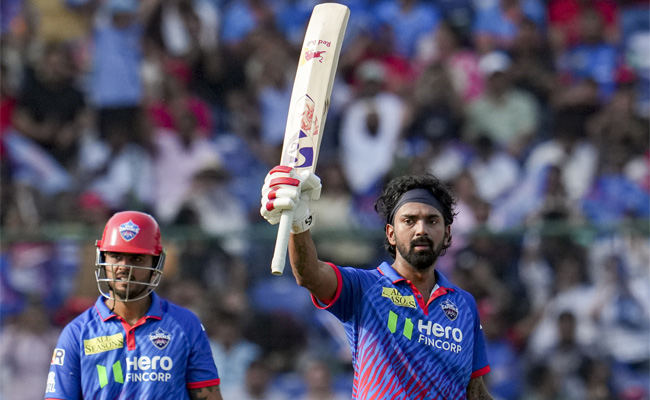
I know my name is attached to promoting game in different parts of the world: Kohli
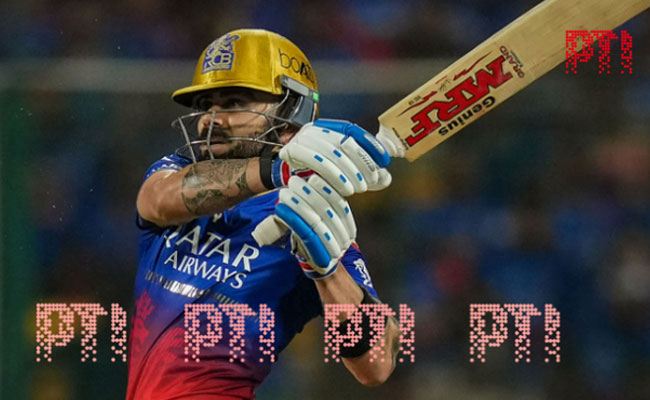
Bengaluru (PTI): Virat Kohli didn't say it in as many words but sent out a loud message to all who would care to listen -- he is not done with T20 cricket when the establishment still considers him to be the most marketable name to promote the game globally.
Kohli, who took a two-month paternity break, scored a match-winning 77 off 49 balls with 11 fours and two sixes and also didn't forget to mention that whether it is cricket in the Olympic programme or T20 World Cup in the USA, he is 'The Face'.
"I know my name is now attached to just promoting the game in different parts of the world when it comes to T20 cricket. I've still got it I guess," he smiled cheekily but the message was for those who would debate his spot in the T20 World Cup squad.
While he has now briefly got the Orange Cap, he said that he is past that stage where these things matter anymore.
"I don't play for these Caps anymore. That's the promise I can give here -- I'll keep turning up and keep trying me best."
He was a trifle disappointed that he couldn't finish the game.
"I try to give the team a blazing start, but if wickets fall, you have to assess. Wasn't the usual flat pitch. Disappointed I couldn't finish the game. The ball was in the slot but sliced it to deep point."
He has started hitting the lofted cover drive and it is his constant endeavour to evolve as a batter.
"They know I play the cover drive well, so they're not going to allow me to hit gaps. You have to come up with a game plan here and there."
For the RCB fans, he still is and will remain the 'King'.
"It's been going on for years (love story with the fans at Chinnaswamy). People talk about a lot of other things when you play sport -- achievement, stats, numbers.
"But when you look back, it's the memories you create as Rahul bhai (Dravid) always tells us that this time will not come back.
"The love, appreciation and backing I've received has been amazing."
The two month paternity break also gave him a chance to lead a normal life and a "chance to spend time and connect" with his elder child -- daughter Vamika.
"Just to feel normal for two months -- for me, my family -- it was a surreal experience. Couldn't have been more grateful to God for the opportunity to spend time with the family. It's an amazing experience to just be another person on the road and not be recognised. Then you come here and you hear them shout your name and you are switched on."
Let the Truth be known. If you read VB and like VB, please be a VB Supporter and Help us deliver the Truth to one and all.
BJP has become party of Bakasur, its hunger insatiable: Sanjay Raut on defection of AAP MPs
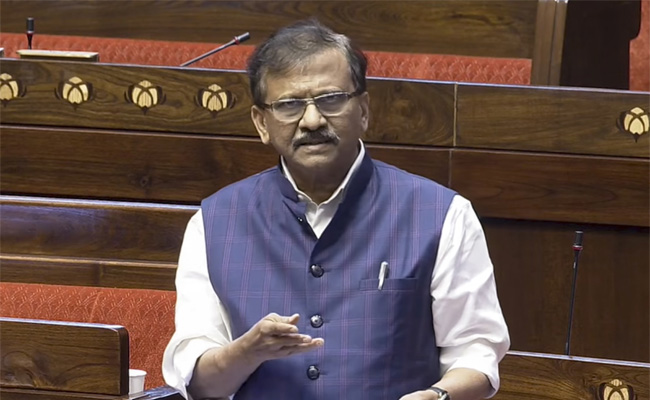
Mumbai (PTI): A day after seven Rajya Sabha MPs of the Aam Aadmi Party (AAP) quit and said they were merging with the BJP, Shiv Sena (UBT) leader Sanjay Raut on Saturday likened the saffron party to the mythological demon Bakasur with insatiable hunger.
Talking to reporters here, Raut said the majority of AAP MPs who switched their loyalties to the Bharatiya Janata Party were "Page 3 leaders", and claimed that they were scared as they were "wealthy and needed protection."
"Let the garbage from other parties go the BJP so that it becomes a dumping ground," Raut said.
The AAP suffered a jolt on Friday as seven out of its 10 Rajya Sabha members, including Raghav Chadha, Ashok Mittal and Sandeep Pathak, quit the party, with Chadha saying all of them had merged with the BJP.
"In Mahabharat, there is a demon called Bakasur whose hunger was insatiable. The BJP has become a party of Bakasur. It can eat anything," Raut said.
Chadha had once termed the BJP a party of goons, while Mittal's businesses faced raids soon after he was made deputy leader of the AAP in the Rajya Sabha (replacing Chadha), said Raut, himself a member of the Upper House of Parliament.
The Enforcement Directorate had last week conducted raids at business entities linked to Mittal in Punjab as part of a FEMA probe.
"Everyone knows about the BJP's politics. It is shamelessness," the Sena (UBT) leader said, adding that US President Donald Trump called India a hellhole and the BJP was showing what hell looks like.
He himself had written to then Vice President and Rajya Sabha chairman Venkaiah Naidu that there was pressure on him to join the BJP but he did not betray his party and preferred to go to jail, Raut said, referring to his arrest in an alleged money laundering case in 2022. He was released on bail in the case months later.
#WATCH | Mumbai | On Raghav Chadha, along with 2/3 AAP Rajya Sabha MPs joining BJP, Shiv Sena (UBT) leader Sanjay Raut says, "... Everyone knows the politics the BJP is playing. Their politics is a single word, we call it shameless. They have no shame. Because these people, like… pic.twitter.com/hJslDdLZDV
— ANI (@ANI) April 25, 2026