ICC announces record prize purse of USD 11.25 million for T20 World Cup
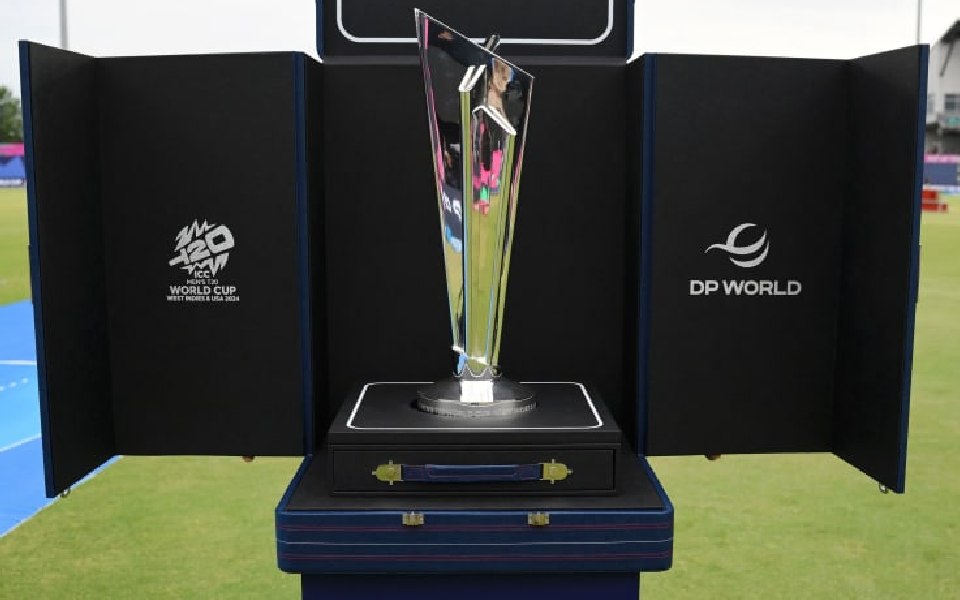
New York, Jun 3: The International Cricket Council on Monday announced a record prize purse of USD 11.25 million for the 2024 T20 World Cup with the winners pocketing at least USD 2.45 million.
The runners-up will receive at least USD 1.28 million, while the losing semi-finalists walk away with USD 787,500 each.
The previous edition in 2022 had a total prize pool of USD 5.6 million with winners England receiving USD 1.6 million.
"The ninth edition of the ICC Men’s T20 World Cup will see the winners of the 20-team tournament earn at least $2.45 million, the highest prize money in the history of the tournament, along with the trophy that they will lift at Kensington Oval in Barbados on 29 June," said the ICC in a statement.
The four teams that fail to make it out of the Super 8s will earn USD 382,500 each, while the teams placed ninth, 10th, 11th and 12th receive USD 247,500 each. Participants who finish 13th to 20th place will return $225,000 each.
"And every team receives an additional $31,154 for each match they win barring the semi-finals and final," the sport's governing body added.
The 55-match event will be played over 28 days, across nine venues in the West Indies and USA, making it the biggest T20 World Cup ever. A record 20 teams are taking part in the competition including first timers USA, Canada and Uganda.
The format of this year’s tournament will see 40 first round matches played before the top eight progress to the Super 8s. Four teams will then qualify for the semi-finals, which will be staged in Trinidad and Tobago and Guyana, ending with the final in Barbados.
“This event is historic in so many ways so it is fitting that the prize money for players reflects that. Hundreds of millions of fans around the world will be entertained by the players in what we’re hoping to be an Out of This World event," said ICC Chief Executive Geoff Allardice.
ICC reveal historic prize money for the Men's #T20WorldCup 🤩
— ICC (@ICC) June 3, 2024
Details ⬇️https://t.co/jRhdAaIkmc
Let the Truth be known. If you read VB and like VB, please be a VB Supporter and Help us deliver the Truth to one and all.
Two arrested in K'taka for assaulting minors, uploading CSAM content

Bengaluru (PTI): Two men were arrested for allegedly sexually assaulting two minor girls, recording the acts on mobile phones and uploading the videos online as child sexual abuse material, police said on Thursday.
The accused have been identified as Kiran Kumar (29), hailing from Chitradurga district, and Aditya M K (20), hailing from Shivamogga district, they said.
A probe was initiated after information was received from the NCRP portal regarding a suspected instance of creation of Child Sexual Abuse Material (CSAM) for online dissemination, police said.
Accordingly, a case was registered at Kaggalipura Police Station under relevant sections of the IT Act on May 10, they added.
Investigation revealed that two minor girl victims were exploited and videos were created and uploaded to the internet. The child victims have subsequently recorded their statements as per procedure and further necessary legal steps have been taken, Pronab Mohanty Director General of Police, Cyber Command, said in a statement.
Based on the statements of the victims, the accused persons, who allegedly assaulted the minors, recorded the acts on mobile phones and uploaded the videos online, were arrested, he said.
Following the probe, sections 65(2) (rape) and 70 (gangrape) of the Bharatiya Nyaya Sanhita, along with relevant sections of the POCSO Act, have been added to the FIR, police said.
Officials collected relevant information and on May 12, arrested the accused persons and seized three mobile phones belonging to them, in which the videos had allegedly been recorded, he said.
The accused were later produced before the court and taken into police custody for further investigation, he added.
According to him, in CSAM cases, police usually apprehend offenders who have downloaded such content or have kept them in their possession after obtaining them from elsewhere, usually the internet.
"The present case is one of the very few instances where content creators and uploaders have been apprehended," Mohanty added.