ICC congratulates England on 1000th Test
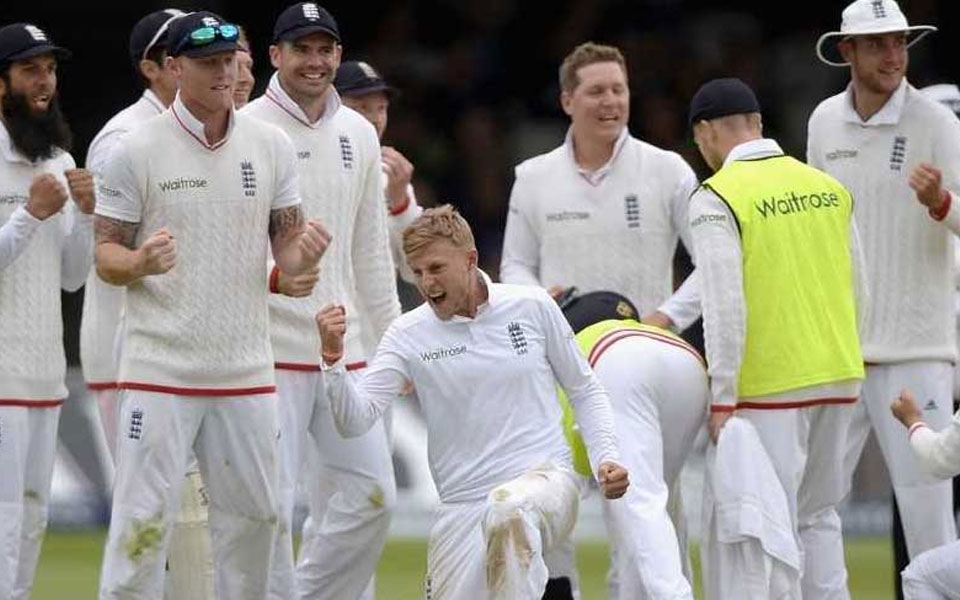
Dubai, July 30: The International Cricket Council (ICC) on Monday congratulated the England and Wales Cricket Board (ECB) with their mens team preparing to play their 1000th Test match, which begins at Edgbaston in Birmingham against India on Wednesday.
Out of the 999 men's Tests to date since their debut Test against Australia at the Melbourne Cricket Ground in March 1877, England have won 357 and lost 297 with 345 ending in draws, according to an ICC statement.
At Edgbaston alone, the venue of the 1000th Test, England have played 50 Tests to date since their first Test in May 1902 against Australia, winning 27, losing eight with 15 ending in draws.
Congratulating the English side, ICC Chairman Shashank Manohar said: "On behalf of the cricket family, I want to congratulate England on their 1000th men's Test match, the first country to reach this milestone."
"I wish England all the best in this historic match and may it continue to produce players and performances that inspire the following of Test cricket, the oldest and most demanding format of the game."
To commemorate the occasion, former New Zealand captain and match referee Jeff Crowe, on behalf of the ICC, will present a silver plaque to ECB Chairman Colin Graves before the start of the Test.
England have dominated India since their first Test in June 1932, winning 43 and losing 25 out of a total of 117 Tests. On home turf, England have won 30 Tests and India have emerged winners on six occasions with 21 Tests ending in draws.
Edgbaston has hosted six Tests between the two sides, with England leading 5-0 on a head-to-head count. These statistics will give England further impetus to improve their current ranking of fifth on the ICC Test Team Rankings.
If England make a 5-0 sweep, then they will jump to second on the table with a 10-point rise to 107 points, reducing the pre-series gap with top-ranked India from 28 points to just five points.
In contrast, if India can display their strength and prowess which has made them the highest-ranked side in the world, then they will further strengthen their grip on the top spot.
If India wins 5-0, then they will rise to 129 points and England will drop to sixth place on 94 points.
The followers of the most challenging format of the game will also be keeping a close watch on the ICC Test Player rankings as India captain Virat Kohli will look to snatch the coveted number one position from Australia's Steve Smith, while England fast bowler James Anderson will aim to defend his number one ranking.
Kohli trails Smith by 26 points and will have to produce a string of strong performances to leapfrog the Australian, while Anderson will also need wickets to either defend or consolidate his top spot.
Let the Truth be known. If you read VB and like VB, please be a VB Supporter and Help us deliver the Truth to one and all.
Two arrested in K'taka for assaulting minors, uploading CSAM content

Bengaluru (PTI): Two men were arrested for allegedly sexually assaulting two minor girls, recording the acts on mobile phones and uploading the videos online as child sexual abuse material, police said on Thursday.
The accused have been identified as Kiran Kumar (29), hailing from Chitradurga district, and Aditya M K (20), hailing from Shivamogga district, they said.
A probe was initiated after information was received from the NCRP portal regarding a suspected instance of creation of Child Sexual Abuse Material (CSAM) for online dissemination, police said.
Accordingly, a case was registered at Kaggalipura Police Station under relevant sections of the IT Act on May 10, they added.
Investigation revealed that two minor girl victims were exploited and videos were created and uploaded to the internet. The child victims have subsequently recorded their statements as per procedure and further necessary legal steps have been taken, Pronab Mohanty Director General of Police, Cyber Command, said in a statement.
Based on the statements of the victims, the accused persons, who allegedly assaulted the minors, recorded the acts on mobile phones and uploaded the videos online, were arrested, he said.
Following the probe, sections 65(2) (rape) and 70 (gangrape) of the Bharatiya Nyaya Sanhita, along with relevant sections of the POCSO Act, have been added to the FIR, police said.
Officials collected relevant information and on May 12, arrested the accused persons and seized three mobile phones belonging to them, in which the videos had allegedly been recorded, he said.
The accused were later produced before the court and taken into police custody for further investigation, he added.
According to him, in CSAM cases, police usually apprehend offenders who have downloaded such content or have kept them in their possession after obtaining them from elsewhere, usually the internet.
"The present case is one of the very few instances where content creators and uploaders have been apprehended," Mohanty added.