ICC rates Indore track as "poor", venue gets 3 demerit points
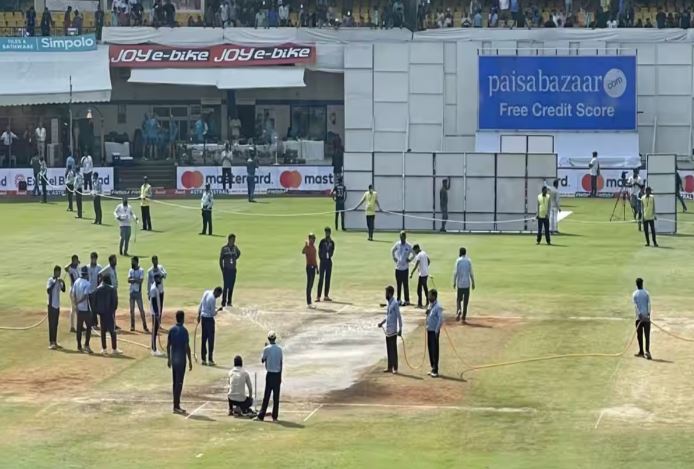
Indore, Mar 3: The ICC on Friday rated the pitch used for the third Border-Gavaskar Trophy Test match at the Holkar Stadium as "poor" after Australia beat India by nine wickets in a little over two days.
The poor rating also earned Indore, three demerit points and will remain active for five years rolling period.
India were all out for 109 and 163 in their two innings while Australia managed 197 in their first essay before knocking off the required 76 runs for a win on the third morning.
"ICC Match Referee Chris Broad submitted his report to the ICC expressing the concerns of the match officials and after consulting with captains of both teams. Following the assessment, the venue has received three demerit points," the release issued by the global body stated.
The consultation with the two captains Rohit Sharma and Steve Smith meant that both concurred with Broad's assessment that it couldn't be termed a pitch which is good advertisement for international cricket.
The report has been forwarded to the BCCI, who now have 14 days if they wish to appeal against the sanction.
Broad said: "The pitch, which was very dry, did not provide a balance between bat and ball, favouring spinners from the start.
"The fifth ball of the match broke through the pitch surface and continued to occasionally break the surface providing little or no seam movement and there was excessive and uneven bounce throughout the match."
India had lost seven wickets in the first session itself with the ball turning square during the opening half an hour.
While most of the experts have panned the pitch, Indian skipper Rohit Sharma said that he has no regrets playing on a result oriented track and hinted that he won't mind if something on similar lines is on offer for the final game in Ahmedabad.
Let the Truth be known. If you read VB and like VB, please be a VB Supporter and Help us deliver the Truth to one and all.
Allahabad HC orders probe into 'reinstatement' of teacher in UP's Barabanki
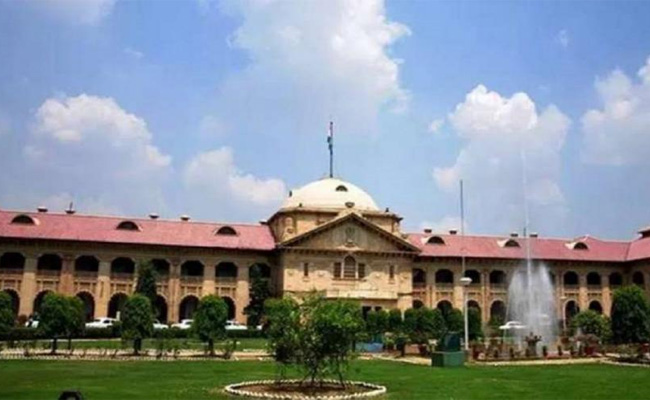
Lucknow (PTI): The Lucknow Bench of the Allahabad High Court on Friday ordered a probe by the special task force (STF) into alleged irregularities in the rejoining of a teacher at City Intermediate College in Barabanki, observing that the reinstatement appeared to be prima facie illegal.
The court also directed the recovery of the salary paid to the teacher during the disputed period.
A bench of Justice Rajeev Singh passed the order on a petition filed by the college management committee. The court expressed doubts over the roles of the District Inspector of Schools (DIOS), Barabanki, the college principal and the teacher concerned and hence, directed a detailed inquiry into the matter.
Taking note of alleged manipulation of records and misleading submissions, the court ordered the immediate transfer of the Barabanki DIOS to ensure a fair probe. It also directed the initiation of disciplinary proceedings against the then joint director of education of the Ayodhya division.
In its order, the court found that the teacher, Abhay Kumar, was initially appointed as an assistant teacher in 2018 but joined an Eklavya Model Residential School in Chhattisgarh as a lecturer in June 2024 without obtaining permission from the management. His subsequent request to retain the lien was rejected.
Despite this, he was allowed to rejoin the Barabanki College in September 2025 on the directions of the joint director of education and the DIOS, and was even paid the salary for October 2025. The court termed the rejoining "wholly illegal" and lacking any legal basis.
The bench also expressed concern over lapses in communication within the education department and directed the Uttar Pradesh chief secretary to ensure that official orders are communicated through email and WhatsApp as well, to prevent disputes.
The matter is next listed for hearing on May 28 when a compliance report is sought.