India beat spirited Nepal 2-0 to qualify for SAFF Championships semifinals

Bengaluru, Jun 24: Captain Sunil Chhetri found the target yet again as India beat a spirited Nepal 2-0 in their second group match to book a berth in the SAFF Championship semifinals here on Saturday.
Chhetri (61st minute) scored his fourth goal of the tournament before Mahesh Singh (70th) struck to notch up the home side's second consecutive win. India had beaten Pakistan 4-0 in their opening match on Wednesday with Chhetri scoring a hat-trick.
Chhetri (91 goals from 139 matches) had already become the second most prolific scorer among Asians -- after Ali Daei (109 from 148 matches) of Iran -- and third among active players in the world. He is the most prolific goal-getter among active Asian players.
With six points from two wins, India qualified for the semifinals from Group A along with Kuwait (also six points), who beat Pakistan 4-0 earlier in the day for their second victory.
India play Kuwait on June 27 to decide the group winner. Nepal and Pakistan are out of the reckoning for a semifinal spot as they lost two matches each.
Before India broke the deadlock, they had to ward off a strong fight from Nepal. India entered the match with large scale changes as only Chhetri, Anirudh Thapa and Sahal Abdul Samad retained their places in the starting 11 from the previous match against Pakistan.
Nepal ran India close the whole of first half with a fine display of solid defence and quick counterattacks.
The first clear chance of the match came Sahal's way but his header from a cross sailed just wide of the goal post in the 21st minute.
Nepal could have gone 1-0 up in the match had Bimal Ghatri was a bit quicker with his shot, as it was kicked away by Rohit Kumar close to the goal line in the 34th minute.
In the 41st minute, Mahesh Singh, who made a fine run down the right flank, jinked a lovely cross to Sahal inside the box but the latter overran the ball and could not execute a volley.
India showed more urgency and purpose in the second half, and the result came their way in the 61st minute.
Sahal and Mahesh engaged themselves in a lighting one-two to evade Nepalese defence before finding an unmarked Chhetri inside the box, and the forward just had to beat goalkeeper Kiran Limbu.
The goal energized the Indian players and they continued the search for another with Sahal marshalling the midfield brilliantly. The Kerala man along with Mahesh Singh worked the engine room of India in the second half.
The second goal was a tribute to Sahal's speed and skills. The midfielder made a bull run through the centre and his pass found Chhetri but his shot deflected off Limbu.
However, Mahesh Singh was right in place to head the ball into the net in the 70th minute as India gained a decisive 2-0 lead.
Despite conceding a two-goal lead, Nepal tried gamely to stage a comeback. But India were able to keep the scoreline intact.
Let the Truth be known. If you read VB and like VB, please be a VB Supporter and Help us deliver the Truth to one and all.
Choose faith or future: BJP alleges 'second-class treatment' of Hindus in K'natka CET row
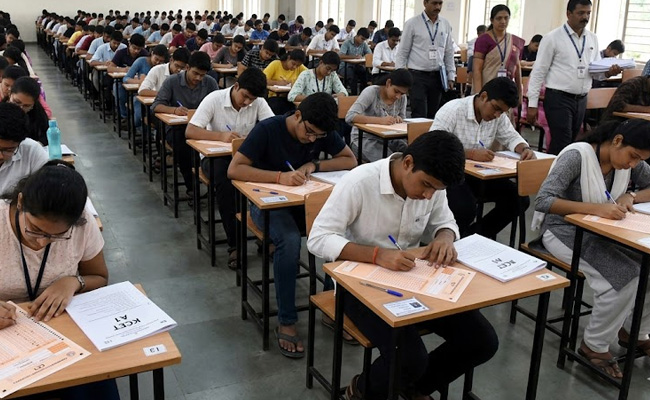
New Delhi (PTI): The BJP on Saturday accused the Karnataka Congress government of being "anti-Hindu" and following double standards after students appearing for the Common Entrance Test (CET) were allegedly asked to remove their 'janeu'.
A political row erupted after five Brahmin students were allegedly forced to remove the thread, considered sacred and worn across the torsos, at a city college in during the CET on Friday.
Students alleged that the invigilators at Madivala asked them to remove their janeu/yajnopaveetha if they wanted to write the exam.
In a video post on X, BJP national spokesperson Shehzad Poonawalla lambasted the act.
"Is it a crime to be a Hindu in Karnataka? In Karnataka, students were stopped from entering the examination hall for wearing a janeu and were given a brutal option -- choose your faith or your future. This happened last year as well," Poonawalla alleged.
ALSO READ: ECI to release exact voter turnout in TN
He accused the Karnataka government of practising double standards and engaging in appeasement politics.
"In Karnataka, we have seen the politics of appeasement. Muslim reservation, a Muslim-only budget, and quotas and contractual work for Muslims. But Hindus have to remove their sacred thread if they want to take an exam, which even the courts have, by the way, allowed," he alleged.
He accused the Congress government of adopting a similar approach in other states where it is in power, while allowing hijab and burka in classrooms.
"It has happened in various Congress-ruled states. We have seen that the Congress party advocates the right to hijab and burkha within the classroom. They say this should be allowed. Even the courts have overruled it.
"But in the case of janeu, they want it to be removed. This is not the first time this has happened. In Telangana and other states, the tilak and mangalsutra were removed. But hijab is fine. This is the kind of second-class treatment being given to Hindus," he added.
Poonawalla said the Congress should rename itself from INC to "MMC -- Muslim League Maowadi Congress" or the "Islamic National Caliphate Party".
As the controversy took a political turn, the college suspended the invigilator pending inquiry. The government also ordered a probe.
The police registered a case and detained three staff members of Krupanidhi College who were in charge of examination checking for questioning, officials said.
A similar incident took place last year in Karnataka, following which the government directed that the candidates would not be asked to remove the janeu while appearing for the CET.