India defeat Zimbabwe by 23 runs to go 2-1 up in five-match T20I series
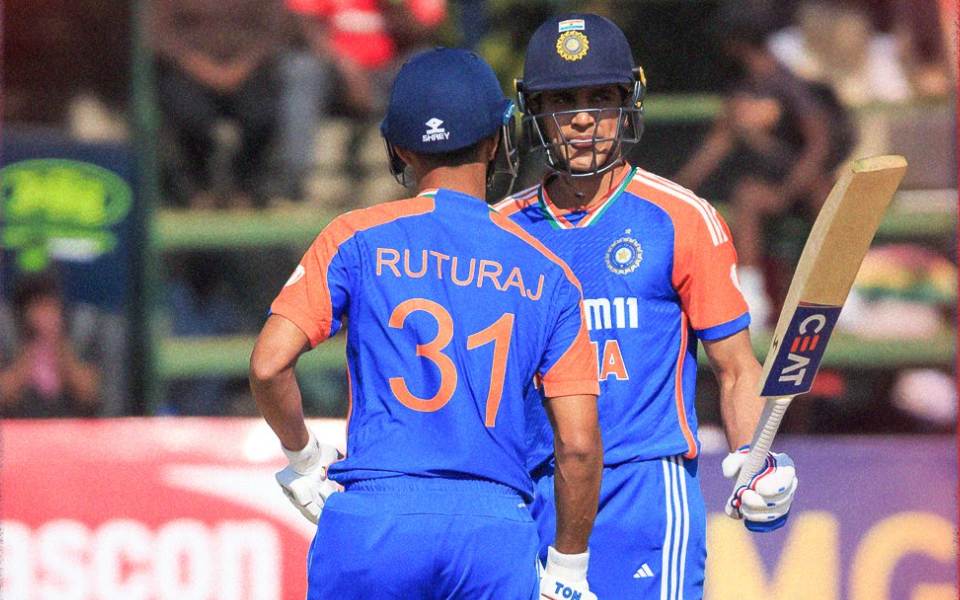
Harare, Jul 10: Skipper Shubman Gill struck 66, while off-spinner Washington Sundar returned with 3/15 as India defeated Zimbabwe by 23 runs in the third T20I to take a 2-1 lead in five-match series here on Wednesday.
Electing to bat, India scored 182/4 with Gill (66, 49b, 7x4, 3x6) and Ruturaj Gaikwad (49, 28b, 4x4, 3x6) leading the way with contrasting knocks.
For Zimbabwe, pacer Blessing Muzarabani (2/25) was the best bowler.
In reply, Zimbabwe made a late resurgence with Dion Myers' maiden T20I fifty in the company of Wellington Masakadza but only to fall short and were restricted for 159/6.
The fourth T20I of the series is slated on Saturday.
Brief scores:
India 182/4 in 20 overs (Shubman Gill 66, Ruturaj Gaikwad 49; Blessing Muzarabani 2/25).
Zimbabwe 159/6 in 20 overs (Dion Myers 65 not out; Washington Sundar 3/15, Avesh Khan 2/39).
Let the Truth be known. If you read VB and like VB, please be a VB Supporter and Help us deliver the Truth to one and all.
Shivakumar opposes ‘One Nation One Election’, calls it ‘unworkable’
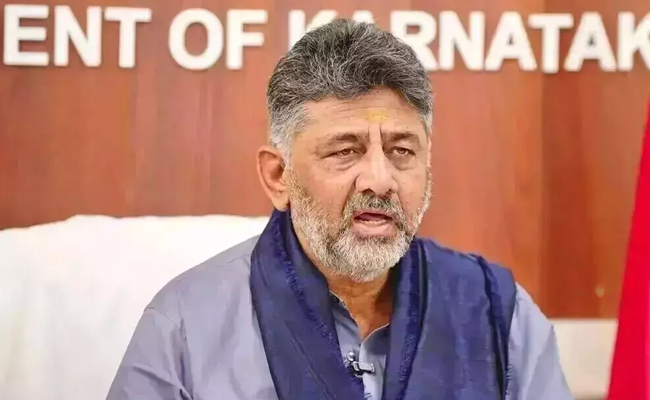
Bengaluru (PTI): Karnataka Deputy Chief Minister D K Shivakumar on Saturday strongly opposed the central government’s proposed ‘One Nation One Election’ initiative.
Shivakumar expressed his views at a dialogue on ‘One Nation One Election’ organised by the Joint Parliamentary Study Committee.
He said the plan is a politically motivated, power-centralising scheme that would seriously damage India’s federal structure by weakening states and poses a threat to the democratic system, according to a statement from his office.
As KPCC president and deputy CM of Karnataka, he categorically rejected the proposal, stating that it is being crafted to suit the convenience of those in power at the Centre.
Shivakumar said that the Karnataka Legislative Assembly had already passed a resolution opposing ‘One Nation One Election’ and read out the resolution at the meeting.
He firmly stated that it is “not a workable plan” and added that it is “practically impossible.”
“If a government falls midterm due to political instability, a no-confidence motion, or loss of majority, what is the solution?” he asked.
“Elections are held at different times in different states for different terms. Karnataka had its election in 2023, while Tamil Nadu and Kerala had theirs in 2021, and Punjab and Telangana in 2022 and 2023, respectively. How can these elections with varying schedules be synchronised?” he asked.
He added that the proposal is a ploy to suppress the voices of regional and Opposition parties.
He also said the Karnataka government does not agree with the proposal and remains committed to the position of the Congress party’s national leadership.