India fail to qualify for 2027 AFC Asian Cup after 1-2 loss to Singapore

Margao (PTI): India failed to qualify for the 2027 AFC Asian Cup after going down 1-2 to Singapore who rallied to humble the hosts with a brace from Korea-born attacking mid-fielder Song Ui-young in the third round qualification match here on Tuesday.
Lallianzuala Chhangte's 14th minute strike was cancelled out by Song's equalizer in the 44th minute, and then he struck what proved to be the winner, in the 58th minute as India were left to rue many missed chances.
The two teams were locked 1-1 at the half-time break at the Jawahar Lal Nehru Stadium, having played a 1-1 stalemate in the first leg in Singapore on October 9.
In the day's other Group C match, Hong Kong and Bangladesh shared the spoils after a 1-1 draw in Hong Kong, a result that did not help India's cause who entered the game with two points from three matches.
India were the dominant team in the first half and enjoyed long spells of possession, and it was appropriate that the Blue Tigers scored the opening goal in front of a lively home crowd.
Chhangte received the ball some distance away from the edge of the box and unleashed a screamer with his left foot that beat the Singapore goalkeeper on its way to the back of the net.
However, Song had other ideas as he struck twice in ether side of the break to dash Indian hopes.
Just before the interval, Singapore struck back against the run of play courtesy Song, who found space inside the Indian box and kept his composure to level the score at 1–1, the equaliser leaving the Indian players distraught for they were the ones dictating play for most parts of the first half.
On resumption, the visitors looked much sharper and more confident thanks to that equaliser, and they were rewarded when Song capitalised on India's defensive lapse to slot the ball home from close range and put his side ahead 2–1.
Desperate for an equaliser, India head coach Khalid Jamil made plenty of substitutions hoping to inject some pace and urgency, bringing Rahim Ali and Udanta Singh in place of Liston Colaco and Sunil Chhetri. But all these changes did not work as India ended on the wrong side of the result.
Brandon Fernandes missed out on a great chance to restore parity for India on the 90th minute after excellent work from Udanta Singh and Rahul Bheke. He hit the ball wide with his weaker foot with the goal at his mercy.
Only the group winner will qualify for the Asian Cup and Hong Kong and Singapore currently lead the table with eight points each.
Coming into the game with just two points from three matches, India needed nothing less than a win to stay in contention for the top spot in the group.
India also missed couple of chances in the first half, during a period of play when they were dominating the contest.
Jamil attributed the defeat, and rightly so, to "lack of concentration" on part of the India players, who have endured another disappointing campaign.
Let the Truth be known. If you read VB and like VB, please be a VB Supporter and Help us deliver the Truth to one and all.
Youngster attacked by gang in Koppal: FIR against 30 people; three arrested
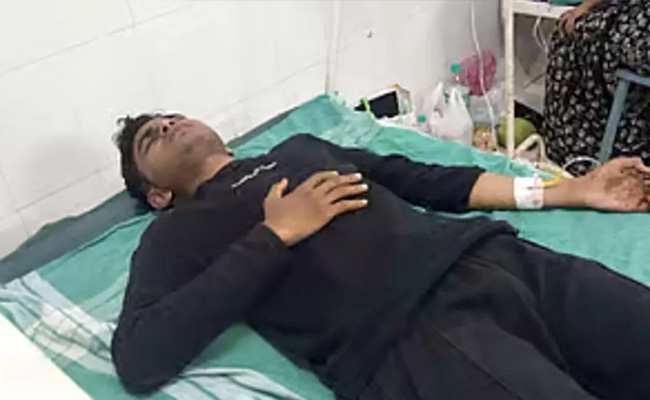
Koppal: Police in Koppal City station limits have registered a case against more than 30 people and arrested three in connection with an alleged assault on a youngster over his relationship.
According to the complaint, Sameer Ahmed Moolimani (22), who works at a mobile agency, was sitting at a hotel with his girlfriend around 8:30 pm on May 6 when a group of youngsters approached him and asked his identity. He said that he was attacked after informing them about the relationship.
Sameer said in his complaint: “They blindfolded me, took me on a bike towards the Hospet side of the national highway, and assaulted me. They asked me, ‘Do you love a Hindu girl?’ They also threatened me, saying, ‘If I am seen with her again, I will not leave you alive.’"
He also stated that after the assault, he was blindfolded and later left near the district hospital.
Police have registered a case at Koppal City police station against more than 30 people, including the girl’s brothers Ashish and Nilesh. Three people have been arrested so far, and investigation is in progress.