India lose to China in women's U-17 BRICS tournament
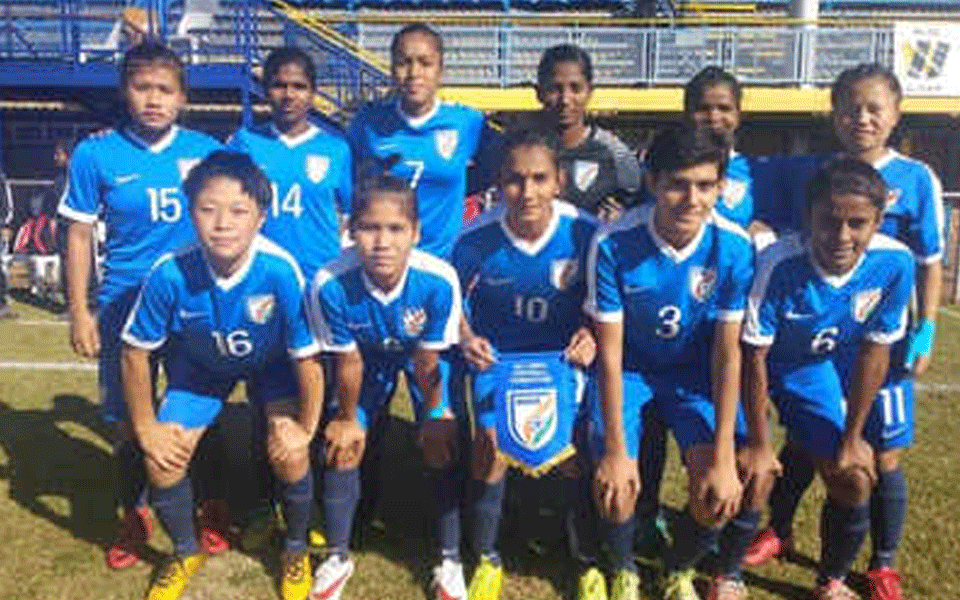
Johannesburg, July 22 : The Indian U-17 womens team lost 1-2 against China in their last match of the BRICS U-17 Football Tournament here on Sunday.
Two goals by China late in the second half nullified the lead India had taken early on, as the opponents ran out eventual winners.
Manisha had put the Indians ahead in the 25th minute when she capitalised on a rebound off a free-kick and her shot went into the net to give India the advantage.
The Indian women had a chance to double their lead before half-time in the 42nd minute but failed to make the most out of it as the shot was placed wide of the goal.
In the second half, the Indian custodian Archana made some good saves to keep India in the match but her citadel was breached in the 74th minute when China equalised from the penalty spot.
Eight minutes later, the Chinese scored once again to take the lead. The Indian women could do little to muster an equaliser and with time running out, failed to make the most of their opportunities.
Let the Truth be known. If you read VB and like VB, please be a VB Supporter and Help us deliver the Truth to one and all.
Rickelton's ton in vain as SRH beat MI by 6 wickets
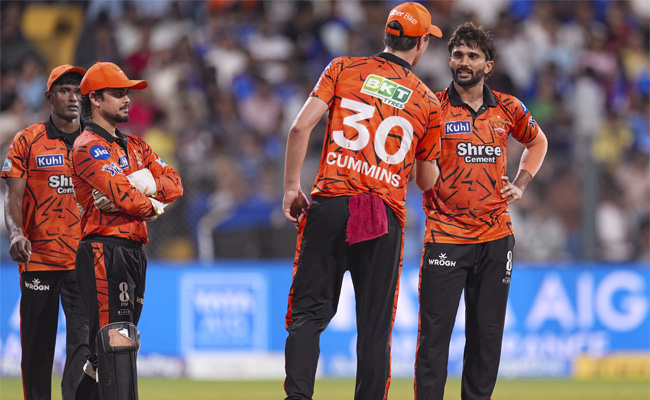
Mumbai (PTI): Ryan Rickelton's whirlwind unbeaten ton was overshadowed by Heinrich Klaasen's unbeaten 65 as Sunrisers Hyderabad defeated Mumbai Indians by six wickets in an IPL match here on Wednesday.
Chasing an imposing 244-run target, Travis Head (76 off 30) and Abhishek Sharma (45 off 24) shared 129 runs for the opening wicket to set the platform for SRH.
Klaasen (65 not out off 30 balls) then displayed his all-round hitting abilities to guide SRH home with the help of Nitish Kumar Reddy (21) and Salil Arora (30 not out off 10) in 18.4 overs.
Earlier, Rickelton's knock powered MI to 243 for five.
MI rode on a 93-run stand between Rickelton (123 not out off 55 balls) and Will Jacks (46 off 22) in 7.1 overs for the opening stand to power the side.
MI skipper Hardik Pandya scored a valuable 31 off 15 balls before being dismissed.
Praful Hinge (2/54), Eshan Malinga (1/29), Sakib Hasan (1/39) and Nitish Kumar Reddy (1/31) were the wicket-takers for SRH.
Brief Scores:
Mumbai Indian: 243 for 5 in 20 overs (Ryan Rickelton 123 not out; Praful Hinge 2/54).
Sunrisers Hyderabad: 249 for 4 in 18.4 overs (Travis Head 76, Heinrich Klaasen 65 not out; AM Ghazanfar 2/51).