T20 WC: India post 205/5 against Australia after Rohit's 92
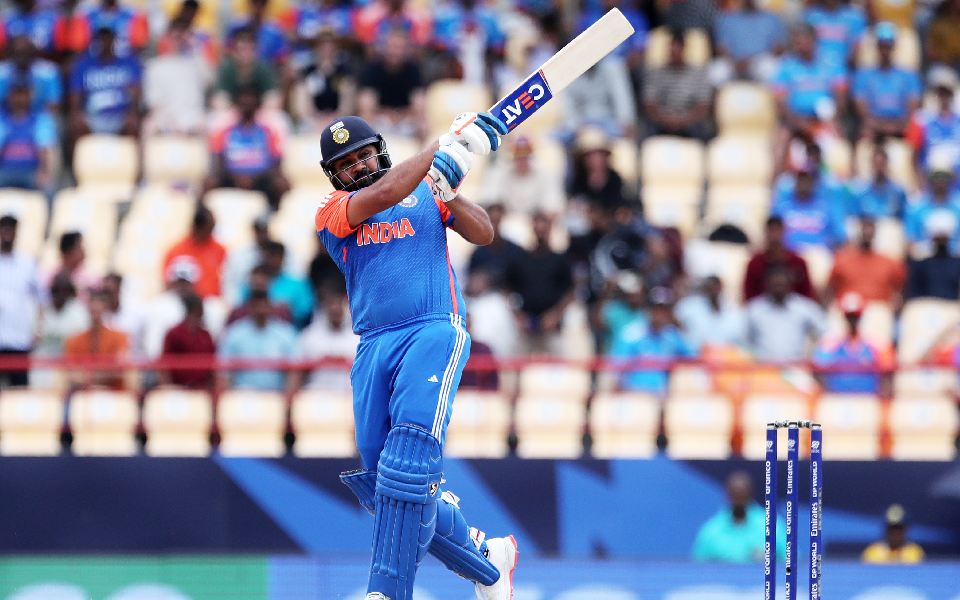
Gros Islet (Saint Lucia), Jun 24: Skipper Rohit Sharma blazed away to a 41-ball 92 as India posted an imposing 205 for five against Australia in their final Super Eights match of the T20 World Cup here on Monday.
Batting first, Rohit fired on all cylinders and struck as many as eight sixes and seven fours during his sparkling knock.
Unperturbed by Virat Kohli's early dismissal, Rohit went after pacer Mitchell Starc and bludgeoned him for 29 runs in his second over, setting the tone for India at the Darren Sammy Stadium.
Starc, who was taken to the cleaners by Rohit, returned to dismiss the India captain and give some relief to the Australian camp.
But Suryakumar Yadav (31 off 16 balls) and Shivam Dube (28 off 22) kept up the tempo with their big hits before Hardik Pandya (27 off 17) finished the India innings in style.
Brief scores:
India: 205/5 in 20 overs (Rohit Sharma 92).
Let the Truth be known. If you read VB and like VB, please be a VB Supporter and Help us deliver the Truth to one and all.
NEET student hangs self in Rajasthan's Sikar

Jaipur (PTI): A student preparing for the NEET examination allegedly committed suicide by hanging himself in a rented room in Rajasthan's Sikar on Friday, police said.
According to the police, the student allegedly hanged himself from a ceiling fan using his sister's scarf while one sister was attending coaching classes and the other was in the bathroom.
He had appeared in the NEET UG exam 2026, which was cancelled due to paper leak, they said.
Udyog Nagar SHO Rajesh Kumar said that the deceased, identified as Pradeep Meghwal, was a resident of Kanika ki Dhani village in Jhunjhunu's Gudha Gaudji area.
He had been living in a rented room in Sikar's Jaldhari Nagar area with his two sisters while preparing for NEET over the last three years.
His elder sister later found him hanging and informed the landlord and police after bringing him down, officials said.
The SHO said the body was kept at SK Hospital mortuary, and a postmortem had not been conducted.
The student's father, Rajesh Kumar Meghwal, told police that Pradeep's NEET examination had gone well and the family was expecting him to score around 650 marks.
Former Rajasthan deputy chief minister Sachin Pilot expressed grief over the incident and linked it to anxiety among students after reports of irregularities and paper leaks in NEET 2026.
Pilot said repeated paper leak incidents and cancellation of examinations were affecting students' mental health and demanded a time-bound investigation and strict action against those responsible.