India rout Uzbekistan 16-0 in Asian Games men's hockey goalfest
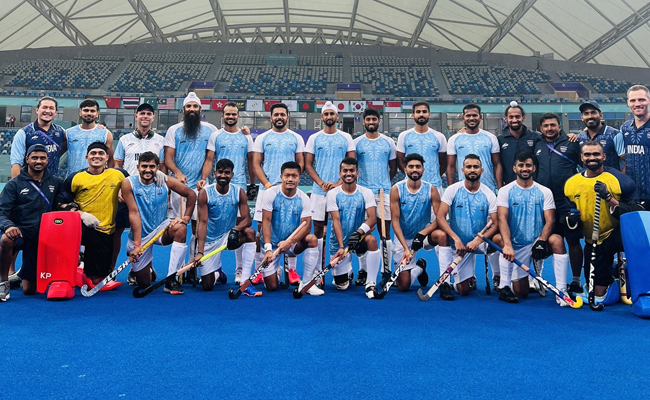
Hangzhou (PTI): Lalit Upadhyay, Varun Kumar and Mandeep Singh slammed a hat-trick each as India started their men's hockey campaign at the Asian Games with a 16-0 rout of lowly-ranked Uzbekistan here on Sunday.
Ranked third in the world, India began the match as clear favourites against the world No. 66 Uzbeks and expectedly dominated the proceedings from start to finish in the Pool A match.
Lalit (7th, 24th, 37th, 53rd) and Varun (12th, 36th, 50th, 52nd) fired in four goals each, while Mandeep (18th, 27th, 28th minutes) found the net thrice.
Abhishek (17th), Amit Rohidas (38th), Sukhjeet (42nd), Shamsher Singh (43rd) and Sanjay (57th) were the other goal scorers as India toyed with the Uzbek defence all through the match.
India skipper Harmanpreet Singh did not play the match as he was rested after donning the responsibility of being the joint flag-bearer along with Olympic medallist boxer Lovlina Borgohain during the opening ceremony of the Asian Games on Saturday.
It was a complete domination from the Indians who took seven minutes to break the deadlock, but once they did, it was complete mayhem for Uzbekistan.
It was raining penalty corners for India as they secured as many as 14 in the entire 60 minutes but converted just five, which should be a cause for concern for chief coach Craig Fulton.
But what is heartening is the display of the forward-line as it combined well with the midfield to pump in 10 goals, while the other came from a penalty stroke in the 36th minute.
The Indians got their first chance in the fifth minute but Abhishek's tap from close range was saved by Uzbek goalkeeper Davlat Tolibbaev.
Minutes later Sukhjeet earned India's first penalty corner but Sanjay's flick was kept away by Tolibbaev.
But India broke the deadlock seconds later when Lalit scored from a rebound after Tolibbaev had made a double save.
Varun doubled India's lead in the 12th minute by converting a penalty corner with a powerful low flick to the left of the Uzbek goalkeeper.
Just at the start of the second quarter, India secured another penalty corner but once again Tolibbaev came to his side's rescue to deny Sanjay.
Besides scoring, Mandeep was the live-wire upfront setting up goals for his teammates with his brilliant dribbling skills.
India scored their third goal in the 17th minute through Abhishek, who spun brilliantly to outwit his marker and tap past Tolibbaev after being set up by Mandeep's terrific work from the left flank.
Minutes from half-time, Mandeep joined the party, scoring two goals in a span of a minute.
It was raining penalty corners for India, who earned two more in a span of three minutes but wasted both as the reigning Olympic bronze medallists led 7-0 at the half-way break.
The trend continued after the change of ends as both the Indian goalkeepers -- PR Sreejesh and Krishan Bahadur Pathak --, who took turns to defend the goal in the four quarters, remained mere spectators with the action completely going on at the other side of the pitch.
The Indians looked more threatening in the last two quarters as they pumped in nine more goals -- four came from penalty corners, one from the spot and the remaining four from field play as Fulton's boys completed a resounding victory.
India will play Singapore in their next pool match on Tuesday.
Let the Truth be known. If you read VB and like VB, please be a VB Supporter and Help us deliver the Truth to one and all.
Allahabad HC orders probe into 'reinstatement' of teacher in UP's Barabanki
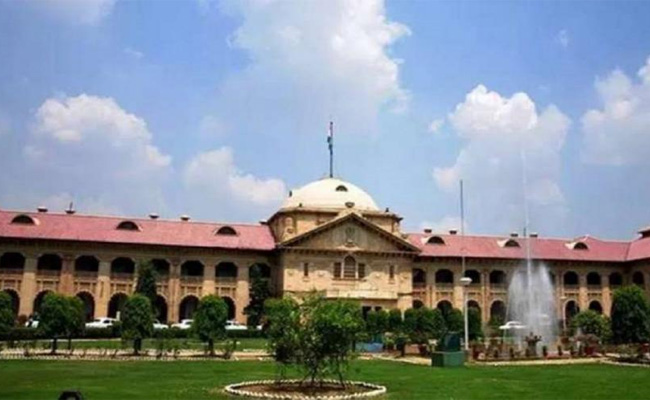
Lucknow (PTI): The Lucknow Bench of the Allahabad High Court on Friday ordered a probe by the special task force (STF) into alleged irregularities in the rejoining of a teacher at City Intermediate College in Barabanki, observing that the reinstatement appeared to be prima facie illegal.
The court also directed the recovery of the salary paid to the teacher during the disputed period.
A bench of Justice Rajeev Singh passed the order on a petition filed by the college management committee. The court expressed doubts over the roles of the District Inspector of Schools (DIOS), Barabanki, the college principal and the teacher concerned and hence, directed a detailed inquiry into the matter.
Taking note of alleged manipulation of records and misleading submissions, the court ordered the immediate transfer of the Barabanki DIOS to ensure a fair probe. It also directed the initiation of disciplinary proceedings against the then joint director of education of the Ayodhya division.
In its order, the court found that the teacher, Abhay Kumar, was initially appointed as an assistant teacher in 2018 but joined an Eklavya Model Residential School in Chhattisgarh as a lecturer in June 2024 without obtaining permission from the management. His subsequent request to retain the lien was rejected.
Despite this, he was allowed to rejoin the Barabanki College in September 2025 on the directions of the joint director of education and the DIOS, and was even paid the salary for October 2025. The court termed the rejoining "wholly illegal" and lacking any legal basis.
The bench also expressed concern over lapses in communication within the education department and directed the Uttar Pradesh chief secretary to ensure that official orders are communicated through email and WhatsApp as well, to prevent disputes.
The matter is next listed for hearing on May 28 when a compliance report is sought.