India set-up Hockey Champions Trophy final against Australia
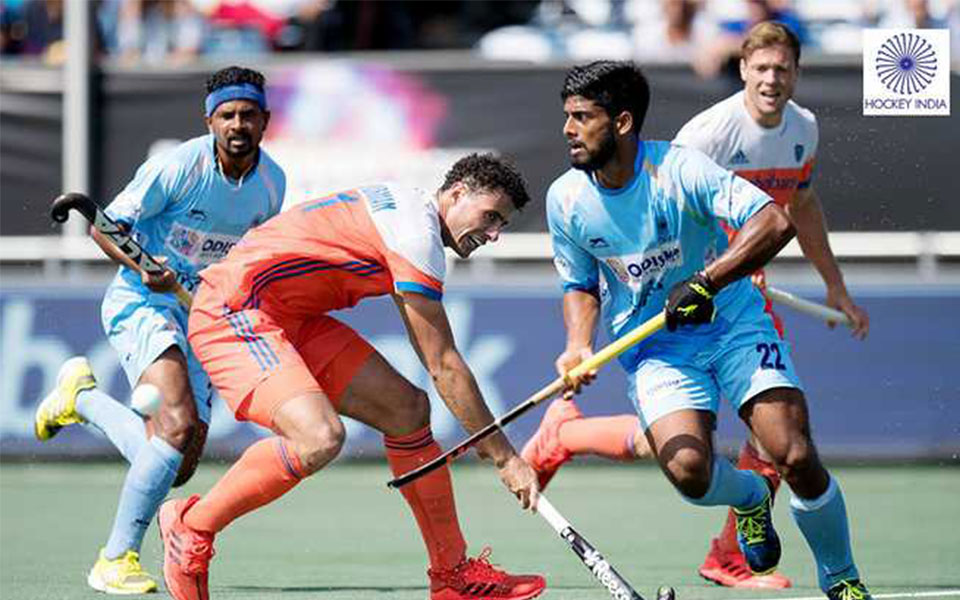
Breda, June 30: India managed to play a 1-1 draw with the Netherlands in their final round-robin game here on Saturday to set-up the Hockey Champions Trophy final against Australia.
Mandeep Singh (47th minute) scored for second-placed India, while Thiery Brinkmann (55th) scored for the third-placed Netherlands as the two teams ended the round-robin stage with eight and seven points respectively.
The Netherlands will meet Olympic champions Argentina in the bronze-medal playoff on Sunday after the South Americans defeated Australia 3-1 to take their points tally to seven -- same as the European team. But Argentina are in the fourth spot due to an inferior goal difference. Australia topped the table with 10 points.
The final will be a repeat of the 2016 edition when Australia got the better of India via a controversial penalty shootout.
India needed at least a draw against the Dutch to keep the opponent away from the place in the final.
Both teams showed urgency but India created a goal-scoring opportunity first with youngster Dilpreet Singh making the right call to ask for a video referral. The video umpire ruled in India' favour for a dangerous ball in the striking circle, though Harmanpreet Singh's powerful flick was brilliantly parried away by Dutch goalkeeper Sam van der Ven.
Immediately though, the home team launched a quick-fire counter with Seve van Ass taking a shot on goal. But with an in-form PR Sreejesh continuing his outstanding form at the goalpost made it difficult for the Dutch to convert.
India won their second penalty corner, thanks to Dilpreet again, but a variation saw Harmanpreet pass the ball to Varun Kumar after Sardar's injection but Varun couldn't get a strong push which was cleared quite effortlessly by the Dutch goalkeeper.
Though India gave away three penalty corners by half time, with no score on the board for either teams. The visitors' defence was compact, very alert and yet again had Sreejesh standout.
One of his best saves was when Jorrit Croon stole the ball from India's midfield to launch a swift counter, beating a fleet of Indian defenders to make it to their striking circle only to find a perfect pass to Thijs van Dam. But his shot was excellently saved by Sreejesh who remained the cynosure in India's defence.
With a goalless scoreboard, the third quarter was crucial. The Netherlands dominated with ball possession, making 20 circle entries and took six shots on goal. While India had made just 12 circle entries with four shots on goal.
India's backline continued to play to structure, with some clever defending while India had a better coordinated move up front with Sunil and Mandeep working in tandem but could not muster a goal in the third quarter.
India, however, opened the fourth quarter with all guns firing. The efforts won them their third penalty corner of the match in the opening minute. Though Harmanpreet's flick rebounded off the Dutch goalkeeper, Mandeep moved up front swiftly to put the ball into the goal and fetched his team the much-needed 1-0 lead in the 47th minute.
With time ticking away, Dutch fans rallied behind their home team with encouraging cheers. The home support worked with Brinkman working a stupendous goal from the baseline, beating Amit Rohidas's block to put the ball past Sreejesh and equalise.
With India needing a draw to make the final, it was a defensive, tactical battle for them. The Netherlands increased their pace in counters to put the Indian defence under stress.
Jeroen Hertzberger was the one to test the defenders with a splendid shot on goal but Sreejesh's diving effort averted the threat and Harmanpreet ensured they steered clear.
But Hertzberger's next attempt was simply unstoppable when he put the ball past Sreejesh but the Netherlands' 2-1 lead was denied by the umpires when it was ruled that the free hit just before Hertzberger's shot on goal was not taken as per the rules.
With just a little over a minute left for the final hooter, the Dutch won three back-to-back penalty corners but India held their nerves to avert the danger and seal the match with a 1-1 draw and place in the Final against Australia.
Let the Truth be known. If you read VB and like VB, please be a VB Supporter and Help us deliver the Truth to one and all.
Neutrality of polls can't be assured if EC dependent on contestants: Justice Nagarathna
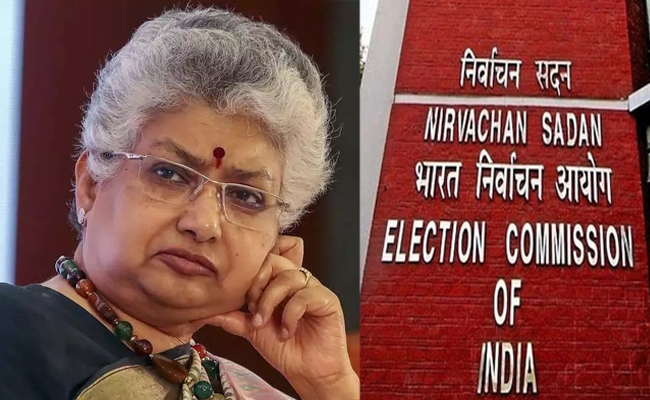
New Delhi (PTI): Supreme Court judge Justice BV Nagarathna, while highlighting that the Election Commission is the primary institution entrusted with maintaining the integrity of polls, has said if those who conduct elections are dependent on those who contest them, the neutrality of the process cannot be assured.
The apex court judge raised a critical concern regarding the structural independence of those tasked with overseeing the ballot while delivering the Rajendra Prasad Memorial Lecture at the Chanakya Law University in Patna on Saturday.
Citing a 1995 verdict where the Supreme Court recognised the Election Commission as a constitutional authority of high significance, entrusted with ensuring the integrity of elections, she said, "The concern, once again, was structural: if those who conduct elections are dependent on those who contest them, the neutrality of the process cannot be assured."
Justice Nagarathna said elections are not merely periodic events but a mechanism through which political authority is constituted.
"Our constitutional democracy has amply demonstrated smooth changes in government due to elections being held on a timely basis. Control over that process is, in effect, control over the conditions of political competition itself," she said.
The Supreme Court judge said power is not exercised only through formal institutions but also through the processes that sustain them, including elections, public finance, and regulation.
"A constitutional structure that seeks to restrain power must therefore go beyond its classical forms and address these fourth-branch institutions. A set of institutions, while not always fitting within the classical tripartite scheme, is nonetheless central to the maintenance of constitutional order," she said.
Justice Nagarathna said the unmistakable lesson of history is that constitutional collapse occurs through the disabling of its structure, and the violation of rights merely follows.
"The dismantling of structure, in turn, occurs when institutions stop checking each other. At that moment, elections may continue, courts may function, laws may be enacted by Parliament, and yet, power is effectively not restrained because the structural discipline no longer exists," she said.
The apex court judge also urged the Centre to view states as "coordinates and not subordinates" and asserted that the separation of powers was a "constitutional arrangement of co-equals."
Justice Nagarathna also called for keeping aside "inter-party differences" in the matter of "Centre-state relations", underscoring that governance must not depend on "which party may be ruling the Centre and which other party may be ruling at the state level".