India to open Women's T20 World Cup 2026 campaign against Pakistan
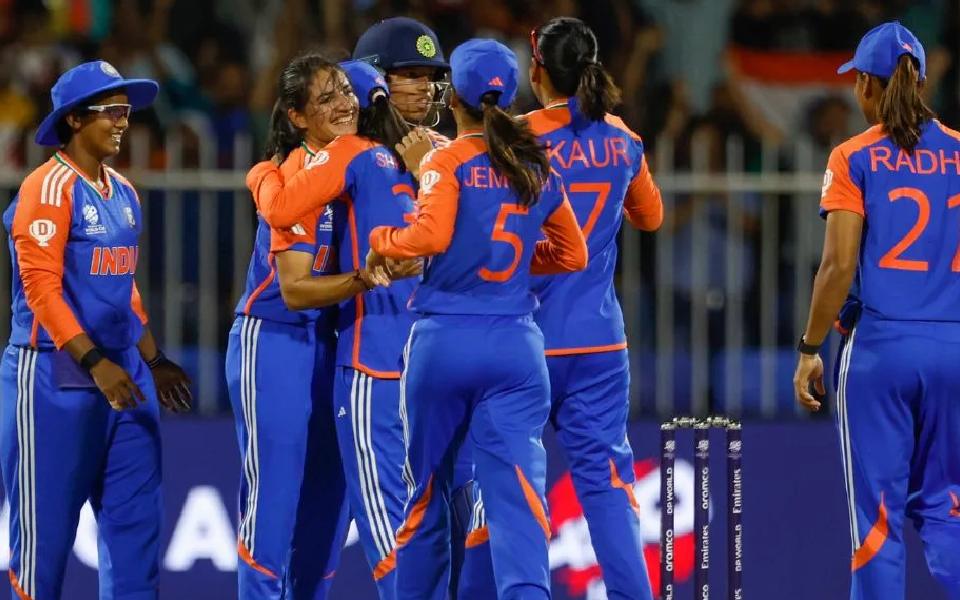
Dubai, Jun 18 (PTI): India will take on arch-rivals Pakistan in their opening match of ICC Women's T20 World Cup 2026 at Edgbaston on June 14.
The ICC and hosts England and Wales Cricket Board (ECB) on Wednesday announced the full schedule of the tournament, featuring 12 teams.
The 24-day long tournament will be held from June 12 to July 5 next year and will consist of a total of 33 matches to be played across seven venues in England.
Arch-rivals India and Pakistan will kickstart their campaigns at Edgbaston, whereas the opening match of the tournament will be between hosts England and Sri Lanka at Edgbaston on June 12.
Hampshire Bowl, Headingley, Old Trafford, The Oval, Bristol County Ground and Lord's are the other venues of the competition.
The two semifinals will be played at The Oval on June 30 and July 2, and the final will be at Lord's on July 5.
The 12-team competition will have two groups of six teams each. The Group 1 consists of six-time winners Australia, last edition's runner-up South Africa, India, Pakistan and two qualifying teams.
The Group 2 consists of defending champions New Zealand, West Indies, Sri Lanka, hosts England and two qualifying teams.
The top two teams from each group will advance to the semifinals.
After their opening clash against Pakistan, India will move to Headingley for their contest against a qualifying team on June 17, followed by contest against South Africa at the Old Trafford on June 21.
While India will face the second qualifying team of Group 1 on June 25 at Old Trafford, their toughest game will be against Australia on June 28 at the 'Home of Cricket'.
"At iconic venues across the country, we'll see incredible, world-class athletes battling it out in front of hundreds of thousands of fans, who with every ball bowled and run scored, will be contributing to lasting change," said tournament director Beth Barrett-Wild.
📍 England and Wales
— BCCI Women (@BCCIWomen) June 18, 2025
🗓️ 2026
Here are #TeamIndia's fixtures for ICC Women's T20 World Cup 2026! 🙌 pic.twitter.com/PTtPmpDCZX
Let the Truth be known. If you read VB and like VB, please be a VB Supporter and Help us deliver the Truth to one and all.
Unemployed 'youngsters like cockroaches' become media, activists; attack system: CJI
New Delhi (PTI): Likening some unemployed youngsters to cockroaches, Chief Justice of India (CJI) Surya Kant on Friday said they go on to "become" media, social media and RTI activists and start attacking the system.
The comments came while a bench of CJI Kant and Justice Joymalya Bagchi was pulling up a lawyer for "pursuing" a senior advocate designation. It said there were already "parasites" in society who attack the system and asked the petitioner whether he wanted to join hands with them.
"The entire world may be eligible to become senior (advocate), but at least you are not entitled," the bench told the petitioner lawyer.
A visibly anguished CJI observed that if the Delhi High Court would confer senior advocate designation upon the petitioner, the apex court would set that aside seeing his professional conduct.
The CJI also referred to the kind of language used by the petitioner on Facebook.
"There are already parasites of society who attack the system and you want to join hands with them?" he said.
"There are youngsters like cockroaches, who don't get any employment or have any place in profession. Some of them become media, some of them become social media, RTI activists and other activists and they start attacking everyone," he said.
The bench also asked the petitioner whether he did not have any other litigation.
"Is this the conduct of a person who seeks to be designated as a senior advocate?" the bench asked.
It said senior advocate designation is something that is conferred on a person and is not to be pursued.
"You are pursuing it. Does it look proper?" the top court said, asking whether a senior advocate designation was a status symbol to be kept ornamentally.
It also observed that it wanted to ask the Central Bureau of Investigation (CBI) to verify the degrees of many of those who were wearing black robes as there were serious doubts over the genuineness of their degrees.
It said the Bar Council of India would never do anything on this issue as they "need their votes".
The petitioner apologised to the bench and sought permission to withdraw the petition. The bench allowed the withdrawal of the petition.