India U-23 men held to draw by Indonesia
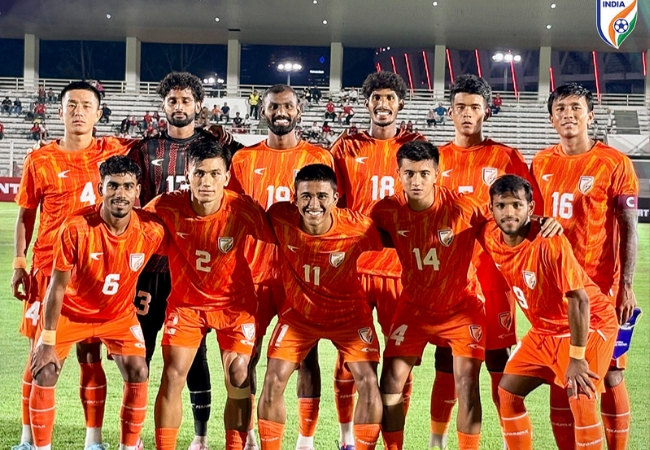
New Delhi: The India U-23 men's national team was held to a 1-1 draw by Indonesia in their second friendly in Jakarta on Monday.
After a goalless first half, Korou Singh Thingujam (47') plut the Blue Colts in the lead, before Dony Tri Pamungkas (71') equalised for the hosts.
India had defeated the hosts 2-1 in the first match, following which, head coach Naushad Moosa made six changes to his starting lineup.
With an intent to avenge their defeat in the previous game, Indonesia pressed forward from the get go, but a spell of adept defending from the Blue Colts saw the match remain goalless for most parts of the first half.
Muhammad Rayhan Hannan's early shot was palmed away by India goalkeeper Dipesh Chauhan in the 10th minute.
Kakang Rudianto, from a set-piece, managed to leap higher than the rest and nodded a free-header goalwards. However, a flying Chauhan managed to put a hand out and tip it over the bar.
India waited for their opportune moments to launch the counter-attacks, and managed a good opportunity with Ricky Meetei flashing a venomous long-range shot perilously close to the Indonesia goal.
Minutes before the half-time whistle, Vibin Mohanan had a crack from the edge of the box, but it was saved by the Indonesia goalkeeper.
India started off much brighter after the change of ends, and took the lead within two minutes of the restart, when substitute Harsh Palande's low cross from the left found Korou unmarked inside the Indonesia box, and the latter tapped it in to put his side in the lead.
A minute later, Muhammed Suhail, who also came on as a substitute, weaved his way into the Indonesia box and had a crack, but it was punched away.
Indonesia had a sniff at getting an equaliser when Sumit Sharma committed a foul outside the India box. Dony Tri Pamungkas stepped up and sent the free-kick into the back of the net, to draw the hosts level.
Moosa made another slew of changes towards the end, which finally saw Priyansh Dubey come on to replace Chauhan in goal. The substitute goalkeeper also pulled off a stunning save in the closing minutes off a Rifqi Ray Farandi long-range effort.
Let the Truth be known. If you read VB and like VB, please be a VB Supporter and Help us deliver the Truth to one and all.
CJI's advice to aspirant: Join the bar, become a lawyer, don't hanker for judicial services post
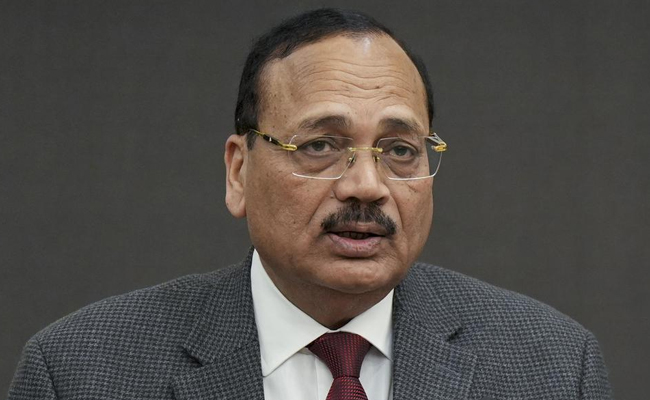
New Delhi (PTI): She came to the Supreme Court seeking a re-evaluation of her paper in the examination for joining judicial services as a magistrate. What she got instead was a rejection — and a candid confession by the Chief Justice that he too had wanted to join the judicial services in his youth but was advised by a senior judge to become a lawyer instead.
A bench comprising Chief Justice Surya Kant and Justice Joymalya Bagchi on Friday dismissed a plea filed by Prerna Gupta, the judicial services aspirant.
As Gupta pressed her case, the CJI intervened and said, "Let me share my personal story and I hope you will go happily as we cannot allow your petition."
He recounted his time as a final-year law student in 1984 when he wanted to become a judicial officer. As per requirement, he cleared the written test and was set to appear for an interview.
Judicial services is one of the two routes to become a judge after initially joining as a magistrate in lower court and thereafter rising through the ranks to become judge in a high court and possibly the Supreme Court.
The other route is to join the Bar, which means becoming a lawyer, and after building a reputation be picked from the Bar to become a judge at a senior level.
By the time the CJI's exam results came out, he had started practising at the Punjab and Haryana High Court when he was called for the interview.
The senior-most judge on the interview panel happened to be a judge before whom he had recently argued two significant matters.
"One of the matters was Sunita Rani vs Baldev Raj, where he had allowed my appeal in a matrimonial case and set aside the decree of divorce granted by the District Judge on the ground of schizophrenia," he noted.
Before the interview could take place, the judge called the young Surya Kant to his chamber and asked, 'Do you want to become a judicial officer?'
"I said 'yes.' He immediately said, 'Get out from (my) the chamber.'"
The courtroom fell silent as the CJI Justice described his initial heartbreak.
“I came out trembling. All my dreams were shattered. I thought he had snubbed me and that my career was over,” the CJI said.
However, the story took another turn the following day and the judge summoned him again, this time offering a piece of advice that would change the trajectory of his life.
“He said, ‘If you want to become (a judge), you are welcome. But my advice is, don’t become a judicial officer. The Bar is waiting for you,’” Justice Surya Kant recalled.
The CJI said he decided to skip his interview and didn't even tell his parents at first, fearing their disappointment, and instead chose to dedicate himself to his practice as an advocate.
“Now tell me did I make a bad right or bad decision,” the CJI asked and the litigant lawyer left the court with a smile on her face despite her case being dismissed.
Encouraging the petitioner to look toward the future rather than dwelling on the re-evaluation of a single paper, Justice Surya Kant said, "The Bar has much to offer."