India women eye ODI series clean sweep against South Africa
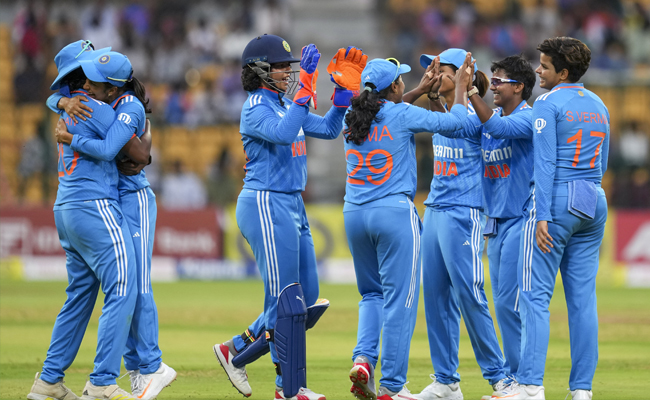
Bengaluru (PTI): India were able to tame varied challenges thrown at them by South Africa so far, and they will be eager to take the series to its fitting conclusion of a 3-0 margin during the third and final ODI here on Sunday.
Currently, the margin stands 2-0 in favour of India but that insuperable position has not come without its own trials by fire.
In the first match, the Indian batters had to come back from a perilous 99 for five before making a 260-plus total. The home side bowlers defended the target well too.
But in the second game, it was the turn of the Indian bowlers to ace the test that they were subjected to by centurions Laura Wolvaardt and Marizanne Kapp on a placid pitch.
Despite the heavy pounding, they kept their nerves till the last ball of the match to come out on the right side of the result.
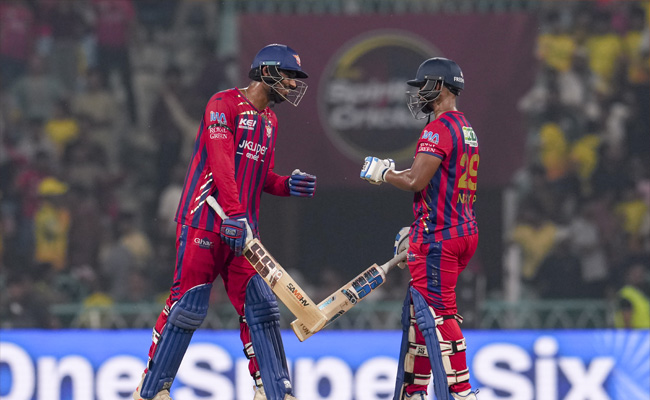
However, the common thread across these two matches was the exceptional batting of Smriti Mandhana, who made 117 and 136 in them.
Mandhana thus became the first India woman batter to score two successive hundreds in ODIs, and she also equalled Mithali Raj’s record of seven one-day centuries.
So, the Indian vice-captain will be eager to sign off from the ODI series on a high before entering the one-off Test at Chennai from June 28.
The timely return to form of skipper Harmanpreet Kaur, who made an 88-ball 103 in the second match, too might have pleased the management no end.
However, the think tank will be eager to see a substantial outing from opener Shafali Verma, whose run of low scores has now been extended to eight matches.
With the series already in kitty, India might also give an outing to fringe players such as bowlers Shreyanka Patil, Saika Ishaque and top-order batter Priya Punia.
On the other hand, South Africa will be keen to win the match and gain at least two ICC Women’s ODI Championship points, critical in their qualification for next year’s 50-over World Cup.
Of course, a win will go a long way in instilling a dose of confidence ahead of the Test and the ensuing T20I series.
But for that, the visitors will need a concerted effort from their batters and bowlers.
Teams (from): India: Harmanpreet Kaur (C), Smriti Mandhana (VC), Shafali Verma, Deepti Sharma, Jemimah Rodrigues, Richa Ghosh (WK), Uma Chetry (WK), Dayalan Hemalatha, Radha Yadav, Asha Sobhana, Shreyanka Patil, Saika Ishaque, Pooja Vastrakar, Renuka Singh Thakur, Arundhati Reddy, Priya Punia.
South Africa: Laura Wolvaardt (c), Anneke Bosch, Tazmin Brits, Nadine de Klerk, Annerie Dercksen, Mieke de Ridder, Sinalo Jafta, Marizanne Kapp, Ayabonga Khaka, Masabata Klaas, Sune Luus, Eliz-Mari Marz, Nonkululeko Mlaba, Tumi Sekhukune, Nondumiso Shangase, Delmi Tucker.
Match starts at 1.30 PM.
Let the Truth be known. If you read VB and like VB, please be a VB Supporter and Help us deliver the Truth to one and all.
NEET student hangs self in Rajasthan's Sikar

Jaipur (PTI): A student preparing for the NEET examination allegedly committed suicide by hanging himself in a rented room in Rajasthan's Sikar on Friday, police said.
According to the police, the student allegedly hanged himself from a ceiling fan using his sister's scarf while one sister was attending coaching classes and the other was in the bathroom.
He had appeared in the NEET UG exam 2026, which was cancelled due to paper leak, they said.
Udyog Nagar SHO Rajesh Kumar said that the deceased, identified as Pradeep Meghwal, was a resident of Kanika ki Dhani village in Jhunjhunu's Gudha Gaudji area.
He had been living in a rented room in Sikar's Jaldhari Nagar area with his two sisters while preparing for NEET over the last three years.
His elder sister later found him hanging and informed the landlord and police after bringing him down, officials said.
The SHO said the body was kept at SK Hospital mortuary, and a postmortem had not been conducted.
The student's father, Rajesh Kumar Meghwal, told police that Pradeep's NEET examination had gone well and the family was expecting him to score around 650 marks.
Former Rajasthan deputy chief minister Sachin Pilot expressed grief over the incident and linked it to anxiety among students after reports of irregularities and paper leaks in NEET 2026.
Pilot said repeated paper leak incidents and cancellation of examinations were affecting students' mental health and demanded a time-bound investigation and strict action against those responsible.