Indian chess players' valuables stolen after multiple room break-ins in Spain
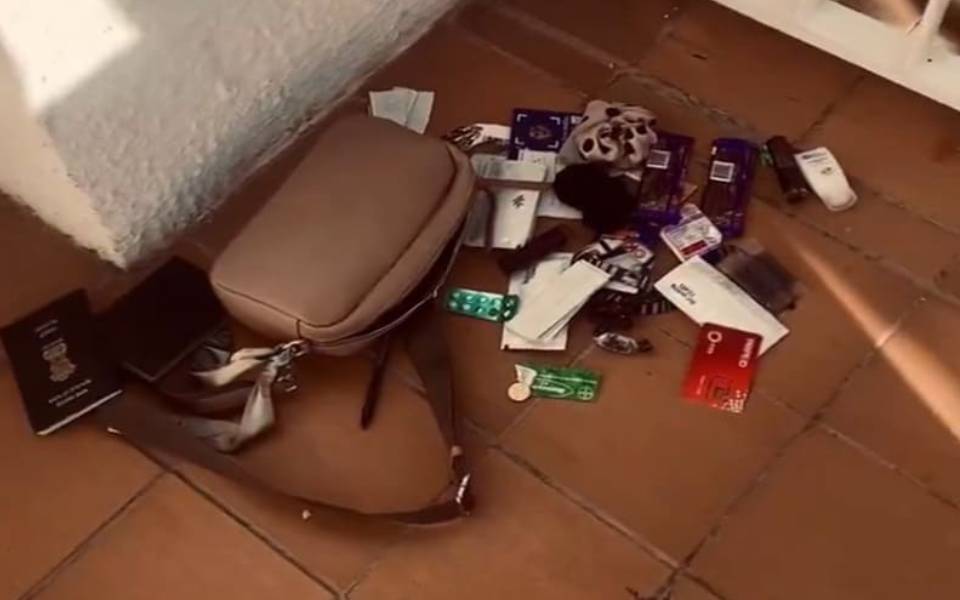
New Delhi, Dec 26: Some of the frontline Indian chess players, including GM Sankalp Gupta, went through a torrid time while participating in the recent Sunway International chess tournament at Sitges, Spain, as they lost several valuables after break-ins at their apartments.
The train of unsavoury incidents started on December 19 with a break-in at the Apollo apartment, a property provided by the organisers for participants, where International Master Dushyant Sharma and Sankalp were sharing the accommodation.
This break-in happened when the duo was out of their room and Dushyant lost his passport, laptop and cash from the room.
Though Sankalp was robbed of his laptop and air-pods, his passport was safe.
But that was not the end of miseries for them as the translator interpreted wrongly that the players left the doors and windows open, hinting that the burglary was because of their negligence.
"We rectified this mistake in the report (to the organisers) later", said Dushyant.
Dushyant, in fact, had to leave the tournament to get the document to come back home.
Interestingly, Sankalp was able to track his air-pods online but the player complained that he did not get any support to retrieve them from Barcelona.
Three days later, Sunway San Jorge Apartment was targeted by the burglars after the last round.
Women's IM Mounika Akshaya and WGM Srija Seshadri were away for an evening walk and IM CRG Krishna was sleeping inside the room while burglars entered the apartment.
Their valuables like laptop and mobile phones were taken away, but fortunately, Krishna was not harmed.
On December 23, Sunway Arizona Apartments had a break-in when WIM Arpita Mukherjee and WFM Vishwa Shah were sleeping in the bedroom.
Between 2:30 am and 6 am, their laptops, mobile phones and cash were stolen from the bedside tables. Luckily, the players were left unharmed by the perpetrators.
"The organisers claim this happened for the first time in 10 years but while reading reviews on Google, I found out that there have been multiple such break-ins recently", wrote Sankalp to the organisers.
My depressing robbery story at Sunway Sitges Chess Festival 2023, Spain. I request the authorities to kindly take action in this since I am not the only player who suffered from this event. pic.twitter.com/FzHzRR289p
— Mounika Akshaya (@MounikaAkshaya) December 23, 2023
Robbery at Sunway Arizona apartments on 23.12.23 midnight. Laptop,mobile,bag & money stolen. Similar incidents with Indian chess players in other apartments. Requesting @SunwayChessOpen @aicfchess @ianuragthakur @IndiainSpain for prompt action. Massive security breach!
— Arpita Mukherjee (@arpita_chess) December 23, 2023
Burglary in #SPAIN #Sunway APOLO APARTMENT on 19 Dec in my room. My Laptop, Passport, cash etc & my roommate’s laptop,airpods stolen. Later on,similar thefts happened with other Indian chess players too. Requesting @SunwayChessOpen @IndiainSpain @ianuragthakur @DrSJaishankar Help pic.twitter.com/daKdjusy45
— Dushyant Sharma (@chess_dushyant) December 24, 2023
Official statement regarding isolated incidents during the @chessable Sunway Sitges International Chess Festival 2023. pic.twitter.com/qdYNpr8pU0
— Sunway Chess Festival (@SunwayChessOpen) December 24, 2023
Let the Truth be known. If you read VB and like VB, please be a VB Supporter and Help us deliver the Truth to one and all.
Noida International Airport appoints Nitu Samra as interim CEO
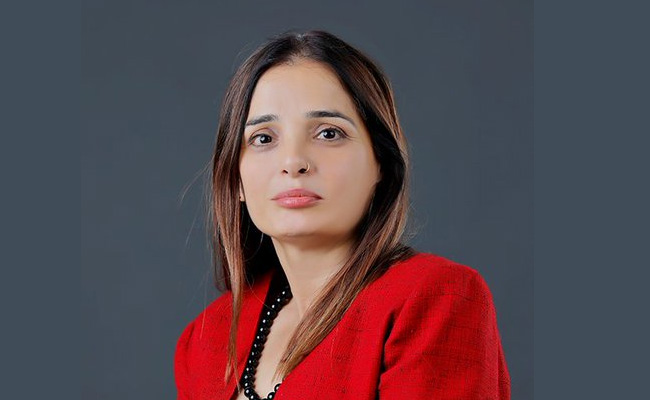
New Delhi (PTI): Noida International Airport on Friday announced the appointment of its Chief Financial Officer Nitu Samra as the interim Chief Executive Officer after authorities denied permission for foreign national Christoph Schnellmann to be at the helm.
"This change follows directions issued by the Bureau of Civil Aviation Security (BCAS) that the Chief Executive Officer of an airport in India is required to be an Indian national," NIA said in a statement.
Samra will replace Schnellmann, a Swiss national who has led Noida International Airport (NIA) as the CEO since August 2020.
The regulatory issue related to the requirement of having an Indian national as CEO has been delaying the start of commercial operations of the airport, which was inaugurated by Prime Minister Narendra Modi on March 28.
Schnellmann will join the airport's Board of Directors as Executive Vice Chairman. In this role, he will continue to support the project and its transition to operations, the statement said.
With immediate effect, NIA said Samra has been appointed as the CEO on an interim basis until the Board of Directors can conclude a formal selection process.
Samra has been serving as the CFO since October 2021 and was closely involved in the airport’s development journey, overseeing financial stewardship, governance, and strategic planning during a key phase of the project, the statement added.
NIA will be operated by Yamuna International Airport Pvt Ltd (YIAPL), a subsidiary of Zurich Airport International AG, under a public-private partnership.
Originally scheduled to commence passenger services in September 2024, NIA is being developed in four phases, along with a dedicated cargo terminal. It received an aerodrome license from the aviation regulator Directorate General of Civil Aviation (DGCA) in March.
YIAPL Chairman Daniel Bircher said that since the inauguration of the airport by the Prime Minister, the goal was to enable the start of operations as early as possible.
"This management change brings the airport into compliance with Bureau of Civil Aviation Security requirements while maintaining continuity in the airport’s leadership team. The newly structured team will support a smooth transition into operations, guided by clear and transparent governance and a strong corporate culture," he said.
On March 28, Civil Aviation Minister K Rammohan Naidu said commercial flight operations from the airport would start in the next 45 to 60 days.
Among the largest greenfield airport projects in the country, NIA will initially have a capacity to handle 12 million passengers per annum.
Once fully developed, the airport will have a total passenger handling capacity of 70 million.
The first phase of NIA has been developed at an investment of around Rs 11,200 crore. 'DXN' is the code for the airport.
The airport features a 3,900-metre runway capable of handling wide-body aircraft, along with modern navigation systems, including Instrument Landing System (ILS) and advanced airfield lighting.
The peak handling capacity in the first phase will be 30 flights per hour.
In the first phase, there will be 28 aircraft stands, and the projected cargo capacity is around 2.5 lakh tonnes.
Terminal 1 of the airport is spread across 1,37,985 square metres with 48 check-in counters. Over 40 acres of land have been earmarked for developing MRO (Maintenance, Repair and Overhaul) facilities at the airport.