Indian-origin Pereira wins Singapore's first gold in Asian Games athletics in 49 years

Singapore (PTI): Singapore is celebrating its first athletic gold win in 49 years at the Asian Games with its Indian-origin sprinter Shanti Pereira winning the women's 200m final in Hangzhou, China.
Pereira clocked 23.03 seconds to finish the race on Monday at the Hangzhou Olympic Sports Centre Stadium. This is the first athletics gold medal for the city-state since 1974, when sprinter Chee Swee Lee had won the women's 400m race.
China's Li Yuting took the silver with 23.28 seconds and Bahrain's Edidiong Ofonime Odiong came third at 23.48 seconds in the Monday race. Odiong's compatriot, Salwa Eid Naser, was disqualified for a false start.
Draped in a Singapore flag, the 27-year-old crouched down on the track and covered her face with her hands, before raising her arms in victory, reported Channel News Asia.
On Saturday, Pereira ended her country's nearly 50-year wait for a track and field medal at the Asian Games, after she clinched a silver in the women's 100m.
Pereira, whose 200m personal best stands at 22.57 seconds, then topped all three heats for the event the next day, with a time of 23.14 seconds.
This was her first Asian Games 200m final. At the last edition in 2018, she did not advance past the semi-finals.
The Singaporean has overcome much to get to where she is today, said the Channel report.
She first burst into the nation's consciousness at the 2015 Southeast Asian Games when she took gold in the 200m, clocked a personal best, and set a new national record. Her win also ended a 42-year gold medal drought for Singapore in a SEA Games sprint event.
In August, Pereira became the first Singaporean to make a World Championships semi-finals after a stellar showing in the 200m. She also met the qualifying mark for the event at the 2024 Olympics in Paris.
Let the Truth be known. If you read VB and like VB, please be a VB Supporter and Help us deliver the Truth to one and all.
Allahabad HC orders probe into 'reinstatement' of teacher in UP's Barabanki
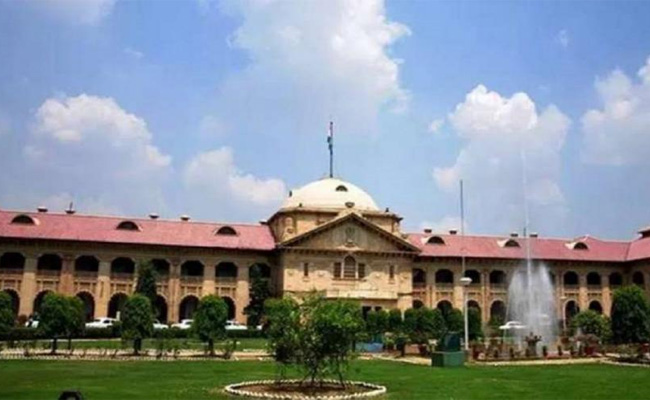
Lucknow (PTI): The Lucknow Bench of the Allahabad High Court on Friday ordered a probe by the special task force (STF) into alleged irregularities in the rejoining of a teacher at City Intermediate College in Barabanki, observing that the reinstatement appeared to be prima facie illegal.
The court also directed the recovery of the salary paid to the teacher during the disputed period.
A bench of Justice Rajeev Singh passed the order on a petition filed by the college management committee. The court expressed doubts over the roles of the District Inspector of Schools (DIOS), Barabanki, the college principal and the teacher concerned and hence, directed a detailed inquiry into the matter.
Taking note of alleged manipulation of records and misleading submissions, the court ordered the immediate transfer of the Barabanki DIOS to ensure a fair probe. It also directed the initiation of disciplinary proceedings against the then joint director of education of the Ayodhya division.
In its order, the court found that the teacher, Abhay Kumar, was initially appointed as an assistant teacher in 2018 but joined an Eklavya Model Residential School in Chhattisgarh as a lecturer in June 2024 without obtaining permission from the management. His subsequent request to retain the lien was rejected.
Despite this, he was allowed to rejoin the Barabanki College in September 2025 on the directions of the joint director of education and the DIOS, and was even paid the salary for October 2025. The court termed the rejoining "wholly illegal" and lacking any legal basis.
The bench also expressed concern over lapses in communication within the education department and directed the Uttar Pradesh chief secretary to ensure that official orders are communicated through email and WhatsApp as well, to prevent disputes.
The matter is next listed for hearing on May 28 when a compliance report is sought.