Nicholas Pooran, KL Rahul take Lucknow Super Giants to 214/6 against Mumbai Indians in IPL clash
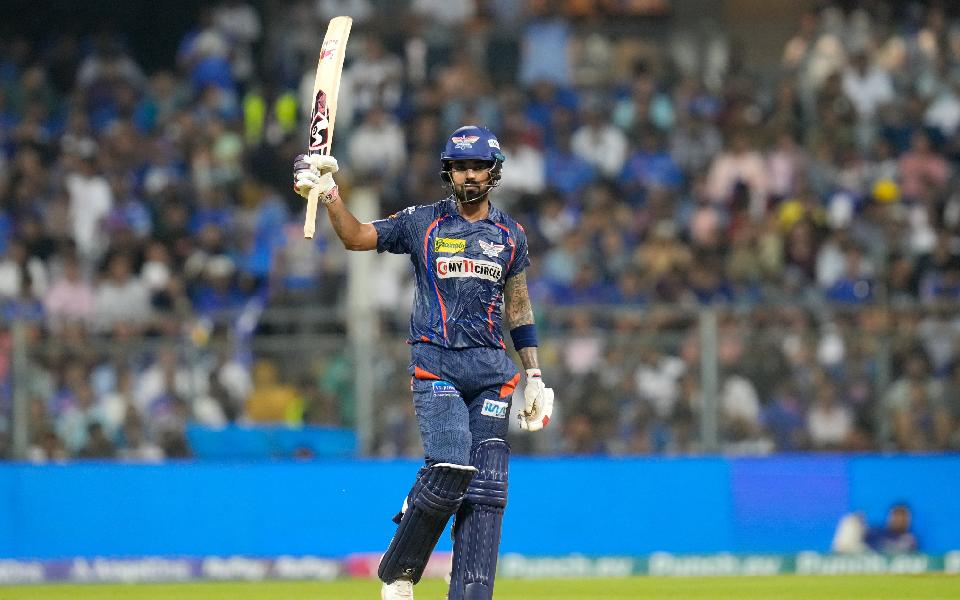
Mumbai, May 17: Nicholas Pooran’s whirlwind 75 covered for skipper KL Rahul’s sedate 55, providing a much-needed impetus to Lucknow Super Giants' impressive total of 214 for 6 against Mumbai Indians in an IPL encounter here on Friday.
Struggling for momentum on what appeared to be a two-paced wicket at the start, LSG could only manage 69 for 3 at the halfway stage but Pooran’s stunning knock made up for another shoddy Powerplay effort by Rahul, who is unable to change his game in the Powerplay.
On their part, Mumbai Indians’ bowling woes persisted with skipper Hardik Pandya using as many as eight different bowling options but none, barring seasoned Piyush Chawla (3/29) and novice Naman Dhir (2/13) could impose themselves.
With Trinidad & Tobago PM Dr Keith Rowley in attendance here at the Wankhede Stadium, Pooran took it upon himself to entertain his country's premier by smashing the MI bowlers to all parts of the ground.
His lofted hits to clear the covers as well as powerful pulls on the leg side were equally compelling until Pooran found Suryakumar Yadav grabbing the ball out of thin air at long on in the 17th over.
By then, the free-flowing West Indian had already notched up his highest score of the season, hammering eight sixes and five fours for 75 off a mere 29 balls.
Pooran’s dismissal followed Rahul’s exit after their 44-ball stand for 109 runs for the fourth wicket, which gave LSG the platform to push for a total exceeding 200.
Pooran’s onslaught also debunked the slowness of the pitch — if there was any as made evident by LSG’s top order — and Rahul’s solidity in tough phases ensured that the visitors did not stumble at any stage in their innings.
The LSG skipper did well to not rush into imposing himself on the game despite his side not able to find their feet for a large part of their innings.
Rahul forged two crucial partnerships, including 48 runs for second wicket with Marcus Stoinis, and put on 55 off 41 balls with three fours and as many sixes.
Ayush Badoni also chipped in with a 10-ball 22, collecting 19 runs off Romario Shepherd in the last over.
LSG were off to a rocky start with Devdutt Padikkal dismissed for a first-ball duck. Nuwan Thushara (3/28) swung the ball back into the left-hander who was pinned in front of the wickets and burned a review.
But there was no such mistake committed by Stoinis, trapped leg-before at the end of the powerplay by Chawla after the Australian stroked his way to 28 off 22 balls with five fours.
Stoinis also used the DRS to perfection when the on-field umpire obliged a passionate appeal for leg-before by Arjun Tendulkar, with the replays confirming that the ball would have passed over the stumps. Tendulkar however was clobbered mercilessly by Pooran and after being hit for back-to-back sixes, the young left-arm seamer was forced to leave the field as he suddenly started suffering from cramps.
Let the Truth be known. If you read VB and like VB, please be a VB Supporter and Help us deliver the Truth to one and all.
Madhu Kishwar booked over misleading content on social media

Chandigarh (PTI): Madhu Kishwar has been booked following a complaint by a Chandigarh resident over the alleged circulation of forged and misleading content on social media.
An FIR has been lodged against Kishwar and some other social media users under relevant sections, including 196 (criminalises acts that promote enmity, hatred, or ill-will between groups based on religion, race, language), 336 (1) (forgery) and 356 (criminal defamation) of Bharatiya Nyaya Sanhita and the IT Act at Police Station Sector-26 here.
According to an official statement issued by the Chandigarh police on Monday, a city-based complainant on April 19 alleged that some forged and misleading social media posts and video clips with obscene text and content were being circulated by various social media users, misidentifying the person in the video.
Further investigation into the matter is underway.
As per the complainant, it is a deliberate act of creating a false electronic record using obscene words and phrases, having knowledge and sufficient reason to believe that the posts are misleading and false, with the intent to cause damage or injury.
The video, which circulated with the intent to cause harm to the reputation of a constitutional authority and to disturb public peace and tranquility, should be investigated, and appropriate action should be taken, according to the complainant.
As per the complainant, the person seen in the video is a travel vlogger whose wife regularly posts updates about their activities on social media. The original video was shared from her social media account.
"As per the statement of the woman, she disclosed that the person in the video shared from her account is her husband. Statements of her husband and another lady in the video have also been recorded during preliminary investigation," said police in the statement.
Meanwhile, Kishwar, in a social media post, said a team of Chandigarh police had visited her late Monday night to serve her notice regarding the FIR registered against her.
"Since the law forbids the police to visit or arrest women after dark and before sunrise, I spoke on phone to the leader of the delegation. She told me that their team has come to serve notice regarding an FIR registered against me in Chandigarh. I insisted that they go by the law and come in the morning," she wrote on X.