IPL Auction 2018: Uncapped Chakravarthy, Unadkat rake in big money; Yuvraj unsold

Jaipur, Dec 18: Unheralded architect-turned-cricketer Varun Chakravarthy Tuesday fetched a sensational bid of Rs 8.4 crore, more than 40 times his base price, but veteran Yuvraj Singh went unsold in an IPL players' auction that had an unmissable Caribbean flavour to it.
Chakravarthy, with a base price of Rs 20 lakh, went to Kings XI Punjab after a bidding war that also involved Delhi Capitals, Chennai Super Kings and Rajasthan Royals.
KXIP also spent big on England all-rounder Sam Curran, buying him for Rs 7.2 crore.
Medium pacer Jaydev Unadkat became a millionaire once again with a Rs 8.4 crore bid from Rajasthan Royals but the spotlight was firmly on Chakravarthy, the 27-year-old mystery spinner from Tamil Nadu who gave up a career as freelance architect to pursue cricket.
"We always knew that we will break the wall for him," said KXIP CEO Satish Menon.
Chakravarthy has risen to prominence owing to a strong showing in the Tamil Nadu Premier League. He has been widely credited for Madurai Panthers maiden TNPL title win this year.
Unadkat, on the other hand, is back in the RR fold after being released at the end of the 2018 season. He had been bought for Rs 11.5 crore by RR earlier this year. On Tuesday, the Royals lapped him up him after a bidding battle with KXI, CSK and Delhi Capitals.
Capped Indian players were in demand and so were the West Indians before a 15-minute tea break at the auction.
However, there were no takers for 37-year-old Yuvraj, who was a sought after player in the IPL for a long time and during his prime, attracted a Rs 16 crore bid.
He entered into the auction with a base price of Rs one crore and could still find a buyer later in the auction if he is among the unsold players brought back into the pool by the franchises.
Yuvraj going unsold was not particularly surprising as he endured a lean run in the 2018 edition after KXIP bought him at a base price of Rs two crore before releasing him in November.
Besides the capped Indians, the West Indians too were in demand with Shimron Hetmyer, Carlos Brathwaite and Nicholas Pooran bagging hefty deals in the first round of bidding.
Spinner Axar Patel (Rs five crore), pacer Mohit Sharma (Rs five crore) and Mohammad Shami (Rs 4.8 crore) were the other names to fetch big bids.
Patel, who made his name at KXIP, was bought by Delhi Capitals after a bidding battle with the Punjab franchise.
Shami, who turned up for Delhi last season, was sold to KXIP while Mohit went back to Chennai Super Kings after a stint with KXIP.
Royal Challengers Bangalore paid Rs 4.2 crore for Hetmyer. Kolkata Knight Riders, Rajasthan Royals and Delhi Capitals also bid for the stylish West Indian batsman, who had a base price of Rs 50 lakh.
His teammate Brathwaite, the star of 2016 World T20, was sold to KKR for Rs five crore after a bidding war between the Dinesh Karthik-led side and Kings XI Punjab.
The all-rounder had entered the auction with a base price of Rs 75.
Another West Indian to get an attractive deal was wicketkeeper Nicholas Pooran. The 23-year-old, who came with a base price of Rs 75 lakh, went for Rs 4.20 crore to KXIP. He is a T20 find and is yet to play Test cricket.
Indian Test player Hanuma Vihari was sold to Delhi Capitals for Rs two crore, four times his base price.
Pacer Ishant Sharma, who had a base price of Rs 75 lakh, went to Delhi Capitals for Rs 1.1 crore while wicketkeeper Wriddhiman Saha was bought back by Sunrisers Hyderabad for Rs 1.2 crore.
The high-profile unsold players were Cheteshwar Pujara, Brendon McCullum and Chris Woakes.
Let the Truth be known. If you read VB and like VB, please be a VB Supporter and Help us deliver the Truth to one and all.
'Godman' Kharat held in 8th sexual exploitation case; court denies police remand, sends him to jail
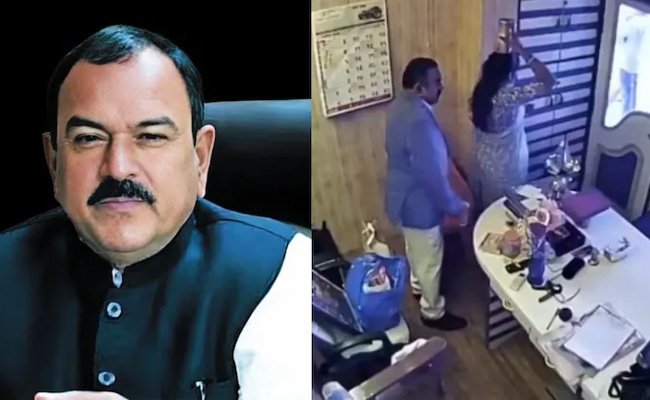
Nashik (PTI): Police took custody of self-proclaimed godman-cum-astrologer Ashok Kharat in an eighth case related to sexual exploitation of women and produced him before a Nashik district court which sent him to jail till May 12 after rejecting the plea for his police remand on Thursday.
On April 29, the Special Investigation Team (SIT) of the Nashik police in north Maharashtra filed a request application in the court demanding Kharat's custody in the eighth case.
After the court granted them the necessary permission, the SIT took custody of Kharat, who was in jail in connection with the seventh case of sexual exploitation registered against him.
The 'godman', named in a dozen FIRs related to rape and financial fraud, was produced before Chief Judicial Magistrate B N Ichpurani in the eighth case through video conferencing due to security reasons.
The eighth case related to Kharat allegedly sexually exploiting a woman who had approached him in search of solutions to her family problems, according to police.
During the hearing, the prosecution demanded police custody of the accused in the latest case.
However, the defence strongly opposed the demand and argued that the SIT was giving same reasons for police custody every time and there was no strong reason for accepting their plea.
The court accepted the argument put forth by the defence and remanded Kharat to judicial custody till May 12 in the eighth case.
The SIT will produce Kharat in the court on Friday again and seek his police custody in the ninth case. As the self-styled godman has been granted judicial custody in the eighth case, he will be sent to Nashik Road Central Jail and the SIT will take his custody from there.
Meanwhile, Kharat's judicial custody in the fourth case ended on Thursday. On April 18, the accused was remanded to judicial custody till April 30 in the fourth case of sexual exploitation of women.
In a related development, the SIT conducted a search at Kharat's office in the 'Canada Corner' area of Nashik city on Wednesday. A 'panchnama' (record of search and seizure proceedings) was conducted and the office was locked and sealed again.
Kharat, a well-heeled man with political connections, was arrested for the first time on March 18 after a woman alleged he had repeatedly raped her for three years.
He is accused of sexually exploiting several women by claiming to have divine powers and knowledge of black magic, and also committing large-scale financial fraud.
The SIT is conducting a probe into 12 cases of sexual exploitation and financial fraud registered against the astrologer in Nashik and Ahilyanagar districts.