Is India’s Test fortress crumbling at home?
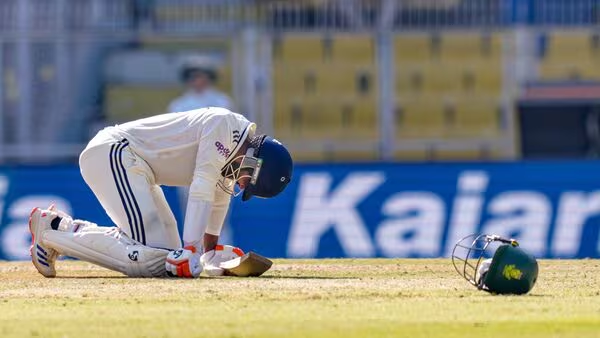
From 2012 to late 2024, the Indian Men’s Test cricket team did not lose a single home series. Between February 2013 and September 2024, India played 53 Tests at home, winning 42 and losing only four. Beating India on home soil was once considered nearly impossible, the team was compared to the great Australian side led by Ricky Ponting.
But things have changed. In the last seven home Tests, India has lost five. The only two wins came against a West Indies side that is far from its former glory. The defeat to New Zealand in 2024 was dismissed as a one-off, but the recent loss to South Africa has set alarm bells ringing. What was once an unbreakable fortress now seems to be cracking.
Let’s look at some of the reasons behind this sudden decline in India’s home dominance.
1. Frequent Changes and Chopping
Since the decline of Cheteshwar Pujara, India has tried as many as seven batters at the crucial No. 3 spot. The constant tinkering with the batting order has hurt consistency. For instance, Washington Sundar, who batted at No. 3 in the first Test and was India’s best performer, was pushed down to No. 8 in the next match. It almost appears that the head coach is applying T20 logic to Test cricket, an approach that simply doesn’t work in the longest format.
2. Priority to IPL Over Domestic Cricket
On one hand, senior players are told to prove themselves in domestic cricket to stay in contention for selection. On the other, players are fast-tracked into the national side purely on the basis of IPL performances. Domestic stalwarts like Abhimanyu Easwaran and Sarfaraz Khan continue to pile up runs but remain mere travelling reserves. Meanwhile, youngsters like Sai Sudharsan, a fine talent but with limited first-class experience have already been handed Test caps.
3. Lack of Specialists
The current Indian team seems obsessed with picking all-rounders. In the recent Test series against South Africa, India fielded three all-rounders in both matches. While they add balance, Test cricket demands specialists batters who can occupy the crease and grind bowlers down, and bowlers who can bowl tirelessly in long spells, setting up dismissals with patience. Batters who can bowl or Bowlers who can bat are definitely good options in test cricket rather than proper all-rounders.
4. Poor Batting Technique
Indian batters, once known for their mastery against spin, are now struggling on home pitches. Visiting spinners like Mitchell Santner and Simon Harmer have looked far more threatening than they actually are largely because of India’s flawed approach. Gone are the days when Dravid, Laxman, or Pujara used their feet beautifully and punished spinners for even minor errors. Today’s batters rarely use their feet and seem hesitant to attack. The problem isn’t in the pitch it’s in their minds.
5. Pitch Demands Gone Wrong
India’s past home success didn’t come from rank turners or minefields. The batters applied themselves, spinners used flight and guile, and pacers extracted reverse swing. But in recent years, the team management has demanded pitches that spin sharply from Day 1, a move that has backfired. Indian batters have looked lost even against visiting spinners, while foreign batters have adapted far better against India’s own spin attack.
6. Shallow Bench Strength
India has always been blessed with world-class spinners from Kumble to Harbhajan to Ashwin and Jadeja. But today, the bench looks thin. Age is catching up with Jadeja, and Kuldeep Yadav seems the only specialist spinner in the squad. Axar Patel and Washington Sundar are talented, but are they being developed as specialist spinners or bits-and-pieces all-rounders?
The same goes for the pace department. The earlier dominance owed much to Ishant Sharma, Shami, Bumrah, and Umesh Yadav. Now, apart from Bumrah and Siraj, there are few tested options. Who are the back-ups to these pacers? With batters too, India seems short of pure red-ball players ready to step up when needed.
7. Team in Transition
The senior players who built India’s home dominance are either retired or out of contetion. This is a young team, and it will take time for them to adapt to the rhythm of Test cricket. But for that to happen, they need consistent backing from the selectors and the management. Frequent chopping, ignoring domestic performers, and favouritism over merit will only hurt the team further.
India’s recent struggles at home are not just about individual failures, they reveal deeper structural and systemic issues. It’s time the players take responsibility, the management restores stability, and the selectors start valuing domestic performances again.
India has weathered bigger crises before and always bounced back stronger. Fans across the country still believe this young team will rediscover its winning rhythm. With the next home Test series scheduled for August 2026, the coming months will tell us what lessons the management has truly learned — and whether the fortress can be rebuilt.
Let the Truth be known. If you read VB and like VB, please be a VB Supporter and Help us deliver the Truth to one and all.
Trump pauses Project Freedom, claims great progress for final agreement with Iran
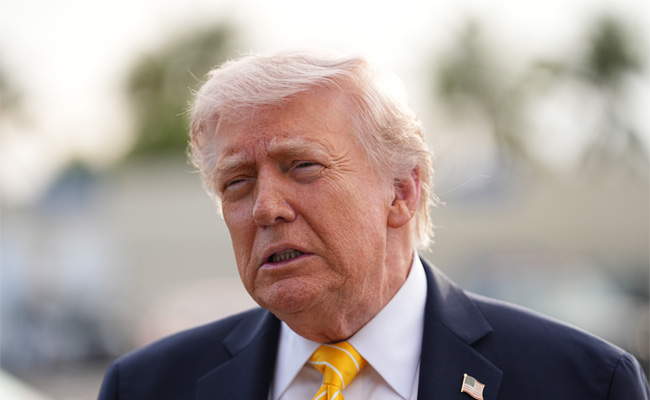
Washington (PTI): President Donald Trump has suspended “Project Freedom,” to escort ships through the Strait of Hormuz, claiming progress in negotiations with Iran toward an agreement to end the war.
In a post on Truth Social on Tuesday, Trump said, “Great progress has been made toward a complete and final agreement with representatives of Iran.”
“Based on the request of Pakistan and other Countries, the tremendous Military Success that we have had during the Campaign against the Country of Iran and, additionally, the fact that Great Progress has been made toward a Complete and Final Agreement with Representatives of Iran, we have mutually agreed that, while the Blockade will remain in full force and effect, Project Freedom (The Movement of Ships through the Strait of Hormuz) will be paused for a short period of time to see whether or not the Agreement can be finalized and signed," Trump said.
Project Freedom was launched on Monday to escort ships, stranded due to the closure of the Strait of Hormuz, out to safety. Trump had announced the operation on Sunday and the US Central Command began implementing it the next day.
However, the Project led to friction in the vicinity of the narrow seaway, a key route for transporting one-fifth of the global oil supplies, with the UAE claiming that its ships were attacked by Iran. The US also claimed to have destroyed several Iranian small boats.
Trump’s statement on Truth Social came hours after US Secretary of State Marco Rubio announced that Operation Epic Fury, launched on February 28, had concluded as its objectives have been achieved.
"Operation Epic Fury is concluded. We achieved the objectives of that operation. We're not cheering for an additional situation to occur. We would prefer the path of peace. What @POTUS would prefer is a deal... that is, so far, not the route that Iran has chosen," Rubio told a press conference at the White House on Tuesday.
On Project Freedom, Rubio said the goal was to rescue almost 23,000 civilians from 87 different countries who were trapped inside the Persian Gulf and left for dead by the Iranian regime.
"This is not an offensive operation. This is a defensive operation, and what that means is very simple: there’s no shooting unless we're shot at first. We’re not attacking them, but if they're attacking us or they’re attacking a ship, you need to respond to that," Rubio said.