Ishan Kishan returns, Ruturaj Gaikwad named captain of India A team for Australia tour
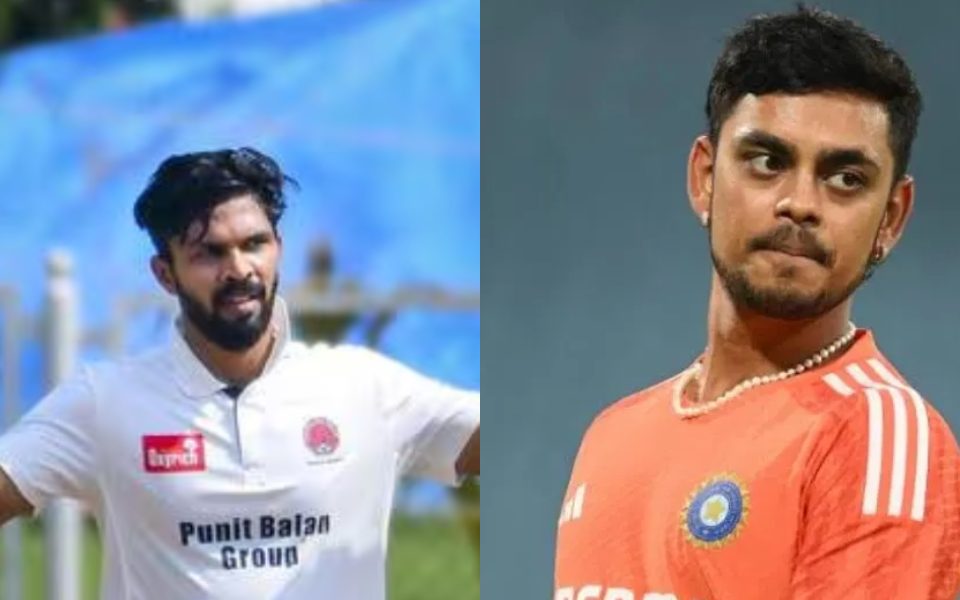
New Delhi, Oct 21: Ishan Kishan returned to the national set-up as he was on Monday named in a 15-member India A squad, to be led by Ruturaj Gaikwad, for the upcoming tour of Australia.
Fresh from his fine hundred against Mumbai in the Ranji Trophy, Maharashtra's Gaikwad was named captain of the India A team.
India A will play two first-class matches against Australia A in Mackay and Melbourne and then take part in a three-day intra-squad game against the senior India team in Perth.
Apart from Gaikwad, the squad also includes other opening batters like Abhimanyu Easwaran and Sai Sudharsan, as India will likely need to name a reserve opener in their Test squad for the upcoming tour of Australia, with captain Rohit Sharma set to miss one of the first two matches of the Border-Gavaskar Trophy for personal reasons.
Kishan, who was dropped from the BCCI central contracts earlier this year due to concerns that he was "prioritising" the cash-rich Indian Premier League over domestic cricket, made his return to the India A setup.
Kishan was last part of the India squad during the tour of South Africa in 2023, which he had left midway.
The batter had reportedly taken a personal break which did not go down well with the BCCI.
After the player decided to skip the domestic competitions in the run-up to the IPL, the BCCI dropped him from the central contract.
India A squad for the tour of Australia: Ruturaj Gaikwad (capt), Abhimanyu Easwaran (vice-captain), Sai Sudharsan, Nitish Kumar Reddy, Devdutt Padikkal, Ricky Bhui, Baba Indrajith, Ishan Kishan (WK), Abishek Porel (WK), Mukesh Kumar, Khaleel Ahmed, Yash Dayal, Navdeep Saini, Manav Suthar, Tanush Kotian.
Let the Truth be known. If you read VB and like VB, please be a VB Supporter and Help us deliver the Truth to one and all.
Allahabad HC orders FIR against Rahul Gandhi in dual citizenship case
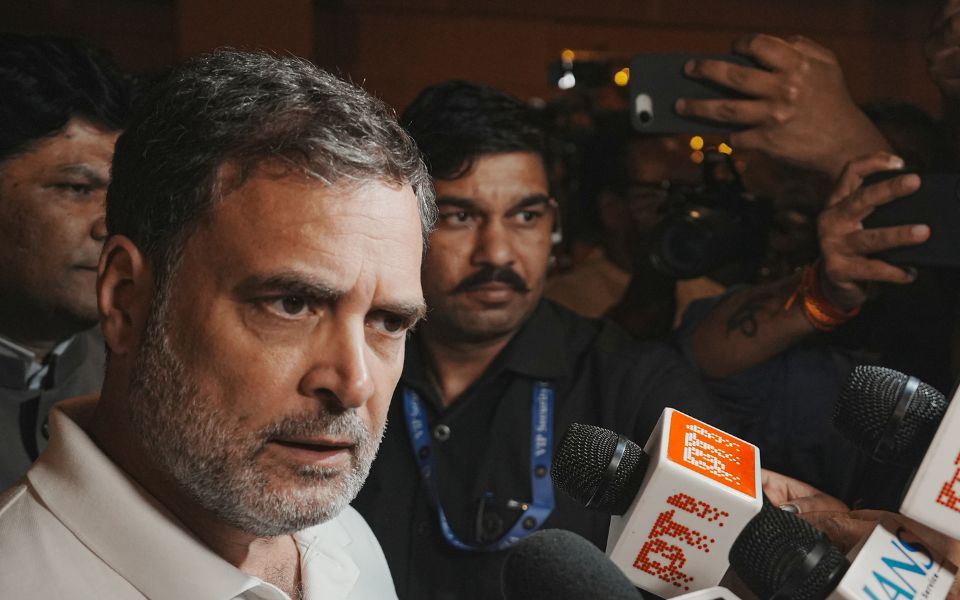
Lucknow (PTI): The Lucknow bench of the Allahabad High Court on Friday ordered an FIR be filed against Congress MP Rahul Gandhi in connection with an alleged dual citizenship controversy.
The bench permitted the state government to hand over the probe to any central probe agency after registration of the FIR.
The order was passed by a bench of Justice Subhash Vidyarthi on a petition filed by S Vignesh Shishir, who had challenged a January 28 order of a special MP/MLA court rejecting his plea for an FIR against Gandhi, the leader of the Opposition in the Lok Sabha.
The special court had earlier held that it was not competent to adjudicate on issues related to citizenship.
The petitioner, a BJP worker from Karnataka, had sought registration of an FIR and a detailed probe into the matter, levelling allegations against Gandhi under provisions of the Bharatiya Nyaya Sanhita (BNS), the Official Secrets Act, the Foreigners Act and the Passport Act.
The complaint was initially filed before the special MP/MLA court in Rae Bareli. However, on the petitioner's request, the high court transferred the case to Lucknow on December 17, 2025.
The MP/MLA court in Lucknow subsequently dismissed the plea on January 28, 2026, prompting the petitioner to approach the high court, which has now ordered registration of an FIR.
In its order, the bench said that from a bare perusal of the allegations, prima facie cognizable offences were made out against Gandhi and hence the allegations required to be investigated.
The bench said that the special court should have looked into whether the allegations prima facie made out any cognizable offences or not, but it failed to consider it.
Earlier, Deputy Solicitor General of India SB Pandey produced the central government's records in the court relating to the citizenship controversy surrounding Gandhi.
Government counsel VK Singh also consented on behalf of the UP government that the allegations prima facie made out cognizable offences.
After having a detailed hearing, the bench found that the material on records showed that Gandhi had committed "cognizable offences" in having dual citizenship, and these allegations required to be probed.
The petitioner has alleged that Rahul is a UK Citizen and incorporated a company named M/S Backops Ltd in August 2003.
It was further submitted that Gandhi categorically admitted and voluntarily declared his nationality as British, having a Director Identification ID and London and Hampshire addresses.
In his petition, Shishir claimed that Rahul submitted the company's annual returns in October 2005 and October 2006, listing his nationality as British.
Thereafter, the company was dissolved through a dissolution application in February 2009.
According to the petitioner, the material placed before the court includes records suggesting that Rahul Gandhi may have been listed as a voter in the United Kingdom and participated in electoral processes there.
During the course of the hearing, the high court earlier directed the Ministry of Home Affairs to place all relevant records, including classified documents, before the court.