It was meant to be: Young India spinner Vaishnavi on cricket career
_vb_27.jpeg)
New Delhi (PTI): It was written in the stars, or so believed her father.
Long before Vaishnavi Sharma picked up a cricket ball, she says her future as a sportsperson was known to her astrologer father, Narendra Sharma. The 20-year-old left-arm spinner from Gwalior made her India debut in the T20 International format just last year in a home series against Sri Lanka.
"When I was four years old, my journey in sports began. As you all know, my father is an astrologer. He looked at my horoscope and said that I should either go into sports or into the medical field," Vaishnavi told 'PTI Videos'.
"After that, it was a question of where my own interest was. After some time, he understood that my interest was in sports. When I was seven, I started playing more seriously, like going for evening practice sessions.
"And when I was 11–12 years old, I played my first Under-16 match for Madhya Pradesh. It wasn't under the BCCI then, but that’s where my journey really started," she recalled.
In the five-match series against Sri Lanka, she finished as the joint-highest wicket-taker for India with five scalps. The youngster says she has been certain about cricket from the very first day.
"When I started cricket, this was always my goal. I never focused on any other goal. Whenever I go to the ground, I just forget everything else, because the feeling I get after playing cricket, I don't get it from anything else," she said.
"I can't sit idle at home. Even if I'm doing my favourite things, when I have that love for cricket, I don't think about anything else," she added.
Her journey, however, hasn't been without disappointment. Vaishnavi admitted she had hoped to be picked by a franchise during the Women's Premier League auction before the Sri Lanka call-up but when it did not happen, she felt disappointed.
However, she ensured that it didn't affect her performance at a domestic age-group event.
"Of course, it feels very bad when you have expectations. I had them too, and I felt really bad. But I was playing a tournament at that time, so my whole focus was on my team. Under-23 was a big stage for me, so I kept my focus only on that," she said.
"Then I thought that I can only do what is in my hands and leave the rest to God. And when I left it to God, He gave me something even better."
Instead of dwelling on the setback, Vaishnavi focussed herself on domestic cricket, determined to control what she could.
"I never showed that disappointment on the field. I was sad in my room, I spoke to my family. My friends, parents, brother and seniors all called me.
"Yes, I was a little sad, but I never let that come onto the ground. I focused on what I had in my hands, and at that time, it was Under-23 cricket for Madhya Pradesh," she said.
A few weeks later, her perseverance paid off with a maiden India call-up and she said walking into a dressing room filled with World Cup winners was an emotional moment.
"I was very nervous. I was thinking, what will their reaction be, what will they say, how will I start the conversation? But when I reached there, everyone welcomed me warmly, spoke to me and made me feel very comfortable. I bonded really well with them," she said.
Despite now being teammates, Vaishnavi admits to being a fan of captain Harmanpreet Kaur.
"I will always have those butterflies that I am going to meet Harman di. They are big stars. I used to watch them on television and now I am playing with them. So the butterflies and excitement will always be there," she smiled.
Vaishnavi says she idolises Harmanpreet’s fighting spirit, while Smriti Mandhana inspires her approach to the game.
"Smriti di and Harman di are my role models. I once saw an interview of Smriti di where she said that even if she contributes for the team, she celebrates that day and then starts again from zero the next morning. From Harman di, I've learnt the never-give-up attitude," she said.
"The best thing about her is that whenever she gives me the ball, she says, 'Go and bowl freely, bowl your best and make the batter dance.' The whole team is very sweet."
On the bowling front, Vaishnavi draws inspiration from Ravindra Jadeja and Radha Yadav for their accuracy and control.
Let the Truth be known. If you read VB and like VB, please be a VB Supporter and Help us deliver the Truth to one and all.
Man rapes 13-year-old stepdaughter in Beed; booked
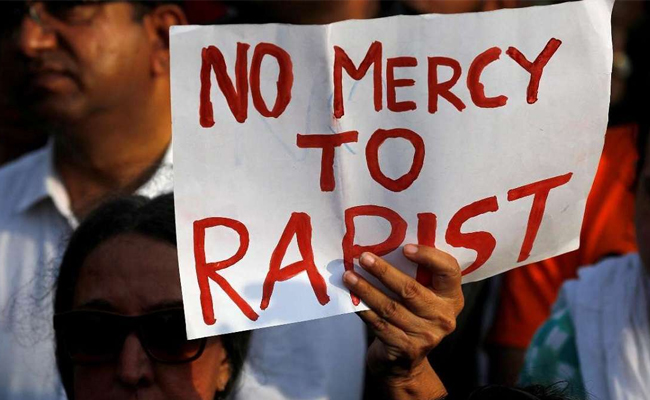
Beed, Apr 13 (PTI): A 13-year-old girl was allegedly sexually assaulted by her stepfather in Maharashtra's Beed district, police said on Monday.
Based on a complaint, the police have registered a case under the Protection of Children from Sexual Offences (POCSO) Act in connection with the incident, which occurred on April 9, an official said.
According to police, the teen's mother divorced her first husband nine years ago and married the accused, with whom she has a son.
On the afternoon of April 9, the accused allegedly sexually assaulted his stepdaughter while his wife was away and threatened her into silence, the official said.
He said that the assault came to light when the mother returned home and noticed a change in her daughter's behaviour and questioned her. The girl narrated the ordeal, following which a complaint was lodged at the Kaij police station.
_vb_65.jpeg)
_vb_90.jpeg)