I've 10 months to decide whether I want to play one more year: Dhoni on IPL future
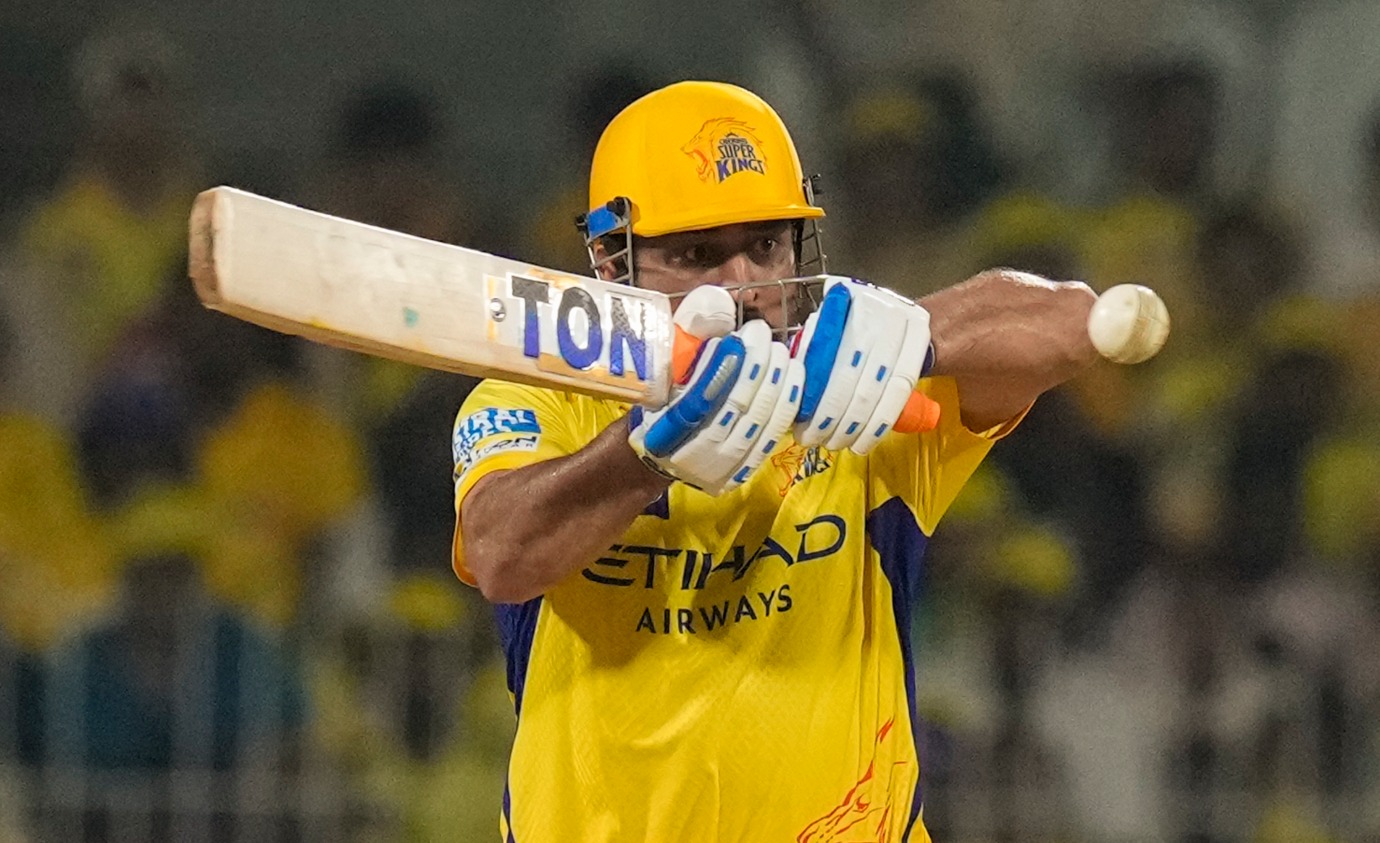
New Delhi(PTI): The legendary MS Dhoni stayed immune to the growing clamour around his future in the IPL, saying the decision to bring curtains on his career depends on how his body reacts to the demands of top-flight cricket and he has "10 months" to take a call.
In this IPL, Dhoni has not been able to make the kind of impact that he usually does while batting in the lower middle-order.
His lack of timing and ineffectiveness, evidenced in the 76 runs that he made from four matches, have prompted several experts to urge the multiple World Cup-winning skipper to move on.
"I am still playing the IPL and it is one year at a time for me. I am 43 now and by the end of this IPL season, I will be 44," Dhoni said on entrepreneur Raj Shamani's podcast recently.
"So, I have 10 months to decide whether I want to play one more year and it's not me to decide as it is my body that decides whether I can play or not," he added.
However, the former Chennai Super Kings skipper, who led CSK to five IPL titles, said he is quite content with his achievements on the field.
"It is not about whether I am happy or unhappy. Whatever has happened has happened. It cannot be changed. It's about accepting all of it. You know, whatever happens I will not be able to add one more run to my international runs, and no one will be able to reduce them," he said.
Dhoni has always been a man of the present. But, for once, he set aside that pragmatic side to reveal his wish of seeing legends like Sachin Tendulkar, Sourav Ganguly, Virender Sehwag and Yuvraj Singh assemble in the same team once again.
"I will stick to Indian players. Viru pa opening the innings, Sachin, Dada… and now you imagine everyone at their prime. Then you will get this feeling that there can't be anyone better than them.
"It's tough to pick an all-time eleven. Now, when you see Yuvi hitting six sixes, you will feel that I don't want to watch any other batsman. It's all about enjoying what they have done for India. Some of those talents we have seen are mind blowing," he added.
Let the Truth be known. If you read VB and like VB, please be a VB Supporter and Help us deliver the Truth to one and all.
No proposal to hike bus fares in Karnataka, says Ramalinga Reddy
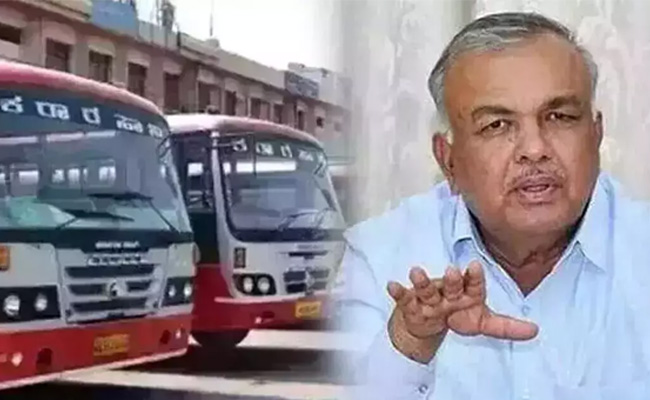
Bengaluru: Karnataka Transport Minister Ramalinga Reddy has said there is no proposal at present to increase bus fares in the state, even if diesel prices go up.
Speaking to reporters in Bengaluru on Wednesday, Reddy said he was not aware of any decision to raise diesel prices and added that it would be welcome if no such hike takes place.
He said that although an increase in diesel prices would add to the financial burden of state-run transport corporations such as Karnataka State Road Transport Corporation and Bangalore Metropolitan Transport Corporation, no discussion has been held so far regarding a revision in passenger fares.
Commenting on the recent salary revision for transport corporation employees, the minister said the government had already conveyed its decision and declined to comment on reports that some employees were dissatisfied with the announcement.
On the delay in holding elections to the Greater Bengaluru Authority, Reddy said it was natural for aspirants to feel disappointed and acknowledged that the postponement was also increasing pressure on party leaders.
He said Bengaluru’s infrastructure development since 1947 had seen substantial progress during Congress governments, but added that questions regarding the reasons for postponing the elections should be addressed to Deputy Chief Minister D. K. Shivakumar.
Reddy also said he had no information regarding any power-sharing arrangement within the government, but was aware of discussions on a cabinet reshuffle.
He noted that he had travelled to New Delhi only three times in the past three years and said it would be good if the cabinet expansion takes place soon.
According to him, there had been indications that the expansion would occur after two and a half years in office, but it has already been delayed by six months.