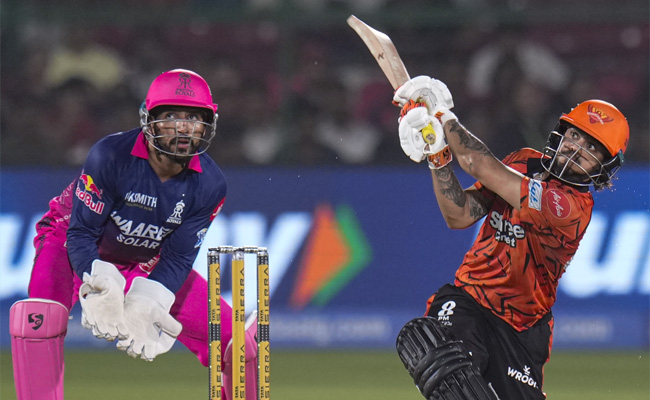
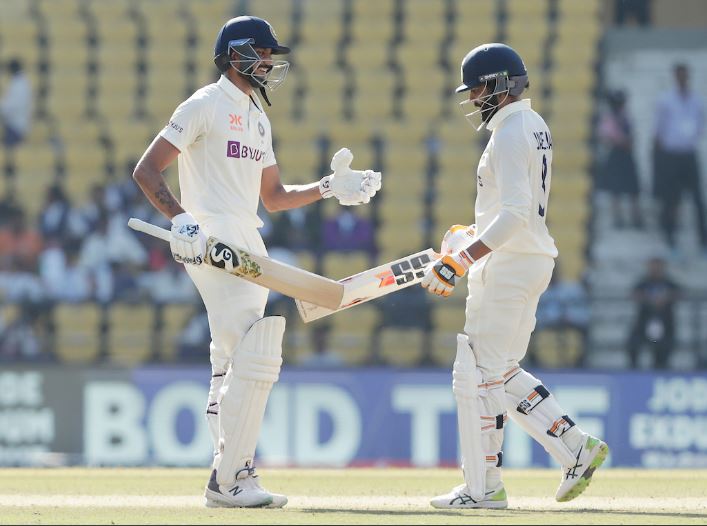
Jadeja-Axar extend India's lead to 144 runs on day 2
Nagpur, Feb 10: Skipper Rohit Sharma conjured up one his most impressive Test hundreds under pressure against a quality Australian attack as India vaulted to a crucial 144-run lead in the series-opener after ending the day two at 321 for 7, here Friday.
Rohit (120) displayed class and composure of the highest order and in the process became the first Indian captain to have scored a century in all three formats.
While Rohit's ninth Test hundred is worth its weight in gold, Ravindra Jadeja's (66 not out) 18th half-century is also priceless. The all-rounder's knock will be equally important in the context of the game.
Jadeja once again showed his true worth by adding 61 runs for the sixth wicket with Rohit and another 81 runs for the unconquered eighth-wicket with Axar Patel (52 batting), who is also playing a fine hand.
It was a battle of attrition for Indian batters, especially Rohit and Jadeja with the home team putting on board 244 runs on the second day.
On a slow track where other batters found the run-scoring extremely difficult, the Indian captain was concentration-personified.
It had the same class as the 161 he scored in against England in 2021 in the Chennai Test. The opener put his best food forward against an attack, led by spinners Nathan Lyon (1/98) and Todd Murphy (5/82), who got a five-for on Test debut.
In fact, both the off-break bowlers came round the wicket against right-handers to stem the flow of runs and succeeded partially.
It took Rohit 171 balls to reach his hundred. He hit 15 boundaries and two sixes in a knock that spanned more than four and half hours.
But the hallmark of his innings was the rotation of strike and how he traded risk for caution.
Having read the nature of the pitch perfectly, Rohit curbed his natural flair and channelised his "inner Cheteshwar Pujara" and testimony to that was 62 completely out of character runs that he scored across two sessions on the day.
He had scored 56 runs in half-a-session on Thursday evening.
Pull has been Rohit's go-to shot in every form of cricket he didn't take his opposite number Pat Cummins' (1/74) bait, save one time when he hit him for a maximum behind square.
He didn't try to get to his hundred in a hurry, playing out maidens and taking singles before whipping Cummins to square leg for a boundary that took his score in the 90s.
It was an inside-out lofted drive over extra cover off Murphy that brought up his hundred, and once again reiterated the theory that in adverse situations, individuals with the highest degree of skill prevail.
There wasn't any over-the-top celebrations, no cuss words used or the customary ritual of removing the helmet. He just looked towards the dressing room in acknowledgement.
Once second new ball was taken, Cummins dismissed Rohit with an unplayable delivery that was fast and also moved away late after pitching.
However Jadeja stood firm and got good support from fellow all-rounder Axar to further consolidate India's position in the game.
Virat Kohli (12) along with debutants Suryakumar Yadav (8) and Kona Bharat (8) would be disappointed that they didn't score big.
In the case of Kohli, bespectacled Murphy bowled a similar delivery to the former India skipper that had earlier accounted for Cheteshwar Pujara.
The young spinner bowled on the fifth stump on the leg side and a faint nick was taken on the second attempt by wicket-keeper Alex Carey.
Surya became Lyon's first victim as the off-break bowler breached his defence.
In the morning, captain Cummins had set the bait for his opposite number with a deep fine leg and deep mid-wicket fielder but bowled fuller during his morning spell.
Scott Boland also toiled manfully but once Carey stood up to the stumps, it was evident that there was no help for fast bowlers on day two.
Let the Truth be known. If you read VB and like VB, please be a VB Supporter and Help us deliver the Truth to one and all.
Trump says he ‘hasn’t even thought about’ continuing Iran ceasefire
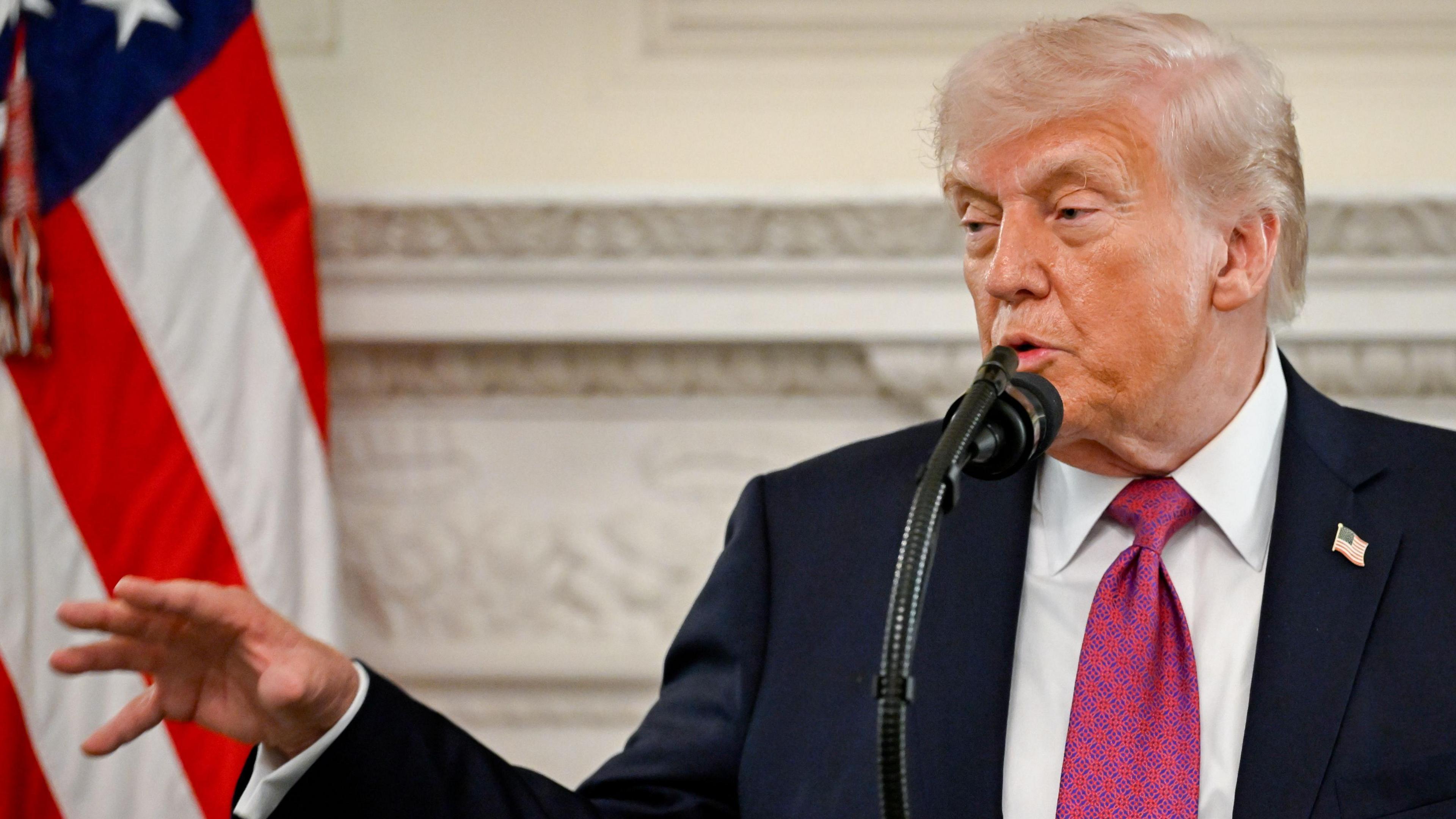
Washington: US President Donald Trump has said he has not yet considered whether he would continue the ceasefire involving Iran, while also claiming the United States holds the advantage in negotiations.
Speaking to reporters, Trump said he was prepared to make a deal with “whoever is running the show” in Iran.
“They are fighting with each other, there’s tremendous infighting. They’re probably fighting for leadership in many cases. I think they’re fighting not to be leader because we knocked out two levels of leaders,” he said.
Trump added, “When they want they can call me. We have all the cards, we’ve won everything.”
Referring to ongoing negotiations, he said, “They gave us a paper that should’ve been better. And, interestingly, immediately when I cancelled it [envoy trip to Pakistan], within 10 minutes we got a new paper that was much better.”
“We talked about they will not have a nuclear weapon, very simple … They offered a lot, but not enough,” he added.
When asked whether he would continue the ceasefire, Trump replied, “I haven’t even thought about it.”
The remarks come as uncertainty remains over the future of the temporary truce and broader negotiations between Washington and Tehran.