James Anderson ends Test career with 704 wickets as England thrash West Indies at Lord’s

London, Jul 12: It's 704 wickets and out for Jimmy Anderson.
The most prolific fast bowler in test history bowed out of international cricket by helping England complete a win by an innings and 114 runs over the West Indies at Lord's on Friday.
The 41-year-old Anderson's 188th and last test ended with him taking 3-32 in the West Indies' second innings as they were dismissed for 136 a little over an hour into the third day's play.
One of those wickets came on Friday, with Anderson enticing an edge behind off Joshua Da Silva with a delivery that seamed away. It was classic Anderson — unlike the caught-and-bowled chance he dropped off Gudakesh Motie with England needing just one more wicket for victory.
He fell to his knees and covered his face with his hand.
Soon, he was walking off the field at the home of cricket — in front of his parents, wife and children — to a standing ovation after Gus Atkinson took the final wicket.
The morning had started with Anderson, who doesn't like being the center of attention, looking emotional after being given a guard of honor from both teams — and a first standing ovation from the crowd — when he came out at the start of the day's play.
Speaking after the match while holding a pint of Guinness in the England dressing room, Anderson said: “I feel about 55 after the overs I bowled this week.”
“Playing for England,” he added in an interview with Sky Sports, “is the best job in the world. I've been privileged to have done it for a long time.”
Atkinson, who represents the future of English pace bowling, took three of the wickets after the Windies resumed on 79-6 — still 171 runs adrift of making England batting again — and had match figures of 12-106 on test debut. He became the first England bowler to get a 10-wicket haul in a test at home since Alec Bedser in 1946.
Anderson finished his test career four wickets behind the late Australia legspinner Shane Warne's tally of 708 wickets. Only one bowler has more than them: former Sri Lanka spinner Muttiah Muralitharan with 800.
Anderson ended his test career where it started 21 years ago, when he ran in to bowl against Zimbabwe at Lord's with tinges of blond in his hair.
“I've been lucky to play with some amazing players, some of the most talented cricketers that have ever played the game,” he said. "And more importantly some really good blokes and friends I have made for life.
“Part of me is jealous that these lads get to experience that for the next few years,” he said, looking around the dressing room as his teammates listened to his every word. "The advice I would pass onto them is just enjoy every moment, because it's a great ride."
A legendary career 👏 James Anderson 🙌#WTC25 pic.twitter.com/sViECTJjPc
— ICC (@ICC) July 12, 2024
Let the Truth be known. If you read VB and like VB, please be a VB Supporter and Help us deliver the Truth to one and all.
Lebanon appoints new representative for talks with Israel, rejects linkage to Iran
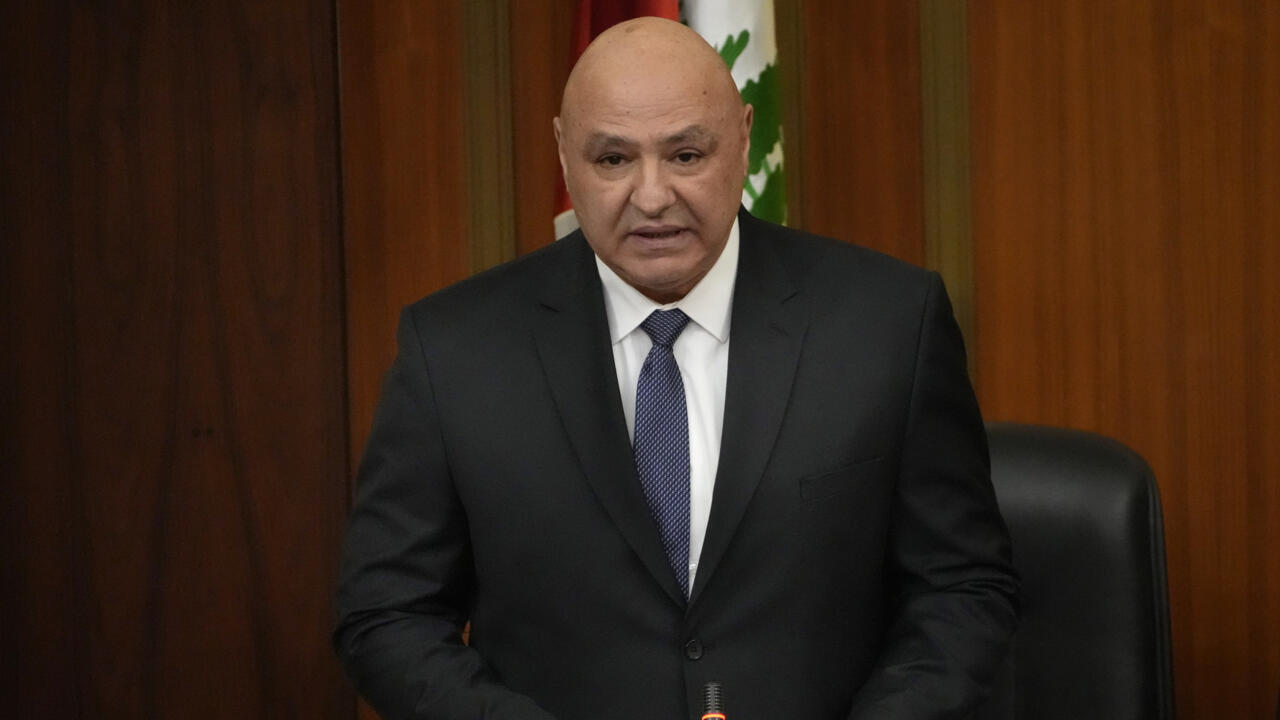
Beirut: Lebanon’s has moved to underline its independent position in ongoing regional developments, amid attempts to link the country to the broader conflict involving Iran, the United States and Israel.
President Joseph Aoun, while announcing the appointment of former US ambassador Simon Karam as Lebanon’s representative in talks with Israel, made it clear that Karam would be the sole representative for Lebanon and that there would be no substitute.
The move comes in response to what the Lebanese officials see as efforts by Iran to tie Lebanon’s situation to the wider regional conflict. Iran had indicated that there would be no ceasefire involving the US, Israel and Iran unless it also included a ceasefire in Lebanon.
Some groups, including Hezbollah and its supporters, had expressed support for linking the situations, citing concerns that the Lebanese government has limited leverage in negotiations with Israel. Lebanon is not formally a party to the conflict, and its army is considered weak.
However, others, including Prime Minister Nawaf Salam, have opposed this approach. They view Iran’s stance as an attempt to influence Lebanon’s internal affairs and see it as undermining the country’s sovereignty.
Officials backing the government’s position say the move is aimed at reaffirming Lebanon’s sovereignty and ensuring that decisions about peace and ceasefire within the country are not dictated externally.
They also see it as a safeguard, so that any breakdown in talks between the US, Israel and Iran does not automatically lead to renewed conflict in Lebanon.