Jaydev Unadkat makes history by taking first-over Ranji hat-trick vs Delhi
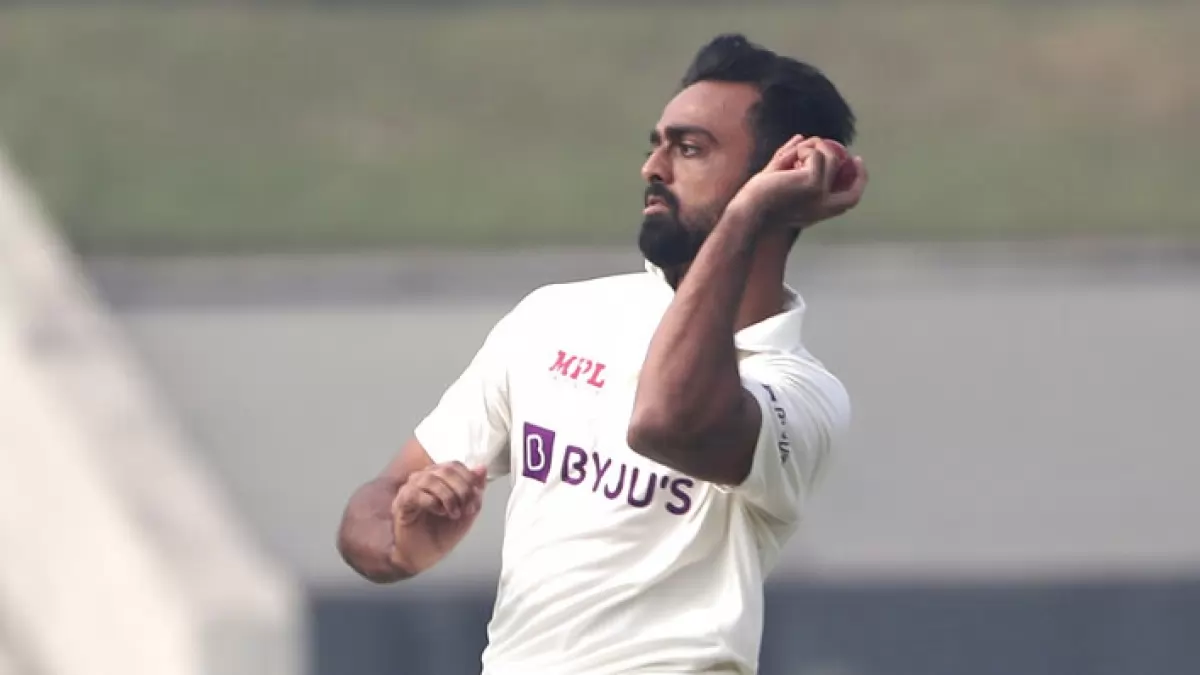
Rajkot, Jan 3: Jaydev Unadkat, fresh from his fine bowling performance in the second Test against Bangladesh at Mirpur, returned to the Ranji grind and made a smashing impact, grabbing a hat-trick in the first over to leave Group B rivals Delhi in a disarray on Tuesday.
Delhi, who lost 7 wickets for just 10 runs, didn't face ignominy of lowest first-class score of 6 by a team called 'The B's' against England in an official match held in 1810.
Courtesy young Hrithik Shokeen (68), they finally managed 133 before Saurashtra scored 184 in just 46 overs as the visitors decided to play with two specialist bowlers.
Unadkat took wickets off the third, fourth and fifth deliveries to achieve the distinction of becoming the only player to take a first-over hat-trick in Ranji Trophy's 88-year-old history.
The previous quickest Ranji hat-trick, a split one, is in the name of Karnataka's Vinay Kumar who achieved the feat over two overs -- first and third.
Unadkat's hat-trick victims included opener Dhruv Shorey, Vaibhav Rawal and young Delhi captain Yash Dhull, all of whom departed for duck.
Sources close to the Delhi team management in fact were wondering as to why on a pitch that had moisture, a rookie like Ayush Badoni was sent to open on his debut.
Badoni, Rawal and even Dhull don't have the wherewithal to face Unadkat on a lightly damp wicket and they had no clue which one was leaving them, which one came back in and the trademark one which skids straight after pitching.
And by the time he was done with his second over, the 31-year-old Unadkat had added two more scalps to accomplish his 21st five-wicket haul in first-class cricket.
Unadkat's continued to wreak havoc, finishing with career-best figures of 8/39 in his 12 overs on Tuesday.
Delhi, missing quite a few regular bowlers in their playing XI due to injuries, found themselves staring at an uphill task after being bundled out for 133. Their toothless attack was laid bare by Saurashtra opener Harvik Desai, whose unbeaten 104 off just 124 deliveries had guided the hosts to 184 for 1 -- a 51-run lead -- at stumps.
Earlier, Unadkat, whose India career got a fresh lease of life almost 12 years after he played his opening Test, pulverised the Delhi batting, reducing them to five for six wickets in his opening two overs.
He accounted for Jonty Sindh (4)
and Lalit Yadav (4) in his second -- and the team's third -- over with Delhi staring at one of the worst batting display in recent years.
But late-order batter Hrithik Shokeen (68 not out) and Shivank Vashisht (38) took the score past 100.
Later, Saurashtra batter Harvik Desai traded in boundaries, smashing 15 fours as the home team raced to 184 in no time, with Jay Gohil's wicket being the only success the visitors had on day one.
Brief scores:
At Rajkot: Delhi 133 in 35 overs (Hrithik Shokeen 68 n.o., Shivank Vashisht 38; Jaydev Unadkat 8/39) versus Saurashstra 184 for 1 in 46 overs (Harvik Desai 104 n.o., Chirag Jani 44 n.o.).
Dear red ball.. 😇❤️#RanjiTrophy pic.twitter.com/SkQyfeUQCn
— Jaydev Unadkat (@JUnadkat) January 3, 2023
Let the Truth be known. If you read VB and like VB, please be a VB Supporter and Help us deliver the Truth to one and all.
FBI Director Kash Patel faces uncertain future amid controversies: Report
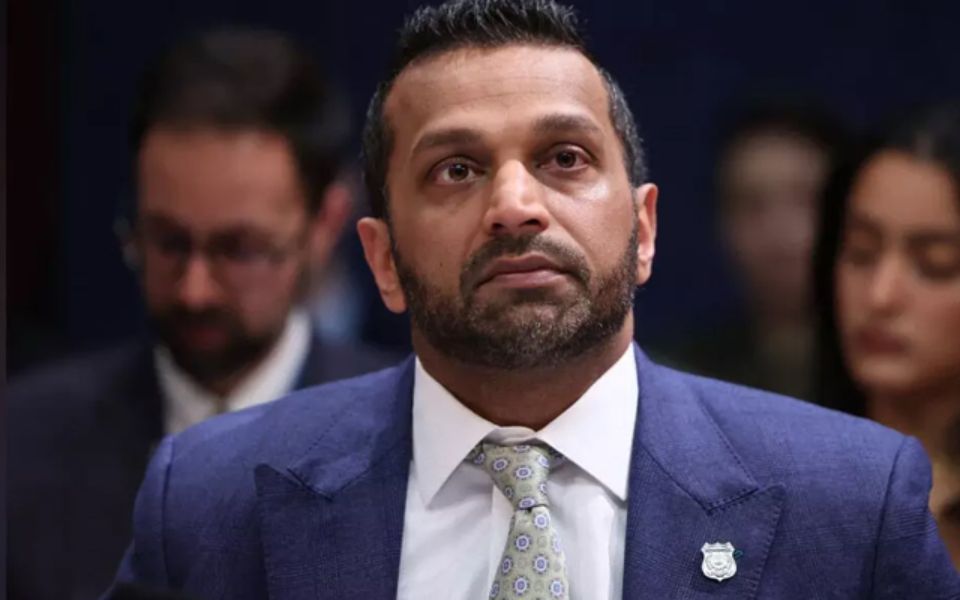
New Delhi: Kash Patel, Director of the Federal Bureau of Investigation, is reportedly likely to be removed from his position in the administration of Donald Trump, according to recent media reports citing senior White House officials.
The development comes amid a series of controversies surrounding Patel, with reports suggesting that his position has become increasingly tenuous. A White House official was quoted as saying that it is “only a matter of time” before action is taken.
The report surfaced shortly before a shooting incident at the White House Correspondents’ Dinner in Washington, adding to the tense political environment.
Patel, who gained prominence for his strong stance against what he described as the “deep state” and his alignment with Trump’s political messaging during the 2024 election campaign, has faced scrutiny over allegations related to past alcohol-related incidents. Reports indicate that he had acknowledged two prior arrests linked to public drinking during his student years.
Further pressure has come from members of the Democratic Party, who have called for Patel to undergo an evaluation related to alcohol consumption patterns. Despite the allegations, Patel has maintained that he has never been intoxicated while on duty.
In March, a hacking incident reportedly linked to an Iran-associated group compromised Patel’s personal email account, leading to the publication of personal material. A Justice Department official confirmed that the breach appeared to be authentic.
The situation follows the recent dismissal of Pam Bondi as US Attorney General earlier this month, a move reportedly driven by dissatisfaction within the administration over legal and political developments. Patel is considered to be among officials whose positions may be under review following her removal.
Despite ongoing speculation, White House Press Secretary Karoline Leavitt stated that President Trump continues to have confidence in Patel. In response to media reports, Patel has filed a $250 million lawsuit against The Atlantic, alleging defamation over claims regarding his conduct.