Dinesh Karthik to end IPL career after 2024 edition, to decide on international retirement soon
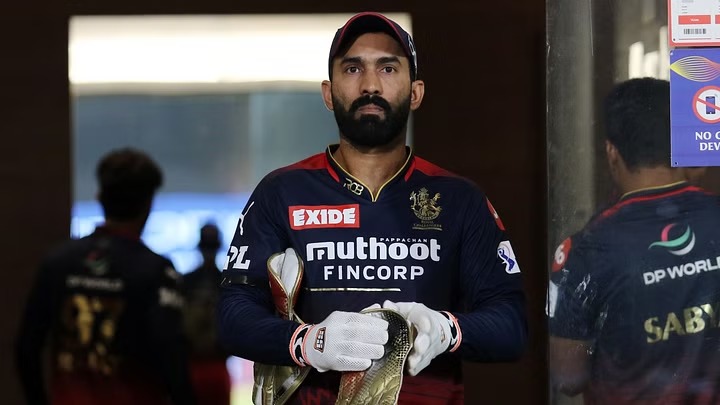
Dharamsala (PTI): India wicketkeeper batter Dinesh Karthik is all set to make his last IPL appearance in the 2024 edition beginning on March 22, and he will decide on his international retirement after the lucrative T20 league.
The 38-year-old, who is currently contracted with the Royal Challengers Bangalore, has played in all the 16 editions of the IPL since 2008 and has only missed two matches across 16 seasons.
"This 2024 edition will be his (Dinesh Karthik's) last IPL. He will decide his international retirement after the IPL," a BCCI source told PTI on conditions of anonymity.
One of the most experienced wicket-keeper batters in the IPL, Karthik has represented six teams in the league.
He started off with Delhi Daredevils (now Capitals) in 2008 before moving to Kings XI Punjab in 2011. He spent the following two seasons with Mumbai Indians before going back to Delhi in 2014 for a price tag of a whopping Rs 12.5 crore.
Royal Challengers signed him in 2015 for Rs 10.5 crore and he then played for Gujarat Lions in 2016 and 2017 before spending four seasons with the Kolkata Knight Riders.
He has led the Kolkata side to IPL playoffs in 2018 and they finished fifth in the points table in 2019.
Ahead of the IPL 2022, Karthik was released by KKR and was bought by RCB for the second time for Rs 5.5 crore. He had a stellar 2022 for RCB while mainly playing the role of a finisher.
Karthik made 330 runs in 16 matches at an average of 55 and an explosive strike-rate of 183.33 that year, a guiding force in RCB's march to the play-offs.
That run earned Karthik a berth in the India squad for the ICC T20 World Cup 2022 held in Australia but he could not shine as expected as Virat Kohli's side bowed out of semifinals after a defeat against eventual champions England.
But by then, Karthik had also made a name for himself as a commentator with his sprightly, technique-laden approach.
The Tamil Nadu man has a reasonable stint at international career too, considering his career clashed with that of MS Dhoni as a wicketkeeper batsman.
He has played 26 Tests after making debut in 2004 against Australia, scoring 1025 runs and effecting 57 catches and 6 stumpings. He played his last Test in 2018.
In the ODIs, he scored 1752 runs in 94 matches between 2004 and 2019, and managed 64 catches and 7 stumpings.
Karthik's last match for India was the T20I against Bangladesh in 2022 after making his debut in the shortest format in 2006. He scored 686 runs from 60 T20Is and effected 30 catches and 8 stumpings.
Karthik has played in 242 IPL matches since the inaugural edition, scoring 4516 runs at an average of 25.81 and strike rate of 132.71, with 20 half-centuries. He has affected 141 catches and 36 stumpings.
However, he recently featured in the DY Patil T20 Cup in Navi Mumbai.
Let the Truth be known. If you read VB and like VB, please be a VB Supporter and Help us deliver the Truth to one and all.
Shaheen Group announces free education for SSLC toppers scoring 95% and above

Bidar: Shaheen Group of Institutions has announced free education for students across Karnataka who have secured 95 per cent and above marks in the SSLC examinations.
The announcement was made by Dr. Abdul Qadeer, Chairman of the institution, as part of an initiative aimed at encouraging academic excellence and supporting deserving students.
According to the institution, eligible students from across the state will be provided free education for both First Year and Second Year PUC at Shaheen institutions.
The initiative is expected to benefit a large number of meritorious students by helping them continue higher education without financial burden.
In addition, Dr. Abdul Qadeer announced special scholarships for Kannada medium students and those studying in government schools, recognising their efforts and encouraging them to pursue further studies.
Speaking on the occasion, he said the initiative reflects Shaheen’s continued commitment to inclusive education and merit-based support, ensuring that talented students from all backgrounds receive opportunities to progress.