Kidambi Srikanth clinches historic silver at World Championships
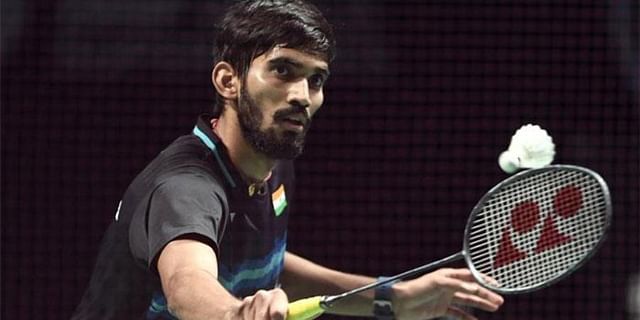
Huelva, Dec 19: Kidambi Srikanth clinched a historic silver medal in the World Badminton Championships after suffering a straight-game defeat to Loh Kean Yew of Singapore in the summit clash to notch up the best ever performance by an Indian in the men's singles here on Sunday.
A former world no. 1, Srikanth lost 15-21 20-22 to Malaysia-born opponent in 43 minutes.
The 28-year-old Srikanth thus bettered the feats of legendary Prakash Padukone (bronze in 1983), B Sai Praneeth (bronze in 2019) and Lakshya Sen (bronze in this edition), whom he had beaten in the semifinals on Saturday.
The maiden silver also placed Srikanth alongside P V Sindhu and Saina Nehwal, who had finished runner-up in the past.
Sindhu had won the coveted gold in 2019, two silver and two bronze, while Saina claimed the silver at the 2015 Jakarta and a bronze at 2017 Glasgow.
It is also the first time that India won two medals in men's singles at the World Championships.
Despite the loss, it is a significant achievement for Srikanth, who has been dogged by fitness issues and lack of form ever since injuring his knee during the 2017 French Open final after claiming four Super Series titles that year.
Playing his first final since the 2019 India Open, 12th seed Srikanth fought dogged battle for supremacy with Loh, who relied on his explosive attacking game and lightening footwork to put pressure on the Indian.
Srikanth, currently ranked 14th in the world, had his moments but he squandered leads of 9-3 and 18-16 in the two games to see the coveted title slip out of his fingers.
The 24-year-old Loh started with a superb net dribble, opening up a 3-1 lead early on but Srikanth soon turned the tables by engaging his rival in short rallies and using his deception to set up the points.
Srikanth's tactics of delaying his returns earned dividends as he moved to a 9-3 advantage with a powerful smash.
Loh then tried to dominate the front court but Srikanth took a four-point lead with another smash on his rival's backhand at the mid-game interval.
After resumption, Loh found his footing as he clawed back 11-11 by winning the next four points and then unleashed a jump smash to grab the lead.
World no. 22 Loh soon moved to 17-13 with Srikanth committing too many unforced errors.
A lightening fast net play helped Loh earn five game points and he sealed it when Srikanth erred next.
After the change of sides, the duo fought tooth and nail, moving 4-4 together. Srikanth tried to engage his rival in flat exchanges, sandwiched with angled returns and smashes to move to a 7-4 advantage.
But again, unforced errors came back to haunt Srikanth as Loh made it 9-9. Another net error and it was advantage Loh, who entered the mid-game interval at 11-9.
Srikanth drew parity with a backhand cross court flick, before moving to 16-14 by winning the longest rally with a precise cross court net return.
At 18-16, Srikanth sent one to the net and missed the line, while Loh unleashed a body smash to gain a 19-18 lead. Another fast-paced rally ended with the Indian going to the net to leave Loh with two match points.
Srikanth showed great courage at the net to save two match points but he erred next as Loh then pushed the shuttle at the backline with a precise return to go down on his knees in disbelief.
Loh thus became the first man from his country to win the World Championships title.
It was a big achievement for Loh, who made it to the final after a sensational post-Olympics season which saw him win the Dutch Open, Hylo Open and finish runner-up at the Indonesia Open Super 1000.
Let the Truth be known. If you read VB and like VB, please be a VB Supporter and Help us deliver the Truth to one and all.
CCTVs in police stations: SC asks amicus to convene meeting on utilisation of funds
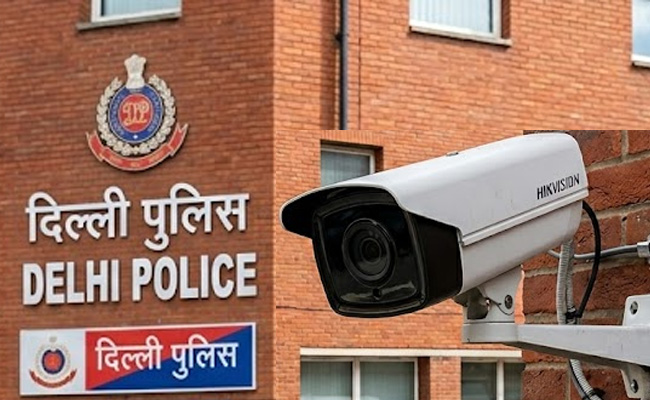
New Delhi (PTI): The Supreme Court on Tuesday said that a meeting be convened on May 6 to deliberate on the aspect of utilisation of funds by the states on installation of CCTVs in police stations across the country.
A bench of Justices Vikram Nath and Sandeep Mehta asked senior advocate Siddhartha Dave, who is assisting it as an amicus curiae in a suo motu matter concerning lack of functional CCTVs in police stations, to hold a meeting on May 6 with the Centre, all states and Union Territories.
"We are of the view that a meeting be convened by the amicus, as done earlier, in which the home secretary of the central government or his nominee not below the rank of joint or additional secretary and the home secretary of states/Union Territories will participate," the bench said.
The issue cropped up after the amicus flagged the aspect of utilisation of funds by the states.
Dave told the bench that in UTs, the Centre gives 100 percent funds while in hilly states, the central government gives 90 percent funding.
He said in remaining states, the Centre gives 60 percent while the rest 40 percent funding is by the respective state.
"Why don't we get responses of the states only on utilisation of funds?" the bench said.
The top court suggested that the amicus can convene a meeting with the Centre, states and UTs on the issue.
It posted the matter for hearing on May 13 and said that a report be submitted before it.
On April 7, the Centre told the top court that all issues concerning installation of CCTVs in police stations would be sorted out within two weeks.
Attorney General R Venkataramani had told the bench that he was taking stock of the issue and a lot of things were happening.
On February 26, the apex court directed the Centre and others to participate in a meeting to deliberate upon the feasibility, modalities and implementation framework of the issues, including creation of a centralised dashboard and standardisation of CCTV infrastructure in police stations.
The top court had earlier directed registration of a suo motu case over the lack of functional CCTVs in police stations after taking cognisance of a media report.
The apex court had in 2018 ordered the installation of CCTV cameras across police stations to check human rights abuses.
In December 2020, the top court directed the Centre to install CCTV cameras and recording equipment at the offices of investigating agencies, including the Central Bureau of Investigation (CBI), the Enforcement Directorate (ED) and the National Investigation Agency (NIA).
It said that states and UTs should ensure that CCTV cameras were installed at every police station, at all entry and exit points, main gate, lock-ups, corridors, lobby and reception, as well as in areas outside the lock-up rooms so that no part was left uncovered.
The top court said that CCTV systems must be equipped with night vision and have audio as well as video footage.
The court made it mandatory for the Centre, states and the UTs to purchase such systems which allow storage of data for at least one year.