Kishan, Iyer's exclusion from central contracts was chief selector Agarkar's call: Jay Shah
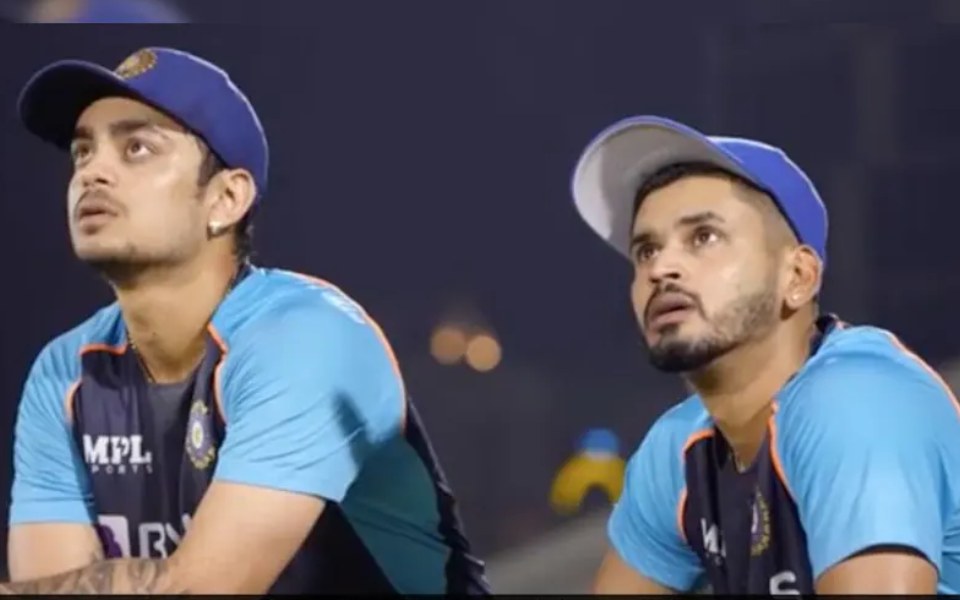
Mumbai, May 10: The exclusion of Ishan Kishan and Shreyas Iyer from the list of centrally-contracted players was a decision that was solely taken by chairman of selectors Ajit Agarkar, BCCI secretary Jay Shah has revealed, asserting that "nobody is indispensable".
Kishan and Iyer were left out after failing to show up for domestic engagements despite a directive from the BCCI. While Kishan went on a long break after the end of the ODI World Cup last year and remained unavailable until the IPL, Iyer eventually did feature in a few matches for Mumbai in the Ranji Trophy including the semifinal and the final.
However, Iyer still found himself at the receiving end after it emerged that he had attended a Kolkata Knight Riders' camp in Mumbai when his domestic side was busy playing a Ranji Trophy fixture.
"You can check the constitution. I am just a convener (of the selection meeting)," he said during a media interaction at the BCCI head office here on Thursday.
"That decision lies with Ajit Agarkar, even when these two players (Ishan Kishan and Shreyas Iyer) who did not play domestic (cricket), the decision to drop them (from the central contracts list) was only his.
"My role is just to implement. And we have got new players (in place), like Sanju (Samson). Nobody is indispensable," he added.
Shah reiterated the Board's position that Indian players will have to prioritise domestic cricket.
In the days leading up to the contract snub, Shah had stated before the third Test between India and England in February this year that he would completely back the chief selector's decision for any action on players who do not comply with the Indian captain and team management's requirement for participation in domestic cricket.
Shah said he spoke with the players after their exclusion.
"Yes, I had spoken with them. Media had even carried the reports," he said.
"Even Hardik (Pandya) said if BCCI is considering me for white-ball, then I am ready to play Vijay Hazare Trophy and Syed Mushtaq Ali Trophy. Any player will have to play, even if they do not want to, they will have to," Shah continued.
Talking about high scores in this year's IPL, Shah said ultimately, it comes down to who is playing well and who, as a player, can sustain performance.
"Whoever plays well in the IPL... like say Ishan Kishan, he finds it difficult to take part with the Indian team but he can play in Mumbai Indians as a player. There he can play in a relaxed manner.
"In Team India, you have to prove yourself, give back to back performances. The one who can handle that can be described as a right player," he added.
Shah also revealed details of his conversation with Kishan, which took place after Mumbai Indians' match against Gujarat Titans.
"No, I did not advise him anything. It was just a friendly talk that he should do well and I speak with all players like that," he said.
While there have been a few media reports mentioning an increase in the match fees for domestic players in the country, Shah said there is no such plan.
"We have increased the pay anyway and also incentivised Test cricket. We had increased the pay by 100 per cent in 2022," Shah added.
Let the Truth be known. If you read VB and like VB, please be a VB Supporter and Help us deliver the Truth to one and all.
No unannounced load shedding in Kerala, outages due to overload, says Minister
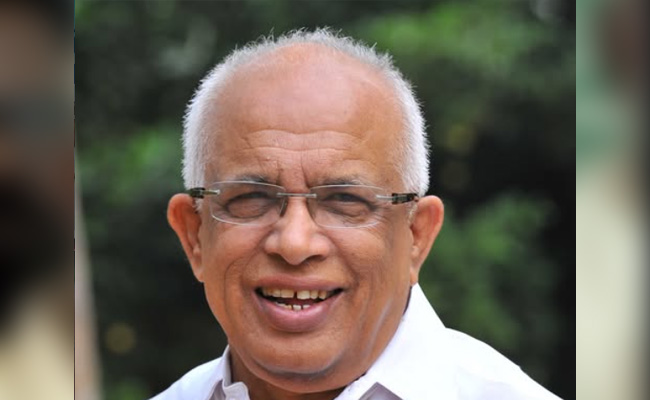
Palakkad (PTI): Kerala Electricity Minister K Krishnankutty on Saturday said there was no unannounced load shedding in the state, attributing recent power interruptions to temporary overload caused by high consumption.
Clarifying concerns raised from various parts of the state, the minister said the disruptions are not deliberate but occur when demand peaks, particularly between 10 pm and 11 pm.
"It is not being done intentionally. Power consumption has risen sharply, and when there is excessive and indiscriminate usage, the system experiences overload, leading to natural supply interruptions," he told reporters here.
His remarks come amid complaints that several areas have been witnessing frequent power cuts, often lasting around 15 minutes and occurring multiple times during the night.
Krishnankutty said the state's power demand has crossed 6,195 MW, putting pressure on the supply system. He added that around 70 per cent of Kerala's electricity is procured from outside, and existing power banking arrangements have been exhausted.
"We have approached the Regulatory Commission seeking permission to purchase more power. However, this will come at a higher cost," he said.
The minister said the government is trying to avoid increasing electricity tariffs and urged consumers to exercise restraint in usage to help manage the situation.
Responding to opposition criticism over the ruling LDF's earlier claims of a decade without power cuts, he said the current situation is not unique to Kerala.
A power crisis is emerging across the country, he said, and sarcastically asked the Opposition to take note of the role of natural factors in this.
Krishnankutty expressed confidence that the situation would improve within two days, while cautioning that long-term energy security would depend on enhancing in-state power generation.
He also warned that future generations could face serious challenges if adequate electricity production capacity is not developed within Kerala.