KKR beat Rajasthan Royals by 8 wickets
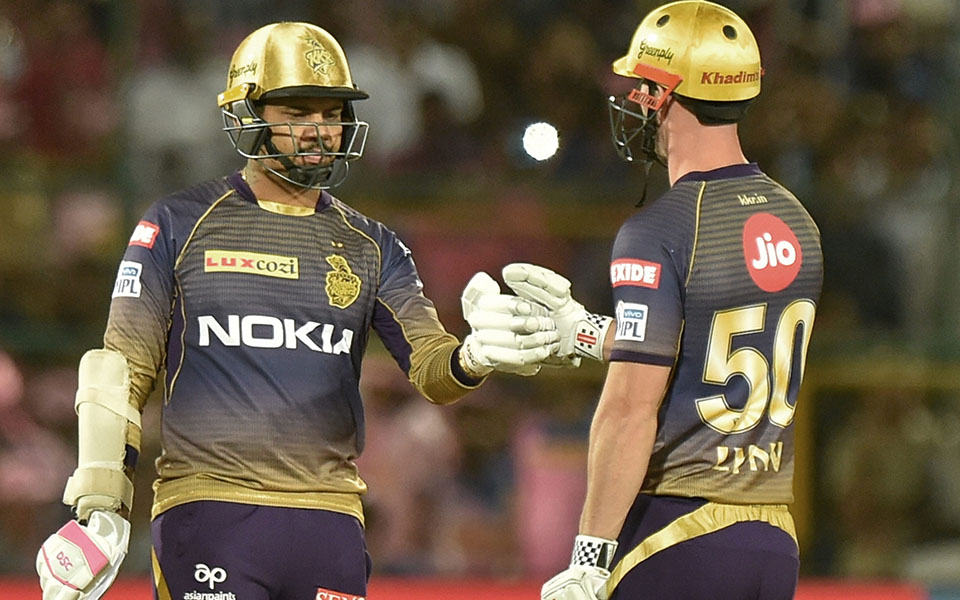
Jaipur, Apr 7: Openers Sunil Narine and Chris Lynn tore the Rajasthan Royals bowling attack to shreds to help Kolkata Knight Riders notch up an easy eight-wicket win in their IPL match here today.
Chasing 140 for a win, Narine (47) and Lynn (50) shared 91 runs for the opening stand in 8.3 overs to take the game away from Rajasthan Royals as KKR reached the target with 6.1 overs to spare.
The win, which took KKR to the top of the table with eight points from five matches (4 wins and 1 loss), was the best of this season in terms of number of balls to spare.
Narine contributed 47, his best of this IPL season, from 25 balls from which he hit six fours and three sixes while Lynn made an exact 50 from 32 deliveries, with the help of six boundaries and three sixes.
When Rajasthan Royals batted, the slow track at Sawai Man Singh stadium looked like a difficult one with the ball not coming on to the bat easily, but the KKR batsman made the nature of the track irrelevant with runs and boundaries coming thick and fast.
The stadium was also engulfed by a sandstorm before the tie but in the end it was the home side who were were swept away by KKR who first put up a brilliant bowling performance to restrict the Royals to 139/3 and then running away with the match in quick time.
Robin Uthappa gave the finishing touches with 26 not out from 16 balls as KKR reached 140 for 2 in 13.5 overs.
KKR took 10 runs from the first over bowled by Dhawal Kulkarni with Lynn hitting two boundaries but more fireworks came in the second over with Narine smashing a six and four boundaries to take 22 runs off Krishnappa Gowtham.
The stunned home crowd then witnessed Rahul Tripathi dropping Narine in the first ball of the fourth over bowled by Kulkarni and then endured the agony of seeing a lucky Lynn surviving despite an inside edge off his bat hitting the stumps.
The inside edge glanced the leg stump but the bails could not be dislodged to the misery of Kulkarni and the home team.
The scoring rate dropped a bit but KKR still scored 65 for no loss in the powerplay overs.
Debutant leg-spinner Sudhesan Midhun looked promising for a few balls before Narine sent him for two sixes in the eighth over.
Earlier, Australian batsman Steve Smith struck his first half century of this IPL season as he remained not out on 73 off 59 deliveries to anchor Rajasthan Royals to 139 for 3 after the home side were invited to bat on a tricky track.
The former Australia captain, who returned to competitive cricket last month after serving one-year ban for his involvement in the infamous ball-tampering scandal in South Africa, hit seven fours and one six in his unbeaten knock.
He shared 72 runs in 10.4 overs with opener Jos Buttler (37 off 34 balls) for the second wicket after captain Ajinkya Rahane was out cheaply for 5 in the second over.
The home side were 56 for 1 at halfway stage but increased the scoring rate at the back end of the innings to add 83 runs from the next 10 overs with Smith scoring the bulk of the runs.
The Royals were immediately at the back foot as soon as the match started as Rahane was trapped LBW by Prasidh Krishna when the scoreboard read just 5.
Buttler hit a couple of fours in the fourth over bowled by Krishna and after that runs were hard to come by before one-down Smith hit another couple of boundaries in the ninth over off Kuldeep Yadav.
Buttler hit the first six of the match in 12th over bowled by debutant pacer Harry Gurney (2/25) but he was out while going for another big shot with Subhman Gill taking a fine catch near the boundary ropes.
Smith reached to his 50 off 44 deliveries in the 15th over and then opened up his arms in search of runs. He hit a massive six off Narine in the 18th over and a couple of boundaries in the next two overs to take Rajasthan Royals to a respectable total.
Let the Truth be known. If you read VB and like VB, please be a VB Supporter and Help us deliver the Truth to one and all.
Bhojshala complex registered as 'mosque' in old revenue records: Muslim side to MP HC
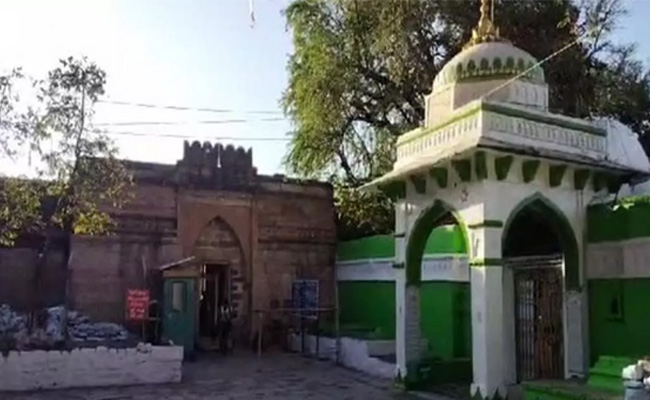
Indore (PTI): The disputed Bhojshala Temple-Kamal Maula Mosque complex has historically been registered as a 'mosque' in revenue records and available sources don't clearly mention any Saraswati temple established by then-king Raja Bhoj, the Muslim side has told the Madhya Pradesh High Court.
The Hindu community considers Bhojshala a temple dedicated to Goddess Saraswati, while the Muslim side calls the 11th-century monument Kamal Maula Mosque. The disputed complex located in Dhar district is protected by the Archaeological Survey of India (ASI).
During the hearing before the HC's Indore bench of Justices Vijay Kumar Shukla and Justice Alok Awasthi on Wednesday, Qazi Moinuddin questioned two PILs filed as intervenors in the Bhojshala case by an organisation named Hindu Front for Justice, one Kuldeep Tiwari and another individual.
Moinuddin claims to be a descendant of Sufi saint Maulana Kamaluddin Chishti and the 'Sajjadanashin' (spiritual head, guru, or successor of a Sufi shrine, khanqah, or religious site).
The PILs state that Bhojshala is actually a Saraswati temple and only Hindus should be granted the right to worship at the disputed complex.
Moinuddin's lawyer, Noor Ahmed Sheikh, claimed in the court that his client's ancestors, who are descendants of Maulana Kamaluddin Chishti, have historically held titles to the complex, and the site was also recorded as a "mosque" in government revenue records.
He contended that those associated with the management of the Kamal Maula Mosque, located within the complex, have been in "continuous and peaceful occupation" of the site for a long time.
Citing Muslim law, Sheikh argued that in the case of religious property, particularly a mosque or its related properties, officials such as the Sajjadanashin and Mutawalli (person entrusted with management, maintenance, and administration of a Waqf), and their descendants, not only have the right to intervene, but also have the right to manage and use such a structure.
Citing provisions of the Ancient Monuments Preservation Act 1904, the Muslim side's lawyer said the term "in-charge of the property" is used in this law, which makes it clear that the person or party who has been in charge of a property for a long time has rights over it.
During the hearing, Touseef Warsi, the lawyer representing the Maulana Kamaluddin Welfare Society of Dhar, claimed that Hindu parties in both PILs had made "misleading representations" regarding historical facts before the high court.
He further claimed that available historical sources do not clearly mention the existence of a Saraswati temple established by Raja Bhoj, the legendary king of the Parmar dynasty who ruled Dhar from 1010 to 1055.
The ASI, a central government agency, has adopted three different positions in the lawsuits filed regarding the Bhojshala dispute, changing its answers from time to time, and this situation raises serious questions about judicial scrutiny of the complex, Warsi submitted.
He raised objections regarding the ASI's process of scientific survey of the Bhojshala complex, carried out on the HC order in 2024, and the method of videography and requested the court to examine these objections.
The hearing in the Bhojshala case will continue on Thursday.
The HC has been regularly hearing four petitions and one writ appeal since April 6, contesting the religious nature of the monument.