KL Rahul to be Virat Kohli's deputy for SA Test series
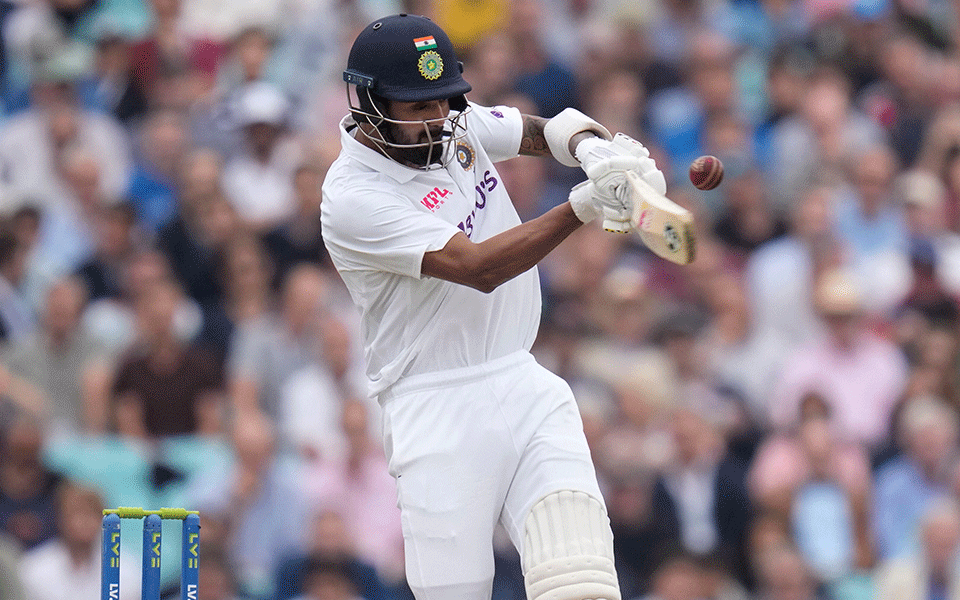
New Delhi(PTI): Opener KL Rahul is all set to become Indian team's vice captain for the three-Test series against South Africa, starting December 26, BCCI sources confirmed on Saturday.
Rohit Sharma was made deputy to Virat Kohli for the series but he was ruled out due to a recurring left-hamstring injury.
The 29-year-old Rahul has played 40 Tests so far and has scored 2321 runs at an average of 35.16 with six centuries under his belt. Importantly, he is being looked at as a long-term potential leader in the coming days.
"KL Rahul is going to be Virat Kohli's deputy for the three Test series," a senior BCCI official confirmed. The PTI had reported on December 13 that Rahul is the frontrunner for the vice-captaincy.
Rohit, who had replaced Ajinkya Rahane as the vice-captain for the Test series, suffered a left hamstring injury during the net session in Mumbai which ruled him out for at least three to four weeks.
For the selectors, it was difficult to go back to Rahane who is no longer a certainty in the Test XI and possibly it is too early for Rishabh Pant to be elevated as vice captain of the national team.
Rahul, currently, is seen as one of the few all-format specialist batter.
Rahul has the right age and experience to be groomed for future when Kohli relinquishes Test leadership. He can take over the mantle for a longer duration.
It is also expected that Rahul will be white-ball deputy to Rohit in the coming days. His name is also doing round to be the leader of new IPL Lucknow franchise.
Let the Truth be known. If you read VB and like VB, please be a VB Supporter and Help us deliver the Truth to one and all.
Road crash in UP leaves 10 dead
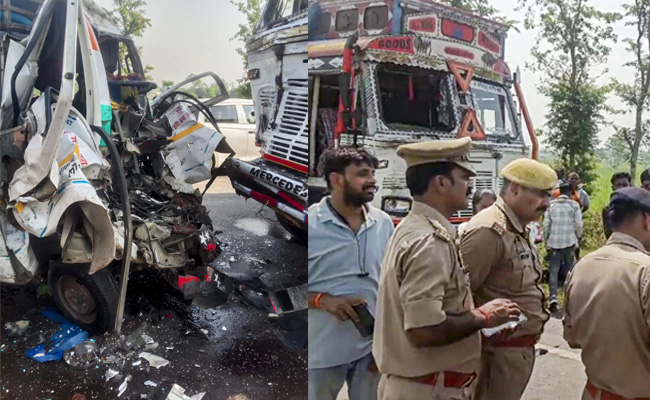
Lakhimpur Kheri (UP) (PTI): Ten people were killed when a van collided head-on with a truck on the Sisaiya-Lakhimpur national highway on Monday, police said.
The van was going to Sisaiya from Lakhimpur when the accident took place between Unchgaon and Bharehta villages.
Circle Officer of Dhaurahra, Shamsher Bahadur Singh, said all nine passengers travelling in the van and the driver were killed.
District Magistrate of Lakhimpur Kheri Anjani Kumar Singh told reporters that the van collided with a truck coming from the opposite direction, leading to nine casualties on the spot, while one succumbed to injuries at the district hospital.
Circle Officer, Dhaurahra, Shamsher Bahadur Singh told PTI, "Efforts are on to establish the identity of other deceased persons."
The seven of the deceased have been identified as Jaideep Singh (25), Pawan (23), Sohan (21), Ram Goyal (42), Sahajram (35), Pappu (18), all residents of Bahraich district and Adnan Khan (15), a resident of Lakhimpur Kheri district, police said.
Condoling the loss of lives in the accident, Uttar Pradesh Chief Minister Yogi Adityanath in a post on X, said, "The loss of life in the unfortunate road accident in Lakhimpur Kheri district is deeply distressing and heart-wrenching. My condolences are with the bereaved families."
"I have directed the local administration to provide prompt and adequate assistance to the injured and the victims. I pray to Lord Shri Ram to grant the departed souls a place at His divine feet and to bestow a speedy recovery upon the injured," Adityanath said on X.
Deputy Chief Minister Keshav Prasad Maurya and Brajesh Pathak too condoled the loss of lives in the accident.
"The loss of lives resulting from the road accident in Lakhimpur Kheri district is deeply tragic and heart-wrenching. My deepest condolences go out to the bereaved families," Maurya said.