Kohli, Rohit misfire as India labour to 136/9 in rain-hit first ODI against Australia
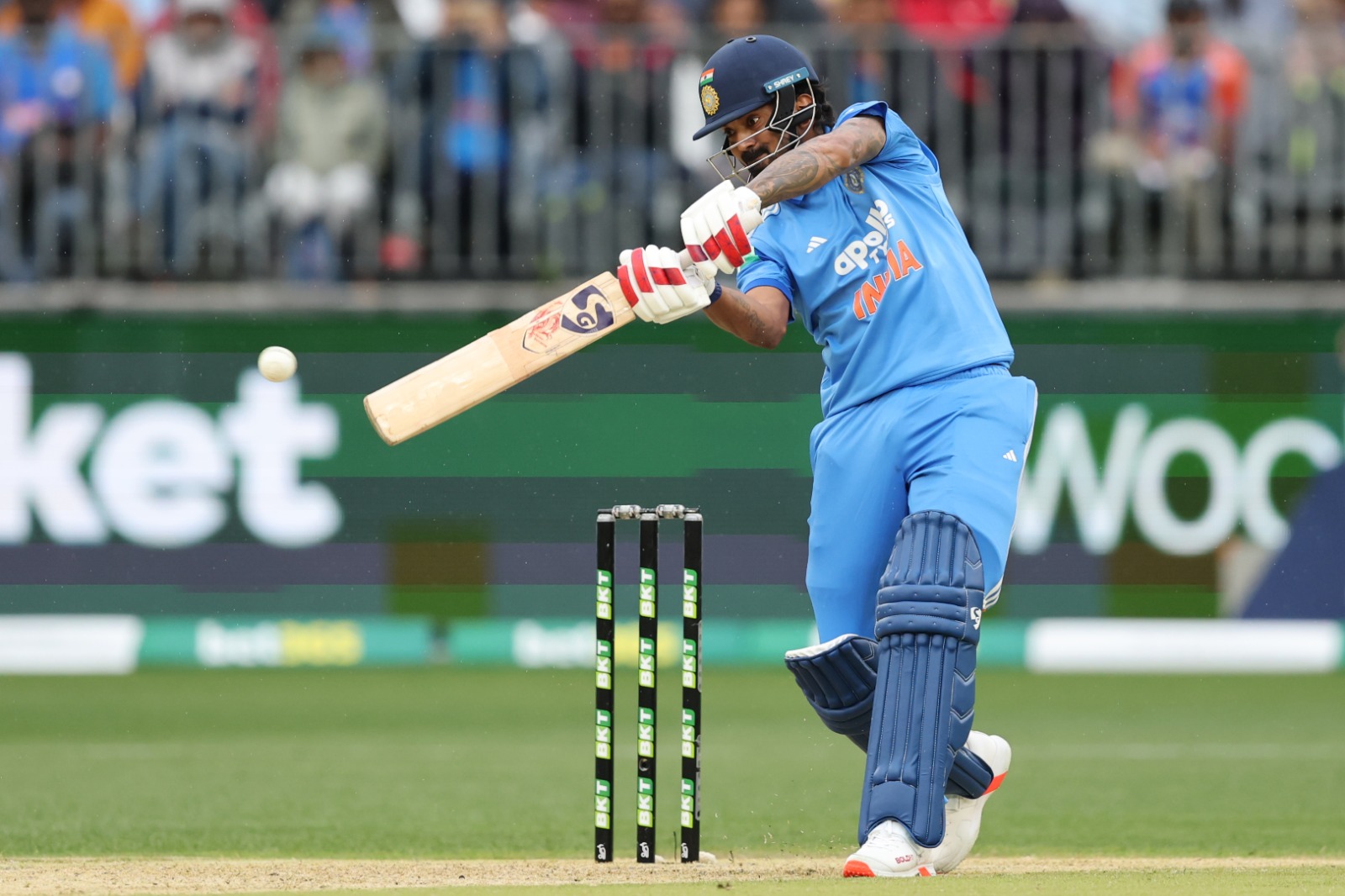
Perth (PTI): The grand comeback party of Virat Kohli and Rohit Sharma lasted just 22 balls combined, and their lowkey appearance reflected in India's underwhelming 136 for nine against Australia in the rain-affected first ODI here on Sunday.
If the constant rain breaks, which reduced the game to a 26-over-a-side affair, were not enough, India struggled to find any sort of momentum, except when KL Rahul (38, 30 balls) was in the middle.
Australia understandably chose to bowl first under grey skies, and the extra bounce on the Optus Stadium pitch also assisted them copiously.
Rohit (8) walked onto the pitch alongside new captain Shubman Gill to loud cheers from the Perth crowd, but he stayed in the middle for just 14 balls.
Rohit played a sumptuous straight drive off Mitchell Starc, a quick time ride back to the glory days. But that was that for the day for him, as Josh Hazlewood's ability to find steep bounce from the quarter length ended his tenure.
The ever-rising ball kissed the sticker of his bat and travelled to debutant Matthew Renshaw at second slip.
Kohli walked into the daunting stadium with even louder cheer, but the familiar ODI greatness was nowhere to be seen.
If anything, a habitual prod outside the off-stump off Starc revealed that the age-old weakness still persists.
It eventually consumed him. A drive on the up off the left-arm pacer took the edge of his bat and Cooper Connolly at backward point snaffled a wonderful catch to curtail Kohli's agonising eight-ball innings.
It was Kohli's first duck in Australia. The veterans need something substantial in the subsequent ODIs at Adelaide and Sydney to prove that they have the fire in them for a longer journey.
Unlike his senior colleagues, Gill looked assured but a rather casual attempt to flick Nathan Ellis resulted in a down the leg side catch to wicketkeeper Josh Philippe.
Shreyas Iyer, who played a marvellous square cut off Hazlewood to find the ropes, perished in the same way.
Hazlewood strangled him for space with another bouncer that he featured to Philippe as India slid to 45 for four in the 14th over. Finally, India found their wheels moving through the 39-run fifth-wicket alliance between Axar Patel (31) and Rahul before the former fell to spinner Matthew Kuhnemann.
Rahul was quite impressive in his knock, dealing with the bounce getting over the ball nicely. The straight drive and pull off Ellis off successive balls for fours were an absolute treat.
Rahul slipped into overdrive once spinners were introduced, and slammed Matthew Short for two successive sixes.
Rahul and Washington Sundar added 30 runs for the sixth wicket but the limited number of overs affected India's acceleration in the backend.
Let the Truth be known. If you read VB and like VB, please be a VB Supporter and Help us deliver the Truth to one and all.
Trump says EU has until July 4 to approve last year's trade deal or it will face higher tariffs
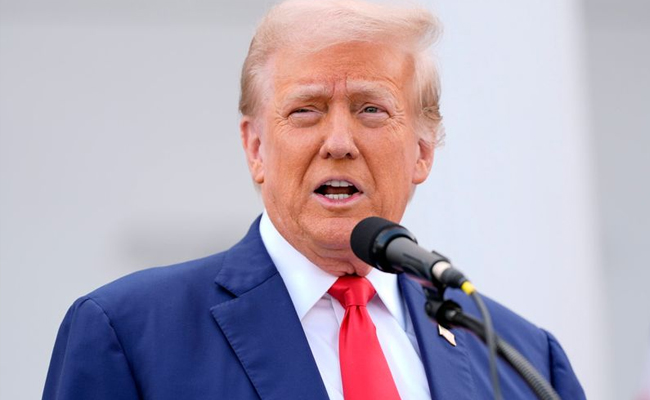
Washington (AP): President Donald Trump has said in a social media post that goods from the European Union would face higher tariff rates if the 27-member bloc fails to approve last year's trade framework by July 4.
The announcement on Thursday appeared to be a deadline extension after the president said last Friday that EU autos would face a higher 25 per cent tariff starting this week. Trump made the updated announcement after what he described as a "great call" with European Commission President Ursula von der Leyen.
Still, the US president was displeased that the European Parliament had yet to finalize the trade arrangement reached last year, which was further complicated in February by the US Supreme Court ruling that Trump lacked the legal authority to declare an economic emergency to impose the initial tariffs used to pressure the EU into talks.
"A promise was made that the EU would deliver their side of the Deal and, as per Agreement, cut their Tariffs to ZERO!" Trump posted. "I agreed to give her until our Country's 250th Birthday or, unfortunately, their Tariffs would immediately jump to much higher levels."
It was unclear from the post whether Trump was implying that the tariff rates would jump on all EU goods or the increase would only apply to autos.
His latest statement indicates he might be backing away from his earlier threat on EU autos by giving the European Parliament several more weeks to approve the agreement.
Under the original terms of the framework, the US would charge a 15 per cent tax on most goods imported from the EU.
But since the Supreme Court ruling, the administration has levied a 10 per cent tariff while investigating trade imbalances and national security issues, aiming to put in new tariffs to make up for lost revenues.