Kohli's captaincy not thoughtful, if not mindless
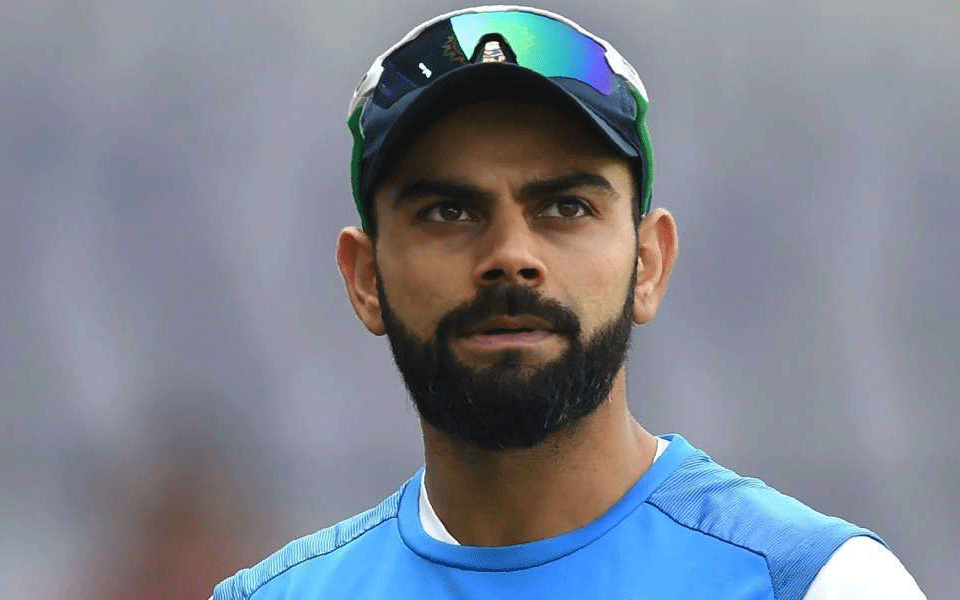
September 15 : These days there is little time to celebrate or brood after a cricket series. After a long tour of England, some key India players, who play in all three formats of the game, are in the Gulf to play the Asia Cup.
On return, they are up against the West Indies before another long taxing tour to Australia.The focus is shifted so fast that everything preceded is history for the statistician to record.
Their Australia tour, third leg of the year's Grand Slams after South Africa and England, will be another gruelling one. Skipper Virat Kohli got a breather to keep his feet up and follow his teammates playing in the Asia Cup on the telly. The break should help him ruminate about his captaincy and why he lost the two tours he could have won with a little bit of application and some luck.
The stocktaking is a part of life and so is in cricket after every tour. Not many former cricketers or the itinerant correspondents are happy with the team's performance in South Africa and England, more so the way the coach and captain reacted to the scrutiny.
Captaincy and team selection are the things on which not everyone will be in agreement. Some question the team selection before the game and many are wiser after, with the advantage of hindsight. It must be said that captaincy, particularly bowling changes and field placements, were not thoughtful, if not mindless.
Whether Kuldeep Yadav should have played at Lord's on a wet English summer day, Ravichandran Ashwin at Southampton or Cheteshwar Pujara should have been dropped for the first Test are not the issues that led to India's defeat. If Yadav had taken wickets and had Pujara played and failed their showing in the run-up to the Tests would have come into question.
Same way, the class and talent was not fairly judged, the dependable Murali Vijay, who got some big runs overseas, was sent back after failing in two Tests whereas the other two openers were retained for no apparent reason except their ability to turn matches on their day.
Till the last day of the series when he came up with a strokeful hundred, Lokesh Rahul's performance was not commensurate with his enormous potential, though he made up with his outstanding slip catching to retain his place in the eleven.
It seemed Shikhar Dhawan was given the opportunity to make sure his technique is not suited for seaming and bouncy pitches. Will he be given another chance against the West Indies to allow him to stake his claims for a berth in the Australia-bound squad, or will Vijay get another opportunity?
There is nothing new about the selectors and the team management not being on the same page. There have been a number of instances when the team management snubbed the selectors' choice.
The clash of minds was seen again when the late joinee Hanuma Vihari, who came in for the last two Tests, was preferred over Karun Nair, only the second Indian to score a triple hundred in Tests and that, too, against England.
Mind you, Nair was picked in the original squad and retained for the entire series.
The only argument the selectors and the team management can have is that Hanuma was in form, having scored heavily for India ‘A' against international sides before the Oval Test whereas Nair had only been accompanying the drinks brigade the entire summer.
The simple act is that Indian batsmen let down the bravehearts Ishant Sharma, Mohammad Shami and Jasprit Bumrah who for the second series in succession bowled the team into a winning position overseas.
When it comes to batting, there was no support for Kohli and the captain publicly stated that he felt miserable after his failure in the second innings of the Birmingham Test which India lost by 31 runs.
He must have had a similar sick feeling after the way he got out in the second innings at the Oval. Who knows, if he had stayed and Rahul and Rishabh Pant played around him the team could have even won or returned with an honourable draw in the last Test.
The word draw is not in the dictionary of the coach and captain.
Both Rahul and Pant, were either advised to bat the manner in which they were trying to potter around or they were simply overcautious to justify their selection.
Both of them and Hardik Pandya should have been told to bat they way they normally do. They looked scared of getting out playing audacious shots.
This batting failure brings us to the topic of preparation for a major tour, playing an adequate number of warm-up matches. After their foolhardy decision not to take practice matches seriously, now coach Ravi Shastri wants a fair number of first-class matches before they go into the Test series.
Even for the hosts these matches should help try their talented youngsters, more so when Australia is in the process of rebuilding their side. Kohli, too, may look at practice games seriously.
It is high time Shastri and Kohli walked their talk.
Let the Truth be known. If you read VB and like VB, please be a VB Supporter and Help us deliver the Truth to one and all.
Parag fined 25 percent of match fees for vaping incident, BCCI exploring 'stringent action' on RR
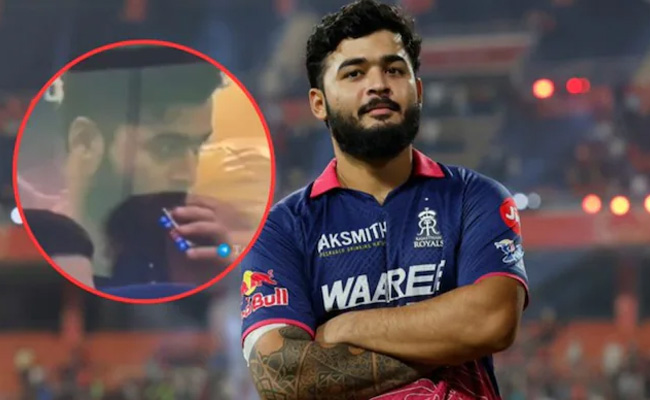
New Delhi (PTI): Rajasthan Royals captain Riyan Parag was on Thursday fined 25 per cent of his match fee for bringing the game into "disrepute" after being caught vaping on camera during the IPL game against Punjab Kings in Mullanpur.
Parag's actions during the Royals' chase on Tuesday night drew condemnation on social media.
PTI has learned that on field umpires Tanmay Srivastava and Nitin Menon had not reported the matter to match referee Amit Sharma right after the game. They only did that after seeing visual proof and Sharma found Parag guilty for a code of conduct breach as per the IPL guidelines.
The Level 1 offence carries 25 per cent deduction from match fees and one demerit point.
ALSO READ: 3 held, hunt on for 4 accomplices after they kidnap, assault and urinate on man in Bhopal
"Riyan admitted to the offence and accepted the sanction imposed by the Match Referee, Amit Sharma," said the IPL in a statement.
"The BCCI is also exploring other options to initiate proceedings for stringent action against the erring team, its officials and players to ensure that the reputation of IPL remains intact," the statement added.
When PTI reached out to BCCI secretary Devajit Saika on possible action on Rajasthan Royals, he said: "As it is written clearly in the statement, we are exploring what action to take on the team. It is not decided yet."
The Indian government had banned e-cigarettes back in 2019, prohibiting their production, sale and distribution. As per the law, the offender faces imprisonment up to one year and/or a Rs one lakh fine for a first time offence.
"Article 2.21 of IPL Code of Conduct is intended to cover all types of conduct that bring the game into disrepute and which is not specifically and adequately covered by the specific offences set out elsewhere in this Code of Conduct, including Article 2.20," the IPL Code of Conduct states.
"By way of example, Article 2.21 may (depending upon the seriousness and context of the breach) prohibit, without limitation, the following: (a) public acts of misconduct; (b) unruly public behaviour; and (c) inappropriate comments which are detrimental to the interests of the game.
"When assessing the seriousness of the offence, the context of the particular situation, and whether it was deliberate, reckless, negligent, avoidable and/or accidental, shall be considered.
"Further, the person lodging the Report shall determine where on the range of severity the conduct lays (with the range of severity starting at conduct of a minor nature (and hence a Level 1 Offence) up to conduct of an extremely serious nature (and hence a Level 4 Offence)."
Since it is a Level 1 offence there was no need for a hearing.
Parag, who has not had the best of times with the bat this IPL, was seen inhaling an e-cigarette, also known as vaping, in the dressing room during the live broadcast of their game against Punjab Kings. Royals won the game to end Kings' unbeaten run in the tournament.
This is not the first controversy to hit the Royals this season. Earlier this month, team manager Romi Bhinder was fined Rs one lakh for breaching PMOA protocol after being found using his phone in the dugout.
IPL and BCCI officials involved in the conduct of the IPL termed it as a careless act in the age of social media and prying TV cameras.
Royals next host Delhi Capitals in Jaipur on Friday night.