KXIP trump MI in second Super Over in dramatic IPL game

Dubai: Kings XI Punjab showed nerves of steel as they defeated defending champions Mumbai Indians in an edge-of-the-seat IPL game that was decided via a second Super Over for the first time in the history of the tournament here on Sunday.
Kieron Pollard helped MI score 11 for one in the second Super Over bowled by Chris Jordan after both the teams ended at the same score in the regulation 20 overs as well as in the first Super Over.
Chris Gayle then hit the first ball bowled by Trent Boult for a six before Mayank Agarwal cracked successive fours as KXIP notched up an incredible win to keep their IPL play-off hopes alive.
This was after Jasprit Bumrah dismissed Nicholas Pooran and KL Rahul in the first Super Over to leave MI with a six-run target.
However, Mohammed Shami bowled an equally incredible over as KXIP defended the five runs to take the match to a second Super Over.
Earlier, Rahul smashed a scintillating 51-ball 77 to take KXIP on the brink of a successful chase but team-mates Deepak Hooda and Jordan could only level the scores at 176 for six in the stipulated 20 overs.
Bumrah (3/24) snared three crucial wickets during the regulation 20 overs after opener Quinton de Kock (53 off 43) hit his fourth half-century of the season to restrict KXIP.
Opting to bat, MI were reduced to 43 for 3 but opener de Kock scored a 43-ball 53 and shared a 58-run stand with Krunal Pandya (34) to steady the ship.
Pollard (34 not out off 12) and Nathan Coulter-Nile (24 not out off 12) then provided the late flourish, adding 57 off 21 balls in the death overs as MI posted 176 for 6.
Chasing 177, Rahul, who currently holds the orange cap, blasted seven fours and three sixes in his knock to cross 500 runs this season and almost single-handedly take KXIP home.
He, alongwith Gayle (24), took KXIP to 75 for one in nine overs after losing Mayank Agarwal (11) early in the innings.
However, Gayle was sent packing by Rahul Chahar in the 10th over and then Bumrah returned to dismiss Nicholas Pooran (24 off 11) to leave Punjab at 108 for 3.
Rahul then pulled Chahar for a six to bring up yet another fifty but the leg-spinner made a good comeback one ball later, removing Glenn Maxwell at the other end as KXIP slipped to 115 for four in 14th over.
Rahul added another 38 with Deepak Hooda (23 not out) but he was done in by a yorker from Bumrah in the 18th over.
Needing 24 off 15 balls, Hooda and Chris Jordon (13) tied the match.
Earlier, de Kock hit three fours and as many sixes for his fourth fifty of the tournament to anchor the innings before Pollard and Coulter-Nile lifted MI past the 170-run mark.
The pace duo of Arshdeep Singh (2/35) and Mohammed Shami (2/30) provided the early breakthroughs, dismissing Rohit Sharma (9) and Suryakumar Yadav (0) respectively to reduce MI to 24 for two in 3.3 overs.
Ishan Kishan then became Arshdeep's second victim when he was caught at deep third man as MI ended the powerplay at 43 for 3.
Promoted up the order, Krunal deposited Chris Jordon's third ball over deep extra cover and then picked up a four off Glenn Maxwell in the next over.
With the spin duo of M Ashwin and Ravi Bishnoi bowling in tandem, MI picked up the odd boundaries but couldn't completely free their arms to play the shots.
Let the Truth be known. If you read VB and like VB, please be a VB Supporter and Help us deliver the Truth to one and all.
Karnataka School Edu Dept prohibits children from being made to dance to obscene songs
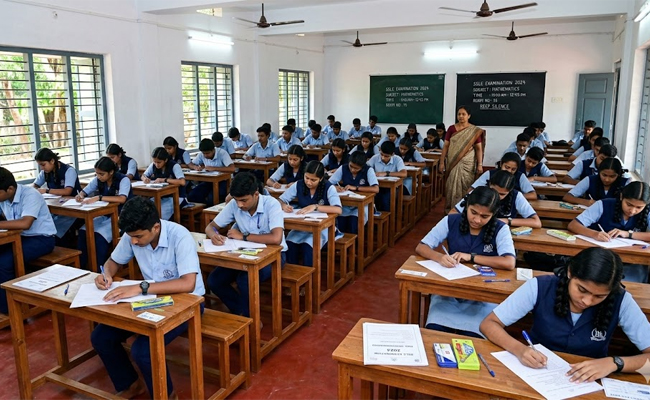
Bengaluru (PTI): The Karnataka School Education Department has issued a circular strictly prohibiting children from being made to dance to obscene songs in educational and cultural programmes.
It stated that such dances would negatively impact students' mental health and moral values. It will create indiscipline and harm the sanctity of education.
"All the Deputy Directors (Administration) of the state's School Education Department have been asked to take strict measures to prevent children or students from dancing to obscene songs in all government, aided and unaided schools in the state," the office of the commissioner of the School Education Department said in a recent circular.
"If it is found that children are being made to dance to obscene songs, appropriate action will be taken against the headmaster or management of such school," it added.
The department also listed certain measures in this regard, which include: strictly prohibiting children from being made to dance to obscene songs during educational and cultural programmes; selecting songs that are inspiring, positive, instilling national pride in children and reflecting the greatness, dignity, values, culture, and morality of the state.
Stating that the school headmaster and management are responsible for selecting songs and dances for cultural programmes, it said, they should also ensure that students wear decent clothes in dance or cultural programmes.