Liverpool star Mohamed Salah becomes a ‘real-life hero’ after stopping abuse of homeless man

This news story was published by 'indianexpress.com' and has been shared here without any changes and alterations. CLICK HERE to read the original post.
Mohamed Salah, who shines with the ball at his feet for Liverpool, showed his humane side in a recent video where he stepped in to stop the abuse of a homeless man in near Anfield, Liverpool.
In a recorded CCTV footage of last month, Salah was seen pulling up to a petrol station in the city and noticed a homeless man, David Craig, being harassed by a group of people.
The 28-year-old Egyptian intervened and warned the hecklers that they could one day be in a similar position as the homeless man. He then went on to hand Craig some money.
“Mo was every bit as wonderful as he is for Liverpool on the pitch,” Craig was quoted by The Sun. “Mo had seen a couple of the lads hassling me. They were calling me names, asking why I was begging and telling me to get a job.”
“He then turned to them and said, ‘That could be you in a few years’. I only knew I wasn’t hallucinating when Mo handed me £100. What a complete legend.”
“Mo is a real-life hero in my eyes and I want to thank him,” Craig added.
Salah is well-known for his charitable nature as he has previously been involved in the construction of a medical centre and a school for girls in Egypt.
On the pitch, Salah has so far scored five goals in just four matches in the 2020/21 season, including a brace in Liverpool’s 7-2 defeat to Aston Villa on Sunday.
Mo Salah reportedly saw a group of lads abusing a homeless man so went over, stopped the abuse and told them it could be them one day.
— Footy Accumulators (@FootyAccums) October 7, 2020
He then withdrew £100 from the cash machine and handed it over to the homeless man.
What a guy ? pic.twitter.com/rjPDtPVxVi
Let the Truth be known. If you read VB and like VB, please be a VB Supporter and Help us deliver the Truth to one and all.
Karnataka School Edu Dept prohibits children from being made to dance to obscene songs
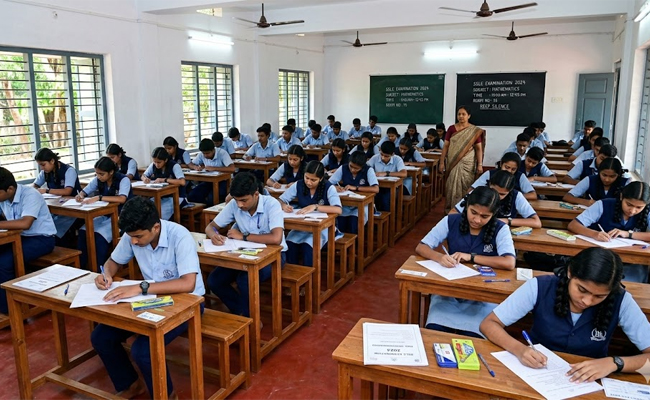
Bengaluru (PTI): The Karnataka School Education Department has issued a circular strictly prohibiting children from being made to dance to obscene songs in educational and cultural programmes.
It stated that such dances would negatively impact students' mental health and moral values. It will create indiscipline and harm the sanctity of education.
"All the Deputy Directors (Administration) of the state's School Education Department have been asked to take strict measures to prevent children or students from dancing to obscene songs in all government, aided and unaided schools in the state," the office of the commissioner of the School Education Department said in a recent circular.
"If it is found that children are being made to dance to obscene songs, appropriate action will be taken against the headmaster or management of such school," it added.
The department also listed certain measures in this regard, which include: strictly prohibiting children from being made to dance to obscene songs during educational and cultural programmes; selecting songs that are inspiring, positive, instilling national pride in children and reflecting the greatness, dignity, values, culture, and morality of the state.
Stating that the school headmaster and management are responsible for selecting songs and dances for cultural programmes, it said, they should also ensure that students wear decent clothes in dance or cultural programmes.