Mohammad Nabi named captain of Afghan team for T20 WC after Rashid steps down
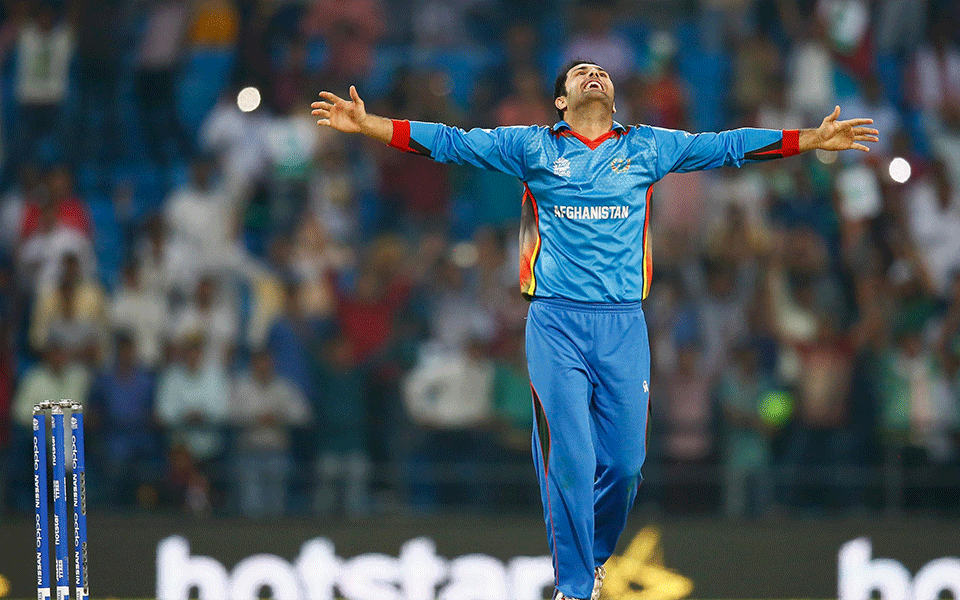
Kabul(PTI): Veteran all-rounder Mohammad Nabi has been named Afghanistan skipper for the upcoming T20 World Cup after star spinner Rashid Khan stepped down from captaincy protesting the selection of the national squad without his inputs.
The Afghanistan Cricket Board (ACB) is yet to officially announce Nabi's appointment as captain but the 36-year-old all-rounder tweeted that he has been chosen to lead the team.
"At this critical stage, I admire the decision of ACB for the announcement of leading the National Cricket Team in T20 Format," the 36-year-old Nabi tweeted.
"... we will present a great picture of the Nation in the upcoming T20 World Cup," said the spin-bowling all-rounder who plays for Sunrisers Hyderabad in the Indian Premier League.
In a shocking decision, Rashid on Thursday stepped down as the captain of the team, saying that his opinion was not sought before finalising the national squad for the T20 World Cup.
Rashid's stepping down came immediately after the ACB named him as the captain of the 15-member squad for the showpiece event.
"As the captain and responsible person for the nation I reserve the right to be part of the selection of the team," the 22-year-old spinner said in a post shared on his twitter handle.
"The selection committee and ACB has not obtained my consent for the team which has been announced by ACB media," said Rashid.
"I am taking the decision of stepping down from the role as the captain of Afghanistan T20 side effective immediately. It's always my proud playing for Afghanistan."
The T20 World Cup is scheduled to be held in the UAE and Oman from October 17 to November 14.
Afghanistan has been in turmoil following the takeover of the country by Taliban.
Soon after forming the interim government, the Taliban banned women from playing cricket or any others sports, casting doubts over Afghanistan men's team Test status.
As per ICC rules, all Test playing nations must have a women's team as well.
Cricket Australia (CA) all but confirmed on Thursday that its men's team's season-opening Test against Afghanistan, slated to start on November 27, will be scrapped due to the Taliban's order.
Let the Truth be known. If you read VB and like VB, please be a VB Supporter and Help us deliver the Truth to one and all.
4 held for sexually assaulting woman, girl on moving bus after social media alert in UP's Agra

Agra (UP) (PTI): Four people were arrested, after a prompt response by police following a social media alert, for allegedly sexually assaulting a woman and a girl inside a moving bus here, officials said on Tuesday.
According to an official police statement, at 12:27 am on April 27, information was received on the social media platform X about an incident of sexual assault on a bus travelling from Kanpur to Ahmedabad, which was approaching Namner crossing in Agra.
Acting under the direction of Police Commissioner Deepak Kumar, the Agra Police social media team immediately alerted the Rakabganj police station within minutes and coordinated with the victims to confirm the incident and obtain the exact location, it stated.
Police teams launched intensive checking at Namner crossing and intercepted the bus as it reached the spot. The four accused involved in the incident were apprehended on the spot, and legal action was initiated against them, the statement said.
The police said the swift response and coordination between the social media team and field units ensured timely action, bringing relief to the victims and other passengers, who expressed gratitude towards the police, it added.