My coaches are being harassed regularly,politics is affecting my training:Olympic medallist Lovlina
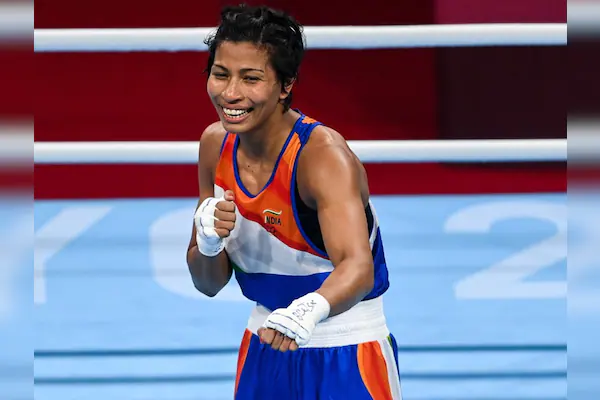
Birmingham, Jul 25: Olympic bronze medallist Lovlina Borgohain on Monday alleged that her preparations for the Commonwealth Games are being hampered because of the "continuous harassment" her coaches are facing from the authorities.
The Indian boxing squad reached the Games Village here on Sunday night after a training stint in Ireland but Lovlina's personal coach Sandhya Gurung could not enter the Village since she does not have accreditation.
Lovlina, perhaps, wanted her personal coach Amey Kolekar with her during the CWG but he did not feature in the long list.
The decorated pugilist expressed her anger in a long twitter post.
"Today with a lot of grief, I want to tell everyone about the continuous harassment going on with me. The coaches who helped me win an Olympic medal are always being side-lined which has severely impacted my training schedule," Lovlina wrote in her twitter post.
"One of the coaches is Sandhya Gurungji, who is a Dronacharya awardee. I had to plead with folded hands to get my coaches included in the contingent. I am feeling mentally harassed because of this ordeal," she posted.
"Right now, my coach Sandhya Gurung is standing outside the CWG village and not being allowed to enter. Just eight days before the start of my event, my training schedule has been hampered. My other coach has been sent back to India," she said.
Lovlina alleged that she endured similar treatment before the World Championship in Istanbul and she fears that something similar will happen at the upcoming Birmingham Games.
"I don't understand how will I focus on the Games (CWG) amidst all this? My world championships also suffered because of this. I don't want my CWG to be affected due to politics. Hoping I will overcome this politics and win a medal for my country. Jai Hind," she wrote.
The Boxing Federation of India (BFI) said the accreditation process is being managed by the Indian Olympic Association (IOA) and hoped that issue will be sorted soon.
"The IOA and BFI are working to get Sandhya's accreditation continuously. It is in IOA's hand but it will come by today or tomorrow.
"We had given all names beforehand but there is a quota system. Based on the number of athletes who have qualified there is 25 per cent quota. So we had four officials, which includes coach, doctor etc," BFI secretary Hemanta Kalita told PTI.
"We had requested the IOA and they have increased the quota to eight. Four will stay inside the village and four have to stay outside, they can enter the village, and spend the day but at night they have to go back out," Kalita added.
The other coach Lovlina is talking about is her strength and conditioning coach Amey Kolekar, who is also her personal coach
His name was not on the long list. Kolekar was with her in Ireland.
The Indian team already has a strength and conditioning coach, who will help out the pugilists during the Games.
Meanwhile the Sports Authority of India (SAI) said it will try that a proper resolution is reached.
"The SAI has taken up the matter with BFI. The Sports Ministry is in talks with IOA to solve the matter and ensure best possible preparation for Lovlina who is a strong medal contender," SAI official said.
— Lovlina Borgohain (@LovlinaBorgohai) July 25, 2022
Let the Truth be known. If you read VB and like VB, please be a VB Supporter and Help us deliver the Truth to one and all.
Nashik court sends ‘godman’ Kharat to 3-day police custody in 7th sexual exploitation case
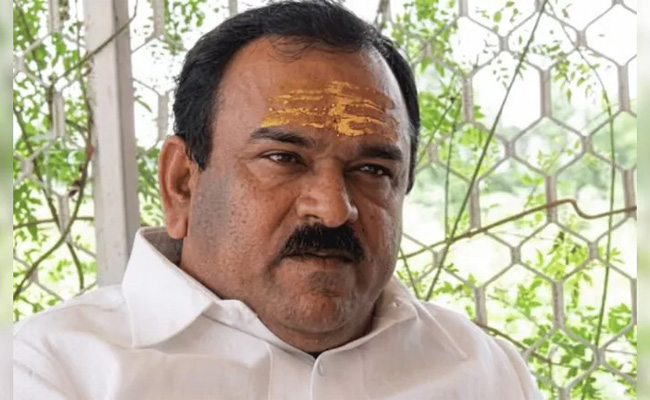
Nashik (PTI): A court in Maharashtra's Nashik has remanded self-styled astrologer-cum-godman Ashok Kharat to police custody till April 29 in the seventh case of sexual exploitation registered against him.
Kharat, a former Merchant Navy officer arrested on March 18, is accused of sexually exploiting several women and indulging in large-scale financial fraud by claiming to have divine powers and knowledge of black magic.
In the seventh case, Kharat sexually exploited a married woman who had approached him in search of solutions to her family problems.
ALSO READ: ED cracks down on suspected interstate liquor racket, raids 9 sites in Arunachal
The accused allegedly gave the woman something to drink, sexually assaulted her while her husband sat outside his office and threatened to kill her if she told anyone about it.
The Special Investigation Team (SIT), which is probing into 12 cases of sexual exploitation and financial fraud registered against Kharat in Nashik and Ahilyanagar districts, on Sunday filed a request application in the court demanding his custody in the seventh case.
Kharat was produced in court for a virtual hearing in the seventh case on Monday.
The prosecution demanded six-day police custody for Kharat, citing the discovery of a locker in Kharat's house during the investigation, from which the police recovered two blank cheques and other documents, all of which have to be probed.
The court agreed to the prosecution's demand and remanded Kharat to three-day police custody till April 29 in the case.
Kharat has been at the centre of a political firestorm, as he was well-connected, and photographs of him with political leaders and other important members of society have been surfacing in mainstream and social media since his arrest.