Naqvi takes away trophy after Indian team refuses to accept from him, BCCI to gun for his ouster
Dubai (PTI): In an unprecedented turn of events, Pakistan's Interior Minister Mohsin Naqvi, in his capacity as the chairman of Asian Cricket Council (ACC), denied the Indian cricket team the Asia Cup Trophy, after it refused to accept the silverware from him.
It was 90 minutes of pure drama at the Dubai International Cricket Stadium after India won the Asia Cup beating Pakistan by five wickets in a thrilling final here on Sunday.
However, what happened after a high-octane game of cricket overshadowed the performance on the 22 yards.
The Indian players were soon out on the field with some of the players being accompanied by their respective families. Skipper Suryakumar Yadav's wife Devisha, head coach Gautam Gambhir's wife and daughters were on the ground as everyone was in good spirits.
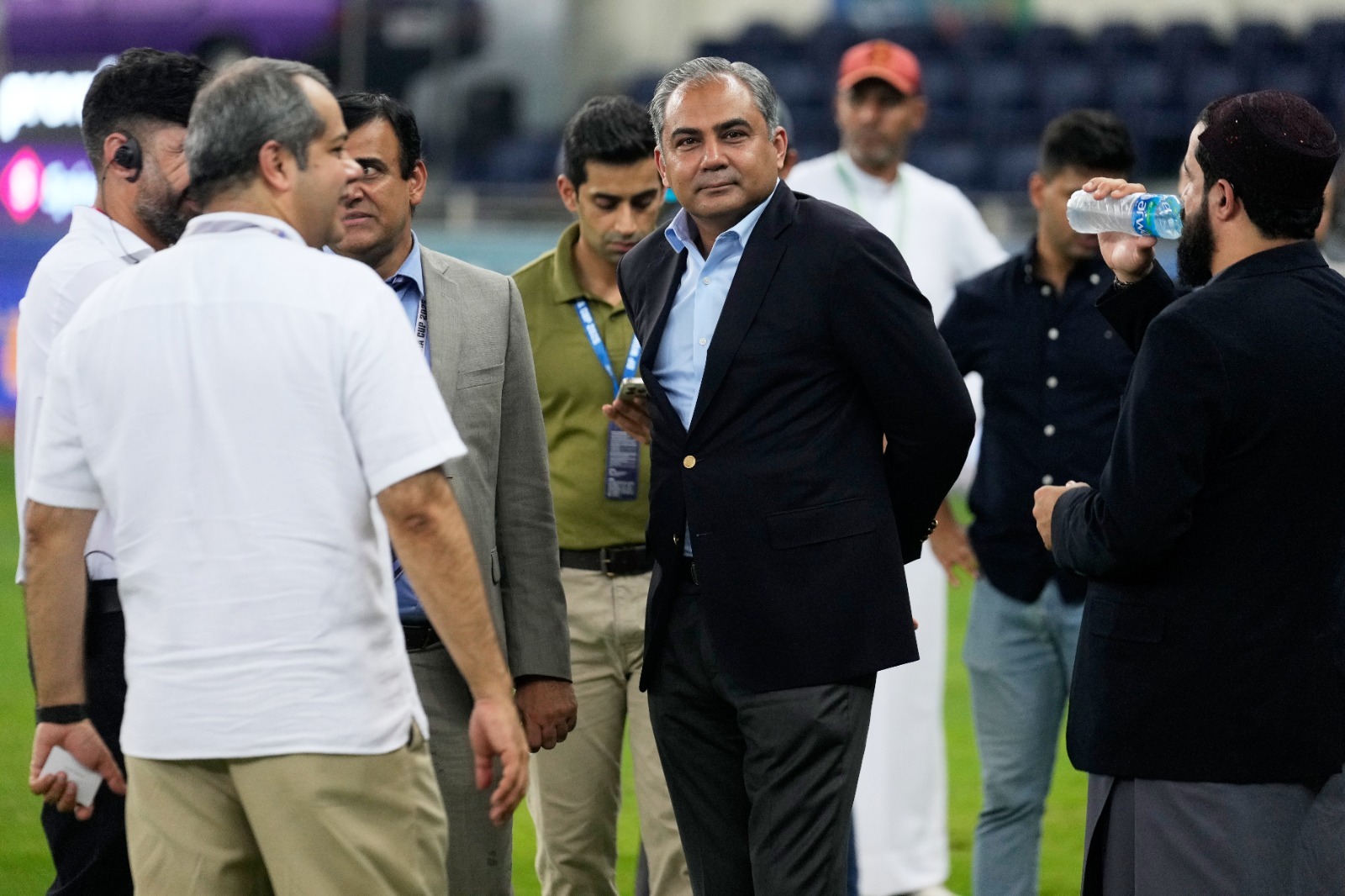
Exactly 20-25 yards from where the 'Men In Blue' gathered, another melee was formed with ACC and Pakistan Cricket Board chairman Mohsin Naqvi standing with his coterie.
It is learnt that BCCI had informed their ACC points-person that the team won't take the award from Naqvi, who has a pronounced anti-India stance.
Naqvi had posted cryptic videos of Cristiano Ronaldo's plane crash gesture celebrations, a reference to the Pakistani claims that six Indian jets were downed during 'Operation Sindoor' in the aftermath of the Pahalgam terror attack.
Naqvi was also behind Pakistan's demand that ICC charge Suryakumar with a Level 4 offence for standing by the Indian Army and showing solidarity with victims of Pahalgam terror attack. The Indian team had also maintained a 'no handshake' policy with regards to Pakistan during the tournament.
For the first one hour of the delayed presentation, none of the Pakistan players were on the ground for the ceremony.
It is learnt that the Indian team was game to receiving the trophy from anyone else among the dignitaries on the podium save Naqvi. Dubai Sports City Khalid Al Zarooni, who was also on the dais, was even expected to present India with the Asia Cup.
However, amid the BCCI's clear stand, the Indian players didn't want to go up on stage till Naqvi was around and the PCB chairman did not oblige.
"BCCI would have lodged official protest if Naqvi had tried to forcefully hand over the trophy," a senior BCCI official told PTI on conditions of anonymity.
In this backdrop, post-match presenter Simon Doull made announcement for the individual sponsors' awards as it is mandatory to acknowledge the stakeholders and investors of the event.
Once the individual awards were given and the Pakistan team collected their prizes from Bangladesh Cricket Board president Aminul Islam Bulbul, Doull announced: "I have been informed by the Asian Cricket Council that the Indian cricket team will not be collecting their awards tonight. So that does conclude the post-match presentation."
As Naqvi got down from the podium and strode towards the exit gate, the ACC event staff, to everyone surprise also walked away with the trophy leaving everyone flummoxed.
BCB president Bulbul, who is seen to be a close ally of Naqvi (the last ACC meet that BCCI skipped was held in Dhaka), spoke to mediapersons stationed outside the stadium informing them that prize distribution ceremony had to be abruptly called off in the middle of the proceedings due to India's refusal.
The Indian squad, along with support staff, gathered near the podium to celebrate briefly and also did a photo-session albeit without the trophy.
"We have decided not to take the Asia Cup 2025 trophy from the ACC chairman, who happens to be one of the main leaders of Pakistan," BCCI secretary Devajit Saikia told select group of news agencies at the board headquarters in Mumbai.
He also asked Naqvi to return the Championship trophy and individual medals as soon as possible.
"But that does not mean that the gentleman will take away the trophy with him, along with the medals. So it is very unfortunate and we hope that the trophy and the medals will be returned to India as soon as possible."
When Pakistan skipper Salman Ali Agha was asked about it, he backed his chairman's controversial move.
"Look he is the ACC chairman. He is well within his rights to give away the trophy."
BCCI to gun for Naqvi ouster from ACC
The BCCI, which had its AGM on Sunday, is furious at the turn of events and will approach the ICC for some action as Saikia declared.
"There is an ICC conference in November in Dubai. In the next conference, we are going to launch a very serious and very strong protest against the act of the ACC chairperson (Naqvi)," Saikia said.
Scheduling for next year's World T20
The India vs Pakistan games are the proverbial cash cows in the global cricket's broadcast ecosystem.
Hence efforts are always made to squeeze in as many games possible in multi-lateral events.
But the chain of events in Dubai on Sunday will certainly have a sour aftertaste and stakeholders will need to decide at what cost they want to have these games which increase animosity as was evident during the Asia Cup.
Let the Truth be known. If you read VB and like VB, please be a VB Supporter and Help us deliver the Truth to one and all.
SC notice to Centre on PIL against Muslim personal law sections being 'discriminatory' against women
New Delhi (PTI): The Supreme Court on Thursday sought the Centre's response on a PIL challenging the constitutional validity of certain provisions of the Muslim Personal Law (Shariat) Application Act, 1937, on the ground that those are allegedly discriminatory against women.
A bench of Chief Justice Surya Kant and Justices Joymalya Bagchi and Vipul M Panchol took note of the submissions made by lawyer Prashant Bhushan, who appeared in the matter for petitioners Poulomi Pavini Shukla and the Nyaya Naari Foundation, and issued a notice to the Union Ministry of Minority Affairs.
The plea says the current Shariat inheritance rules are "manifestly discriminatory" against women, often granting them only half or less of the share allocated to their male counterparts.
Bhushan said the 1937 Act violates Article 14 (right to equality) of the Constitution.
He said matters of succession are civil in nature and do not constitute an "essential religious practice" protected under Article 25.
"Saying women will get half or even less than half compared to male counterparts is discriminatory," the lawyer said.