New Faces: 10 talents who are ready to own IPL this season

New Delhi (PTI): Vaibhav Sooryavanshi and Ayush Mhatre hogged the limelight in their debut IPL season last year and in the upcoming edition too, there would be quite a few who would like to justify the tournament tagline of "Where Talent Meets Opportunity".
PTI takes a look at one rookie from each of the 10 franchises who are expected to make a name for themselves in the next eight weeks.
The list comprises both Indian and international names who either haven't yet made their IPL debut or have played less than five games so far.
Prashant Veer (Chennai Super Kings):
========================
There are plenty of cricketers in India, who bowl slow left-arm orthodox and bat left-handed. But none of them are faced with the task of filling up the big boots of Ravindra Jadeja like the 20-year-old Amethi-born Prashant Veer.
Never before has one witnessed Chennai Super Kings invest so heavily in youth. The franchise bagged him with a Rs 14.20 crore bid, based more on potential and how the scouts felt after looking at him during trials.
The 20-year-old has only nine Syed Mushtaq Ali Trophy (SMAT) matches under his belt but with a bowling economy rate of 6.45 and a batting strike-rate of 167 plus, Prashant Veer is expected to play a big part for the 'Canary Yellows' this season.
Auqib Nabi (Delhi Capitals):
==================
At 29, Nabi isn't a spring chicken and has a good eight years of domestic cricket under his belt but the anticipation surrounding his IPL debut would make DC fans believe that they are in for something special.
After a stellar Ranji season during which he claimed 60 odd wickets to singlehandedly get the trophy for Jammu and Kashmir, the 'Baramullah Express's big-match temperament and India prospects will be judged this year.
He has played 34 T20 games for J&K in SMAT and the economy rate of 7.74 is good for someone who mostly bowls in Powerplays.
The only worrying factor will be his average speed, which is in early 130s and could be cannon fodder for international batters.
Ashok Sharma (Gujarat Titans):
====================
Ashok, one of the fastest young bowlers in India, has been a part of Rajasthan Royals set-up but hasn't got a game so far in the IPL.
There are no guarantees that the 23-year-old will get one this season with GT, especially with Mohammed Siraj and Prasidh Krishna being around as first two choices along with Kagiso Rabada.
However, among back-up Indian pacers, Ashok could be looked at by head coach Ashish Nehra, especially after clocking 150 kmph at this year's SMAT.
Tejasvi Dahiya (Kolkata Knight Riders):
=========================
Kolkata Knight Riders head coach Abhishek Nayar's protege Angkrish Raghuvanshi is being prepared as the batter-keeper since he has already played a couple of IPL seasons.
But the 23-year-old Dahiya, who hails from Delhi, is also a serious talent, who if persisted with, could give results in long run. He scored a half-century for Delhi during the last SMAT and a strike-rate of 168 makes him a good bet in the middle-order.
Naman Tiwari (Lucknow Super Giants):
=========================
Good left-arm pacers are few and far between in India and the 2024 U-19 World Cupper Naman Tiwari has impressed one and all during trials.
The 20-year-old regularly clocks northwards of 140 clicks, had a good 2024 UP T20 league for Noida Kings and could be a handy back-up option if need be.
Tiwari has the ability to get deliveries straighten to right handers.
Allah Ghazanfar (Mumbai Indians):
====================
If there is one bowler that IPL fans have been eagerly waiting to watch, it has to be 20-year-old Ghazanfar, the latest from the stable of mystery spinners produced by Afghanistan.
Ghazanfar was supposed to play for KKR last season but had opted out. He has done well for MI Emirates and this season, Mahela Jayawardene would be tempted to use him as one of the four overseas options.
Mitchell Owen (Punjab Kings):
===================
Last season, Owen got to face only two balls in a single game but the burly Tasmanian is coming on the back of a reputation that he has built for Hobart Hurricanes with a strike-rate of 187 over 36 Big Bash League games and a strike rate of 180 plus in 75 career T20 games.
The 24-year-old has the ability to give the ball mighty thwack and to add to it, he can slip in an over or two of medium pace.
Ravi Singh (Rajasthan Royals):
====================
The 24-year-old Railwayman smashed 218 runs for his side with a strike rate of 173 during SMAT last year.
The highlight certainly was a 38-ball-68 in a successful chase against Vidarbha -- an attack that had IPL players Yash Thakur, Harsh Dubey and Darshan Nalkande. It fetched him Rs 95 lakh deal with RR and it would be interesting to follow his progress this season.
Jacob Bethell (Royal Challengers Benagluru):
=============================
The 22-year-old scored a half-century last season in one of the two games that he got a look-in but this time, Bethell is coming into the IPL on the back of a superb century in the T20 World Cup semi-final against India at the Wankhede.
On Chinnaswamy belters, he along with Jitesh Sharma, could become a nightmare for the opposition teams.
Shivang Kumar (Sunrisers Hyderabad):
========================
The 23-year-old from Madhya Pradesh bowls left-arm wrist spin that makes him a rare commodity. Unlike Kuldeep, who has an angular run-up to the crease, Shivang has a more orthodox straight run-up.
He is also a handy lower order batter but it remains to be seen if SRH head coach Daniel Vettori can find a slot for him.
Let the Truth be known. If you read VB and like VB, please be a VB Supporter and Help us deliver the Truth to one and all.
Siddaramaiah stresses need to establish Supreme Court bench in South India
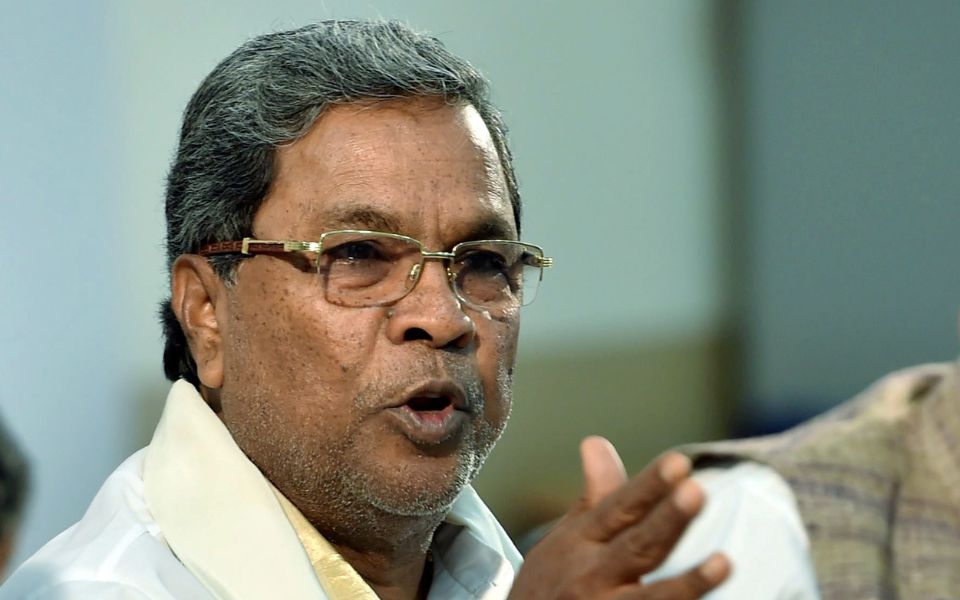
Bengaluru (PTI): Karnataka Chief Minister Siddaramaiah on Saturday stressed the need to improve accessibility to the highest court of the land, asserting that establishing a Supreme Court bench in South India would go a long way in ensuring justice.
Speaking at the 22nd Biennial State Level Conference of Judicial Officers with a theme 'Reimagining the Judiciary in the era of Artificial Intelligence', he said, the authority of a judge must never be overshadowed by the authority of an algorithm.
"Even as we explore these new frontiers, we must remain mindful of the enduring challenges facing our judiciary," the chief minister said.
"Pendency of cases continues to be a serious concern that affects the timely delivery of justice. While technology can provide tools to address this, it must be complemented by systemic reforms through strengthening infrastructure, increasing judicial capacity, and modernising court processes," Siddaramaiah said.
"There is also a strong and compelling need to improve accessibility to the highest court of the land. The establishment of a Supreme Court bench in South India would go a long way in ensuring justice," he said.
Chief Justice of India, Surya Kant, Supreme Court Judges B V Nagarathna and Aravind Kumar and Chief Justice of High Court of Karnataka Vibhu Bakhru were among those present.
The CM said, "We stand today at a defining juncture where law and technology are no longer separate domains, but interconnected forces shaping governance, rights, and the very nature of justice itself."
"Artificial Intelligence is emerging as a transformative force that challenges how we interpret evidence, how we understand facts, and how decisions are arrived at. It offers immense promise, aiding faster legal research, improved case management, and the possibility of reducing pendency through intelligent systems," he said.
"Yet, it also raises profound concerns. Algorithmic bias can undermine the guarantee of equality before law. Opaque systems may weaken the doctrine of reasoned decisions, which lies at the heart of our judicial process," he added.
Siddaramaiah said, Judicial independence, which is the cornerstone of our democracy, must be preserved not only from external pressures but also from subtle technological dependence.
"The authority of a judge must never be overshadowed by the authority of an algorithm," he said.
Pointing out that the emergence of AI-generated evidence presents new challenges for our legal system, the CM said, Deepfakes, synthetic data, and machine-generated content compel us to revisit established doctrines relating to admissibility, burden of proof, and authenticity.
"The courts will increasingly be called upon to determine what constitutes reliable evidence in a digital age. In doing so, we must ensure that truth remains grounded in verifiability and integrity, not merely in technological sophistication," he said.
Hoping that the judiciary will play a defining role in shaping the regulatory framework for artificial intelligence in India, he further said, "through well-established constitutional doctrines such as due process, proportionality, and the right to privacy, our courts will determine the contours within which AI must operate."
"The judiciary, therefore, is not only a user of technology but also the ethical compass that will guide its deployment in society," he added.
Noting that technology also offers meaningful opportunities to strengthen judicial processes, Siddaramaiah said, AI-assisted legal research may democratise access to precedents and reduce disparities in legal knowledge.
Siddaramaiah also said that blockchain technology holds promise in ensuring secure, tamper-proof judicial records. Stating that the intelligent case management systems can streamline court functioning and reduce delays, he said, "However, these innovations must be adopted with care, ensuring that efficiency does not come at the cost of fairness."
"In this transformation, the capacity of our judicial institutions becomes critical. Judges of the future must be equipped not only with legal acumen but also with a clear understanding of technological systems," he added.
Stating that the question is how artificial intelligence intersects with the fundamental principles of equality and social justice, the CM said, if not carefully designed and regulated, AI systems can replicate and even amplify existing social inequalities.
No algorithm can replace the human capacity for empathy, the wisdom that comes from lived experience, or the moral reasoning that defines judicial decision-making, he said, "Technology can assist, but it cannot replace the human conscience that lies at the heart of justice."
Siddaramaiah said, the Government of Karnataka remains committed to building robust judicial infrastructure, facilitating digital transformation, and creating an ecosystem where innovation and justice can progress together.