New Zealand beats West Indies by nine runs in tense finish, leads series 2-1
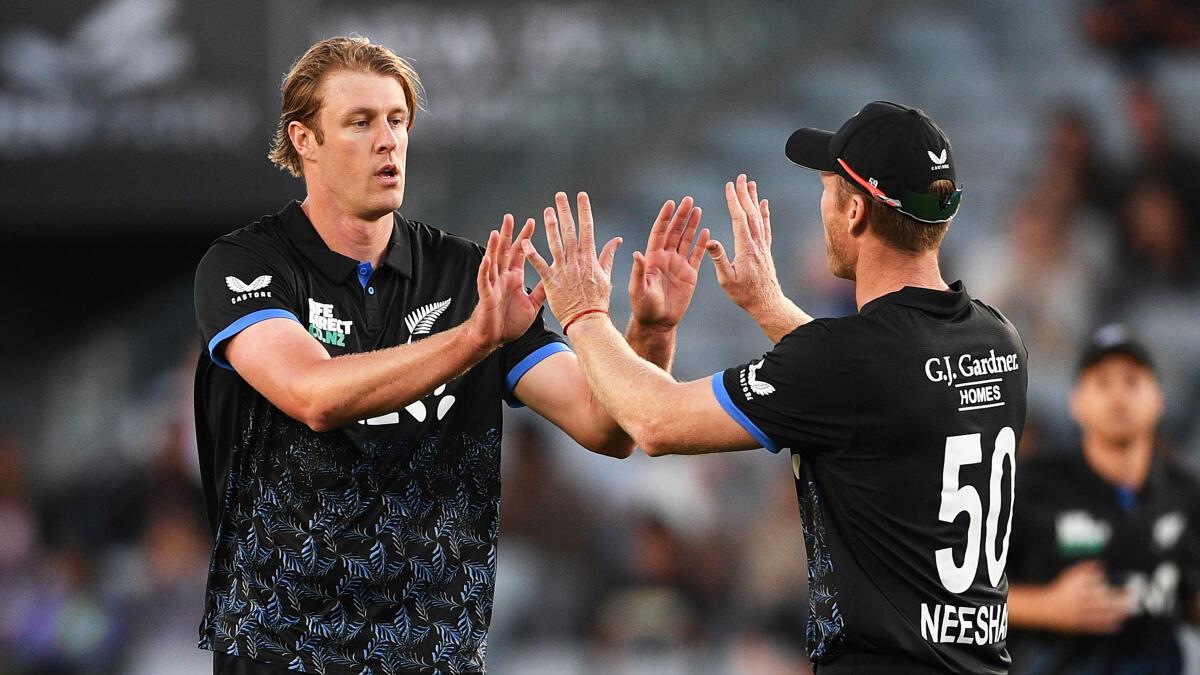
Nelson (AP): Kyle Jamieson bowled a superb final over to seal a nine-run win for New Zealand over the West Indies here on Sunday in the third Twenty20 International.
New Zealand leads the three-match series 2-1 and Jamieson also bowled the last over in the second match on Thursday which New Zealand won by three runs.
The West Indies won the first match by seven runs and all three matches have been decided in the final over.
New Zealand managed only 177-9 batting first but seemed headed for a comfortable win when the West Indies slumped to 88-8 in the 13th over at Saxton Oval.
Romario Shepherd scored 49 from 34 balls and Shamar Springer 39 from 20 as the West Indies rallied to reach the last over needing 14 runs to win with one wicket in hand and Shepherd and Akeal Hosein at the crease.
The onus again fell on the tall fast bowler Jamieson to bowl the final over and he held his nerve, conceding only two runs from the first four balls before dismissing Shepherd with the fifth ball to end the match.
Once again Sunday, the West Indies' tail came to the rescue of its brittle top order. The tourists lost two wickets in the second over of their innings bowled by Jacob Duffy, were 47-2 at the end of the first power play, then lost six wickets for 35 runs through the middle overs.
Spinner Ish Sodhi took 3-34 and was player of the match.
"If you're taking it to the last over, then that means you're in the contest," West Indies captain Shai Hope said.
"It's just unfortunate we didn't come out on the winning side in the last two."
Earlier, Devon Conway set up the New Zealand innings with 56 from 34 balls. New Zealand also suffered a late batting slump, losing six wickets for 31 in the last five overs.
Superb fielding by the West Indies produced three run outs and Jason Holder and Matt Forde bowled excellent spells. Forde took 2-20 and Holder 2-31 to contain New Zealand to a moderate total.
Conway ends lean spell
Conway ovecame recent form struggles to post his first half century in seven innings. He hit a six in the first over, bowled by the spinner Akeal Hosein and set the steady pace of the first half of the New Zealand innings.
Tim Robinson (23) and Rachin Ravindra (26) both made starts but couldn't go on.
New Zealand was 47-1 at the end of the six over power play and well-placed at 97-1 after 10 overs.
Conway reached his half century from 32 balls with another six off Hosein before falling in the 13th, the first of a trio of run outs.
Alick Athenaze pulled off a superb piece of fielding at deep midwicket and beat Conway with a direct hit at the non-striker's end.
Pressure again fell on Daryl Mitchell to give New Zealand's innings momentum in the later overs. He hit 41 from 24 balls with two fours and three sixes but even he couldn't fully get on top of the bowling, nor find a partner to see the innings out.
Michael Bracewell made 11 before being run out in another slick fielding effort by Rovman Powell.
Jimmy Neesham, Mitchell Santner, Mitch Hay and Kyle Jamieson all were out in single figures.
Let the Truth be known. If you read VB and like VB, please be a VB Supporter and Help us deliver the Truth to one and all.
Sujit Nair raises concerns over speculation of DMK-AIADMK understanding to block TVK
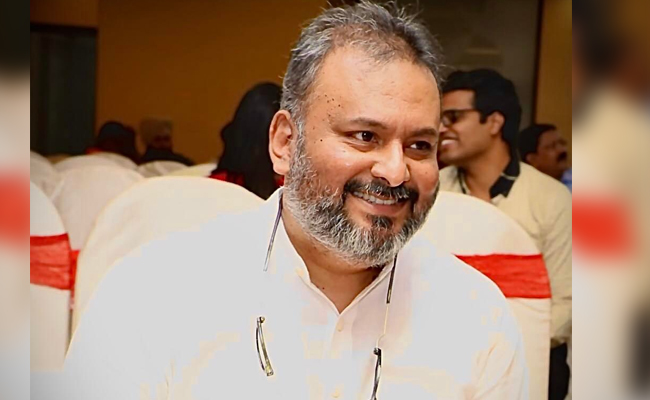
Chennai: Journalist and political commentator Sujit Nair has expressed concern over speculation that the Dravida Munnetra Kazhagam and the All India Anna Dravida Munnetra Kazhagam could explore a post-poll understanding to prevent Vijay-led Tamilaga Vettri Kazhagam from forming the government in Tamil Nadu.
In a social media post, Sujit Nair said the election verdict in Tamil Nadu reflected a clear public demand for political change and argued that the mandate should be respected irrespective of political preferences.
Referring to reports and political discussions surrounding a possible understanding between the DMK and AIADMK, he said he hoped such developments remained only speculative conversations and did not turn into reality.
Nair stated that if such an alliance were to take shape, it would raise serious questions about ideological politics in the country. He said TVK had emerged through a democratic electoral process and that the legitimacy to govern in a parliamentary democracy comes from the people’s verdict.
According to him, attempts to prevent an electoral winner from forming the government through unexpected political arrangements may be constitutionally valid, but many people could view them as politically opportunistic.
He further said that such a move could particularly affect the political image of the DMK, which has historically projected itself around ideology, social justice and opposition politics. Nair said that in ideological terms, the DMK appeared closer to TVK than to the AIADMK, and joining hands with its long-time political rival only to remain in power could weaken its broader political narrative.
He added that the same questions would apply to the AIADMK as well, as the party had spent decades positioning itself against the DMK and such an arrangement could create discomfort among its cadre and supporters.
Drawing a comparison with Maharashtra politics in 2019, Nair said he had expressed similar views when the Shiv Sena formed an alliance with the Indian National Congress and the Nationalist Congress Party after the Assembly elections.
He said post-poll alliances between long-standing political rivals often create a public perception that ideology and electoral mandates become secondary when political power equations come into play.
Nair also said such developments increase public cynicism towards politics and reinforce the belief among voters that ideology is often sidelined after elections.
He maintained that the Tamil Nadu verdict was emphatic and said respecting both the spirit and substance of the mandate was important for the credibility of democratic politics.