Noor Ahmad makes dream debut for CSK as MI struggle to 155/9

Chennai, Mar 23 (PTI): Afghanistan mystery spinner Noor Ahmad made a memorable debut for Chennai Super Kings as his four-wicket haul limited Mumbai Indians to a below-par 155/9 in the Indian Premier League here on Sunday.
Ahmad (4/18) ran through the Mumbai Indians middle-order after Khaleel Ahmed (3/29) removed openers Rohit Sharma (0 off 4) and Ryan Rickelton (13 off 7) in the powerplay.
On a typical Chepauk surface, CSK got the early breakthroughs after putting the opposition in to bat.
Rohit was the first one to depart, flicking straight into the hands of Shivam Dube at mid-wicket off Khaleel.
Playing his first game for Mumbai Indians, Rickelton looked good in his brief cameo which ended when he played on to give Khaleel his second wicket.
R Ashwin, returning to CSK after 10 years, struck in his first over to make it 36 for three as Will Jacks offered a simple catch to Dube at mid-off.
Surykumar Yadav (29 off 26) and the in-form Tilak Varma (31 off 25) forged a 51-run partnership to take the innings forward before the M S Dhoni effected a lightening quick stumping off Ahmad to send back Mumbai Indians stand-in captain.
Dhoni showed he remains as sharp as ever behind the stumps with bails being dislodged even before Suryakumar could complete his bat swing.
Suryakumar led the side in the absence of Hardik Pandya, who could not play due to an over rate ban imposed last season.
What broke the back of Mumbai Indians batting was twin strike from Ahmad in his following over. He trapped Tilak with a googly two balls after getting rid of Robin Minz.
His fourth wicket was Naman Dhir who played around his stumps to be bowled.
Deepak Chahar, switching to Mumbai Indians from CSK, came up with a much needed 28 not out off 15 balls to take the team past 150.
Let the Truth be known. If you read VB and like VB, please be a VB Supporter and Help us deliver the Truth to one and all.
India says no payment issues with Iran, crude supplies fully secured
New Delhi (PTI): India said on Saturday that there are no payment issues with Iran for crude imports and that refiners continue to source oil from the country, as well as from a wide range of global suppliers.
In a post on X, the Ministry of Petroleum and Natural Gas dismissed reports that an oil tanker carrying Iranian crude had rerouted mid-voyage from its previously indicated destination of India, which would have marked the first such shipment in nearly seven years, to China, saying the claims overlooked standard industry practice where cargoes can change destination during transit based on trade optimisation and operational flexibility.
Terming as "factually incorrect" assertions that the cargo was diverted from its previously indicated destination of Vadinar in Gujarat to China due to payment hurdles, the ministry said, "there are no payment hurdles for Iranian crude imports".
"India imports crude oil from 40+ countries, with companies having full flexibility to source oil from different sources and geographies based on commercial considerations," it said.
"Amid Middle East supply disruptions, Indian refiners have secured their crude oil requirements, including from Iran, and there is no payment hurdle for Iranian crude imports, contrary to the rumours being circulated."
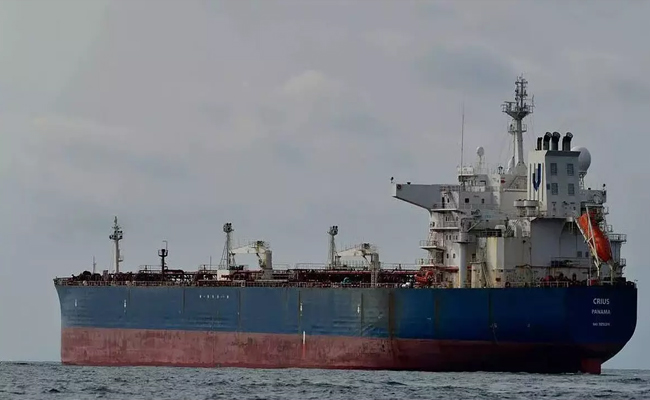
Ship-tracking firm Kpler on Friday stated that Aframax tanker Ping Shun, built in 2002 and sanctioned by the US in 2025, is now signalling Dongying in China as its destination instead of Vadinar in Gujarat, which it had indicated earlier this week.
Oil on Ping Shun would have been the first Iranian crude that India would have purchased since 2019. Indian refiners have been looking at opportunities to purchase a few cargoes of Iranian oil on water following the recent sanctions waiver by Washington.
The ministry clarified that changes in vessel destinations during transit are common in global oil trade, as bills of lading often indicate tentative discharge ports and cargoes may be rerouted mid-voyage for operational and commercial reasons.
"Claims on vessel diversion ignore how the oil trade works. Bills of Lading often carry indicative discharge ports, destinations and on-sea cargoes can change destinations mid-voyage based on trade optimisation and operational flexibility," the ministry said.
"It is reiterated that India's crude oil requirements remain fully secured for the coming months."
The ministry also said that an LPG vessel, Sea Bird, carrying about 44,000 tonnes of Iranian LPG, berthed at Mangalore on April 2 and is currently discharging cargo.
Historically, India was a major buyer of Iranian crude, importing significant volumes of Iranian light and heavy grades due to strong refinery compatibility and favourable commercial terms.
Following sanctions tightening in 2018, imports ceased in May 2019, with volumes replaced by Middle Eastern, US and other grades. At peak, Iranian crude accounted for 11.5 per cent of India's total imports.
India used to buy 5,18,000 barrels per day of Iranian oil in 2018, which slowed to 2,68,000 bpd between January and May 2019 when the US granted waivers to a few buyers. There have been no imports since.
The key grades that Indian refiners used to purchase are Iran light and Iran heavy crudes.
The US last month waived sanctions on the purchase of Iranian oil at sea for 30 days in its latest attempt to ease oil prices that have been driven up by the US-Israeli war on Iran.
That window expires April 19. An estimated 95 million barrels of Iranian oil are on vessels at sea, of which around 51 million barrels could be sold to India, and the remaining are better suited for buyers in China and Southeast Asia.
Ping Shun is estimated to be carrying about 6,00,000 barrels of oil that was loaded from Kharg Island around March 4. Its declared ETA to Vadinar was April 4, according to Kpler.