NZ ODIs: Siraj, Pant's ODI future in focus
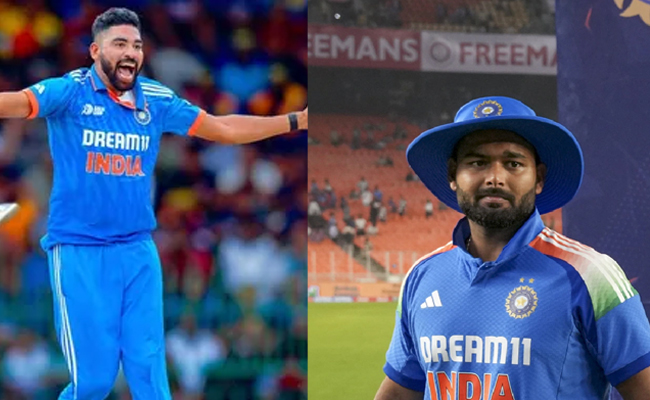
New Delhi (PTI): The indefatigable duo of Rishabh Pant and Mohammed Siraj is expected to be the big talking point on Saturday when the selectors pick a 15-member Indian ODI squad for a three-match series against New Zealand starting January 11 in Vadodara.
While no major shake ups can be foreseen in the squad that beat South Africa in a preceding series a few weeks ago, two specific concerns could be addressed by the Ajit Agarkar-chaired selection committee.
The first point could be Pant's position as the second wicketkeeper with Ishan Kishan showing his hitting prowess in the middle order for Jharkhand and Dhruv Chand Jurel also smashing a 'Daddy Hundred' for UP in the domestic circuit.
ALSO READ: Congress and NCP (SP) to contest separately in Nagpur civic polls
Whether it is Agarkar or head coach Gautam Gambhir, both have shown an inclination to select personnel based on team combination.
Therefore in T20 Internationals, they have gone for keepers who are openers in Sanju Samson and Kishan.
In ODIs, the same keeper is needed to primarily be a middle-order batter, coming in at No.5 or 6.
To be fair to Pant, since the arrival of Gambhir as head coach, he has played just one ODI between July 2024 to December 2025.
Only 31 ODI games in eight years with an average of less than 35 isn't a true reflection of the resilient Rourkee man's potential.
In terms of impact, even his greatest detractors would agree that he is scores over Kishan and Jurel.
However, his shot selection in the recent lost Guwahati Test against South Africa neither impressed the head coach nor the selection committee. But dropping him without giving a fair run could also raise a few uncomfortable questions.
The second aspect to be discussed is the selection of pacers for the three-match series.
While Hardik Pandya and Jasprit Bumrah are likely to be rested keeping the T20 World Cup in mind, it will be interesting to see if the selectors opt to give a break to the other two speedsters -- Harshit Rana and Arshdeep Singh.
Both played in the recent series against South Africa.
But Siraj, who wasn't picked for the Champions Trophy based on conditions, played in the away series against Australia before being overlooked for the South Africa assignment.
He hasn't played in the first four rounds of the ongoing Vijay Hazare Trophy either but might appear for Hyderabad in two of the last three rounds.
His omissions from the 50-over set up after being a regular feature till the 2023 World Cup, has been baffling.
In case of Mohammed Shami, he has played for Bengal across formats but there is a school of thought that he is past his prime as far as international cricket is concerned.
The communication between Shami and the selection committee has also not been particularly clear.
Among the Vijay Hazare Trophy performers, two genuine contenders are Sarfaraz Khan (for the number four slot) and Devdutt Padikkal (opener).
However, with Shubman Gill, Rohit Sharma and Yashasvi Jaiswal already guaranteed a place, it will be difficult to fit in Padikkal.
Sarfaraz Khan has been brilliant in the domestic circuit but Ruturaj Gaikwad has already surged ahead of him among contenders with a hundred against South Africa.
In the end, all selection debates would be nothing more than a storm in the tea cup if the five wise men decide to maintain status quo.
Let the Truth be known. If you read VB and like VB, please be a VB Supporter and Help us deliver the Truth to one and all.
Centre launches national childhood diabetes screening, treatment framework
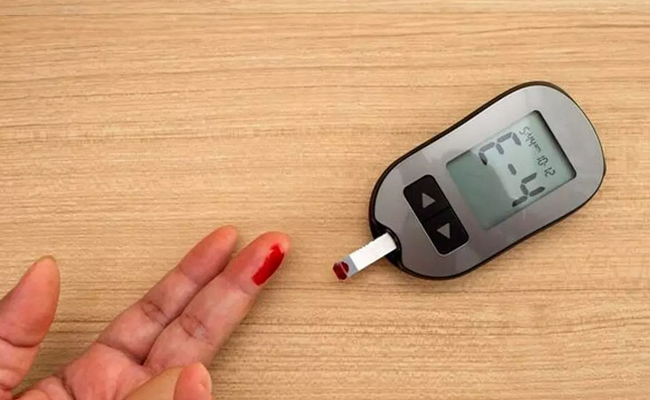
New Delhi (PTI): The Union Health Ministry on Sunday released a guidance document providing a framework for screening, diagnosis, treatment and long-term management of childhood diabetes.
According to the ministry, the document, for the first time, establishes a structured and standardised national framework, positioning India among a select group of countries that have integrated childhood diabetes care into the public health system.
The "Guidance Document on Diabetes Mellitus in Children" was released at the National Summit on Best Practices in Public Healthcare Service Delivery, concluded on May 1-2.
According to a statement by the ministry, the framework aims to ensure universal screening of all children from birth to 18 years through community and school-based platforms for early identification of diabetes.
Suspected cases will undergo immediate blood glucose testing and be referred to district-level health facilities for confirmatory diagnosis and treatment, it said.
A key feature of the initiative is the provision of a comprehensive free-of-cost care package at public health facilities, including screening, diagnostic services, lifelong insulin therapy, glucometers, test strips and regular follow-up care.
The initiative seeks to reduce the financial burden on families and ensure uninterrupted treatment for children diagnosed with diabetes.
The document also lays down an integrated continuum of care linking community-level screening with district hospital-based management and advanced care at medical colleges to ensure seamless follow-up and treatment.
To strengthen early detection, the guidance promotes the "4Ts" awareness framework -- Toilet, Thirsty, Tired and Thinner -- to help parents, teachers and caregivers recognise early warning signs of type 1 Diabetes.
Besides clinical protocols, the document focuses on family and caregiver empowerment through structured training on insulin administration, blood glucose monitoring, emergency response and daily disease management.
The statement stated the initiative is expected to reduce mortality through early detection, prevent complications and improve the quality of life of affected children while strengthening the public health system's capacity to manage non-communicable diseases among children.