ODI World Cup: India to play Pakistan on Oct 15 in Ahmedabad as per draft schedule
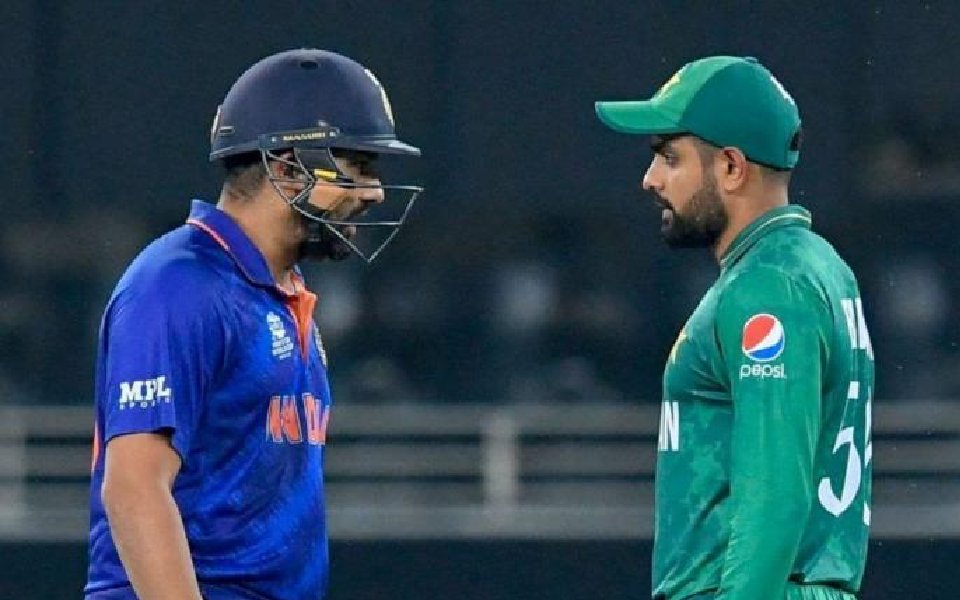
New Delhi, Jun 12: India will open their ODI World Cup campaign against Australia in Chennai on October 8 while Ahmedabad will host their much-anticipated match against arch-rivals Pakistan a week later, according to BCCI's draft schedule for the tournament.
"The BCCI shared the draft schedule with the ICC, which then sent it to the participating countries for feedback before a final schedule is put out early next week," ESPNCricinfo reported on Monday.
As per the initial draft, the tournament will begin on October 5 with reigning champions England taking on last edition's runner-up side New Zealand in Ahmedabad, which will also host the final on November 19.
The venues for the semifinals, which are likely to be played on November 15 and 16, are yet to be decided.
Hosts India, who last won the ODI World Cup in 2011 at home, will play their league phase matches across nine cities, including, Kolkata, Mumbai, New Delhi and Bengaluru. They will take on Pakistan on October 15.
Pakistan, meanwhile, will play their league matches across five cities.
"Pakistan are slotted to meet the two teams progressing from the Qualifier on October 6 and 12 in Hyderabad, and then Australia in Bengaluru (October 20), Afghanistan (October 23) and South Africa (October 27) in Chennai, Bangladesh in Kolkata (October 31), New Zealand in Bengaluru (November 5, day match) and England in Kolkata (November 12)," the report read.
Australia's match against Trans-Tasman rivals New Zealand in Dharamsala on October 29 and against England in Ahmedabad on November 4 are some of the other big fixtures.
A total of 10 teams will participate in the tournament. Out of these, eight teams have already been decided and while two other teams will qualify for the main tournament via the qualifiers.
With a little over four months left for the marquee event to begin, there has been an unprecedented delay in releasing the schedule.
The schedule of the last two editions of the tournament -- 2015 and 2019 -- was finalised over a year in advance.
India's tentative schedule:
India vs Australia, Oct 8, Chennai
India vs Afghanistan, Oct 11, Delhi
India vs Pakistan, Oct 15, Ahmedabad
India vs Bangladesh, Oct 19, Pune
India vs New Zealand, Oct 22, Dharamsala
India vs England, Oct 29, Lucknow
India vs Qualifier, Nov 2, Mumbai
India vs South Aafrica, Nov 5, Kolkata
India vs Qualifier, Nov 11, Bengaluru.
Let the Truth be known. If you read VB and like VB, please be a VB Supporter and Help us deliver the Truth to one and all.
No unannounced load shedding in Kerala, outages due to overload, says Minister
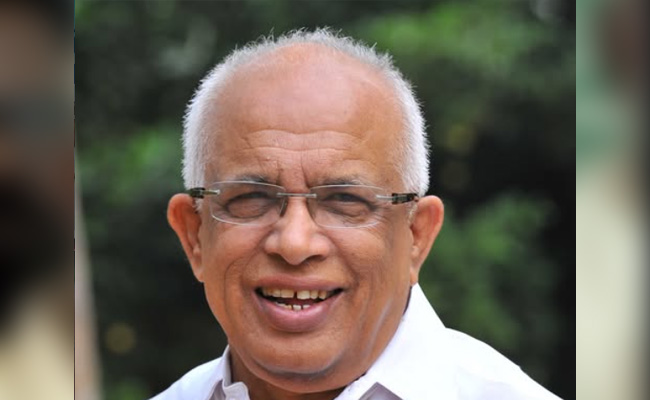
Palakkad (PTI): Kerala Electricity Minister K Krishnankutty on Saturday said there was no unannounced load shedding in the state, attributing recent power interruptions to temporary overload caused by high consumption.
Clarifying concerns raised from various parts of the state, the minister said the disruptions are not deliberate but occur when demand peaks, particularly between 10 pm and 11 pm.
"It is not being done intentionally. Power consumption has risen sharply, and when there is excessive and indiscriminate usage, the system experiences overload, leading to natural supply interruptions," he told reporters here.
His remarks come amid complaints that several areas have been witnessing frequent power cuts, often lasting around 15 minutes and occurring multiple times during the night.
Krishnankutty said the state's power demand has crossed 6,195 MW, putting pressure on the supply system. He added that around 70 per cent of Kerala's electricity is procured from outside, and existing power banking arrangements have been exhausted.
"We have approached the Regulatory Commission seeking permission to purchase more power. However, this will come at a higher cost," he said.
The minister said the government is trying to avoid increasing electricity tariffs and urged consumers to exercise restraint in usage to help manage the situation.
Responding to opposition criticism over the ruling LDF's earlier claims of a decade without power cuts, he said the current situation is not unique to Kerala.
A power crisis is emerging across the country, he said, and sarcastically asked the Opposition to take note of the role of natural factors in this.
Krishnankutty expressed confidence that the situation would improve within two days, while cautioning that long-term energy security would depend on enhancing in-state power generation.
He also warned that future generations could face serious challenges if adequate electricity production capacity is not developed within Kerala.