Pakistan beat Bangladesh by 94 runs but out of semifinal race
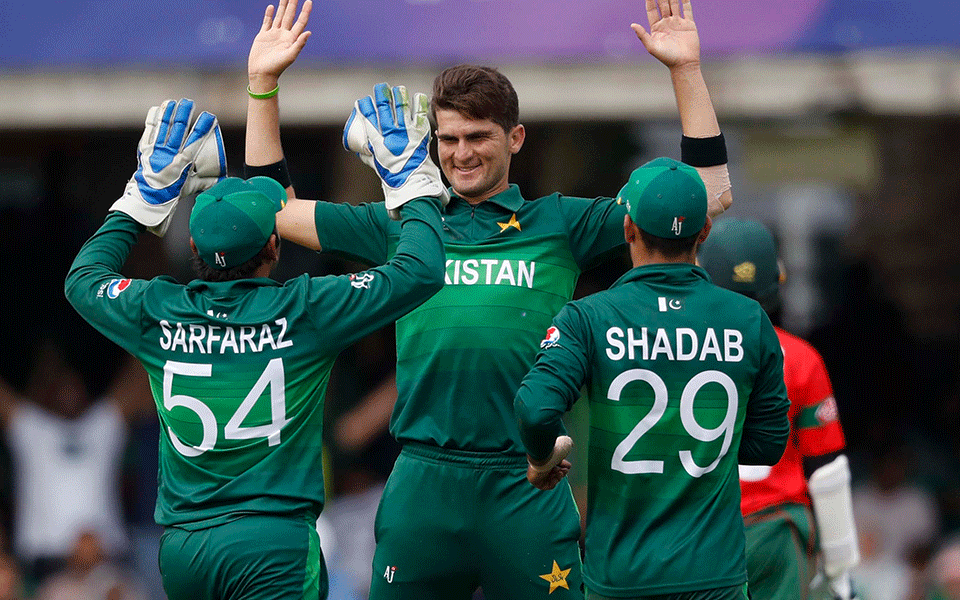
London: 'Mission impossible' remained unaccomplished for Pakistan, who expectedly missed the semifinal bus but wrapped up their World Cup campaign with a consolatory 94-run win over Bangladesh, here Friday.
Aware that the situation demanded them to beat Bangladesh by 300-plus runs to make it to the knockout stage, Pakistan needed to put on board a total of no less than 450 to stand a chance.
The way Pakistan batted, it seemed the 1992 champions were resigned to the fact that such a mammoth victory would remain out of their reach and it was business as usual for them.
All they could manage was 315 for nine after electing to bat, courtesy Imam-ul-Haq (100) and Babar Azam (96), who added 157 runs for the second wicket.
They bowled out Bangladesh for 221 in 44.1 overs to record their fourth win on the trot since suffering defeat at the hands of arch-rivals India.
Friday's result means that New Zealand have joined India, Australia and hosts England in the knockout stage.
Pakistan (-0.525) finished at number five in the table with 11 points, tied with New Zealand (0.175), but were beaten on Net-Run-Rate by the Kiwis.
Bangladesh ended at number seven with as many points.
Shakib Al Hasan's incredible run at this World Cup culminated with a 64-run knock. He totalled 606 runs with an average of 86.57.
The world number one all-rounder kept Bangladesh interested in the contest but did not get support from his colleagues. Saumya Sarkar (22), Mushfiqur Rahim (16) and Liton Das (32) got starts but could not convert them into impact innings.
Once Shakib was dismissed by left-arm pacer Shahin Afridi, it was over for the 2015 quarterfinalists. Afridi returned career-best figures of six for 35, while leg-spinner Shadab Khan took two wickets.
Earlier, Imam, aged 23, became the youngest Pakistani to score a hundred in a World Cup game but Azam missed out on his second century in the tournament by just four runs.
Imad Wasim's quick-fire 26-ball 43 took Pakistan past 300. The intent to get that improbable total was missing in opener Fakhar Zaman as he took 31 balls to score his 13.
Imam and Babar too batted in their usual fashion, showing no urgency to get quick runs. Their partnership was broken when Mohammad Saifuddin trapped Azam with a dipping yorker. Azam's knock came off 98 balls, with 11 shots to the fence.
The bespectacled left-handed Imam was joined at the crease by the seasoned Mohammad Hafeez (27) and they raised a 66-run stand for the third wicket.
Imam completed his seventh ODI hundred with a single off left-arm Mustafizur Rahman in the 42nd over of the innings but was soon out hit-wicket.
Hafeez swept a spinner straight to a fielder in the deep. Had it not been for Wasim's knock, Pakistan would have struggled to reach 300.
Since their defeat against arch-rivals India, Pakistan have recorded three wins on the trot. They can wrap up their campaign on a high with a win.
Let the Truth be known. If you read VB and like VB, please be a VB Supporter and Help us deliver the Truth to one and all.
Bhojshala complex registered as 'mosque' in old revenue records: Muslim side to MP HC
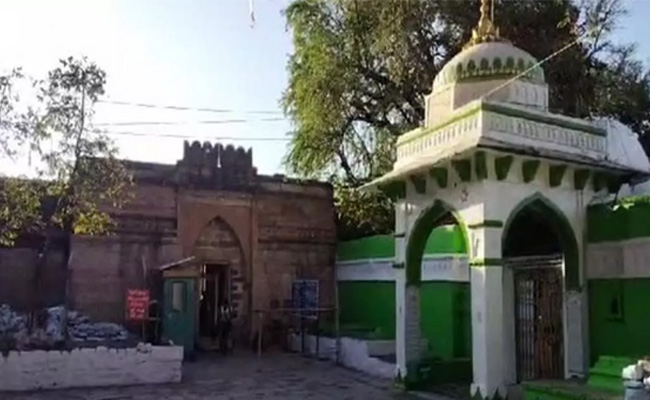
Indore (PTI): The disputed Bhojshala Temple-Kamal Maula Mosque complex has historically been registered as a 'mosque' in revenue records and available sources don't clearly mention any Saraswati temple established by then-king Raja Bhoj, the Muslim side has told the Madhya Pradesh High Court.
The Hindu community considers Bhojshala a temple dedicated to Goddess Saraswati, while the Muslim side calls the 11th-century monument Kamal Maula Mosque. The disputed complex located in Dhar district is protected by the Archaeological Survey of India (ASI).
During the hearing before the HC's Indore bench of Justices Vijay Kumar Shukla and Justice Alok Awasthi on Wednesday, Qazi Moinuddin questioned two PILs filed as intervenors in the Bhojshala case by an organisation named Hindu Front for Justice, one Kuldeep Tiwari and another individual.
Moinuddin claims to be a descendant of Sufi saint Maulana Kamaluddin Chishti and the 'Sajjadanashin' (spiritual head, guru, or successor of a Sufi shrine, khanqah, or religious site).
The PILs state that Bhojshala is actually a Saraswati temple and only Hindus should be granted the right to worship at the disputed complex.
Moinuddin's lawyer, Noor Ahmed Sheikh, claimed in the court that his client's ancestors, who are descendants of Maulana Kamaluddin Chishti, have historically held titles to the complex, and the site was also recorded as a "mosque" in government revenue records.
He contended that those associated with the management of the Kamal Maula Mosque, located within the complex, have been in "continuous and peaceful occupation" of the site for a long time.
Citing Muslim law, Sheikh argued that in the case of religious property, particularly a mosque or its related properties, officials such as the Sajjadanashin and Mutawalli (person entrusted with management, maintenance, and administration of a Waqf), and their descendants, not only have the right to intervene, but also have the right to manage and use such a structure.
Citing provisions of the Ancient Monuments Preservation Act 1904, the Muslim side's lawyer said the term "in-charge of the property" is used in this law, which makes it clear that the person or party who has been in charge of a property for a long time has rights over it.
During the hearing, Touseef Warsi, the lawyer representing the Maulana Kamaluddin Welfare Society of Dhar, claimed that Hindu parties in both PILs had made "misleading representations" regarding historical facts before the high court.
He further claimed that available historical sources do not clearly mention the existence of a Saraswati temple established by Raja Bhoj, the legendary king of the Parmar dynasty who ruled Dhar from 1010 to 1055.
The ASI, a central government agency, has adopted three different positions in the lawsuits filed regarding the Bhojshala dispute, changing its answers from time to time, and this situation raises serious questions about judicial scrutiny of the complex, Warsi submitted.
He raised objections regarding the ASI's process of scientific survey of the Bhojshala complex, carried out on the HC order in 2024, and the method of videography and requested the court to examine these objections.
The hearing in the Bhojshala case will continue on Thursday.
The HC has been regularly hearing four petitions and one writ appeal since April 6, contesting the religious nature of the monument.