Pakistan cricketer Ahmad Shahzad fails dope test
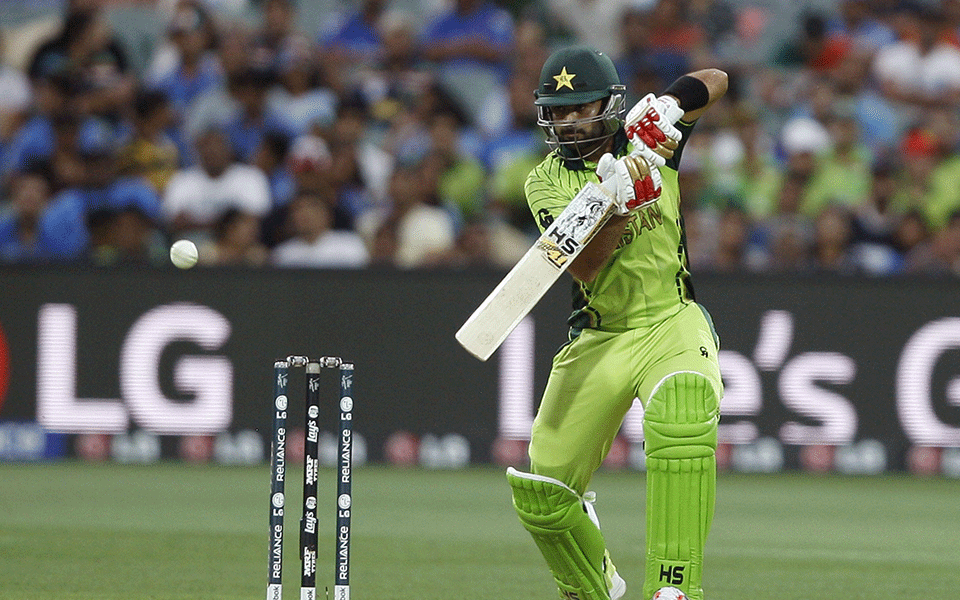
Islamabad, July 10: The Pakistan Cricket Board (PCB) on Tuesday confirmed that the country's international cricketer Ahmad Shahzad has failed a dope test and is likely to face suspension, an official statement said.
PCB announced that opening batsman Shahzad has tested positive for a banned substance in a dope test conducted during a domestic tournament and that he would be charged soon, which will finally lead to his suspension from the game for several months, reports Xinhua news agency.
The 26-year-old batsman, who recently played for Pakistan in the Twenty20 series against Scotland in June, was found guilty after the PCB received a report from the Independent Review Board on Tuesday.
Last month, the PCB, without naming any player, confirmed that a cricketer had failed a doping test.
"A player has reportedly tested positive for a prohibited substance. But under the International Cricket Council rules the PCB cannot name the player or charge-sheet him until the chemical report is confirmed by the Anti-Dope Agency," the board said on last month.
Later, the report of the cricketer was sent to India for a recheck due to some concerns and sensitivity of the matter.
"Pakistan's anti-doping agency wanted to be very sure and double-check it because a senior player was involved, hence it asked the Indian lab to re-check the tests," the PCB said earlier.
Shahzad has been part of several controversies since the start of his international career in 2009. He has been out of Pakistan's national team since the World Twenty20 in 2016 in India after which the then head coach of Pakistan team Waqar Younis had recommended dropping him due to disciplinary issues.
According to sports analysts, Shahzad is likely to face a ban for one-year over the dope test failure.
Let the Truth be known. If you read VB and like VB, please be a VB Supporter and Help us deliver the Truth to one and all.
Rickelton's ton in vain as SRH beat MI by 6 wickets
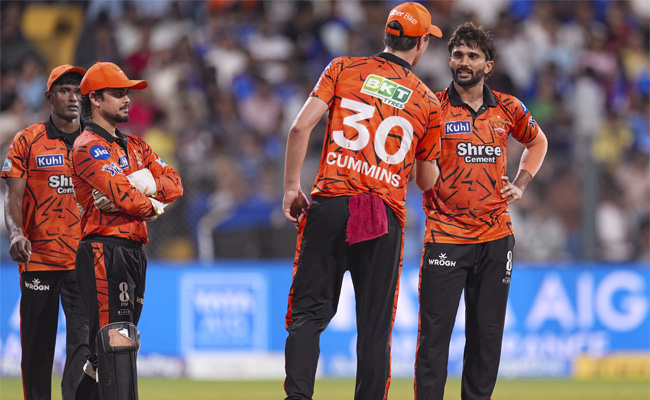
Mumbai (PTI): Ryan Rickelton's whirlwind unbeaten ton was overshadowed by Heinrich Klaasen's unbeaten 65 as Sunrisers Hyderabad defeated Mumbai Indians by six wickets in an IPL match here on Wednesday.
Chasing an imposing 244-run target, Travis Head (76 off 30) and Abhishek Sharma (45 off 24) shared 129 runs for the opening wicket to set the platform for SRH.
Klaasen (65 not out off 30 balls) then displayed his all-round hitting abilities to guide SRH home with the help of Nitish Kumar Reddy (21) and Salil Arora (30 not out off 10) in 18.4 overs.
Earlier, Rickelton's knock powered MI to 243 for five.
MI rode on a 93-run stand between Rickelton (123 not out off 55 balls) and Will Jacks (46 off 22) in 7.1 overs for the opening stand to power the side.
MI skipper Hardik Pandya scored a valuable 31 off 15 balls before being dismissed.
Praful Hinge (2/54), Eshan Malinga (1/29), Sakib Hasan (1/39) and Nitish Kumar Reddy (1/31) were the wicket-takers for SRH.
Brief Scores:
Mumbai Indian: 243 for 5 in 20 overs (Ryan Rickelton 123 not out; Praful Hinge 2/54).
Sunrisers Hyderabad: 249 for 4 in 18.4 overs (Travis Head 76, Heinrich Klaasen 65 not out; AM Ghazanfar 2/51).