Pakistan pacer Umar Gul announces retirement from all forms of cricket
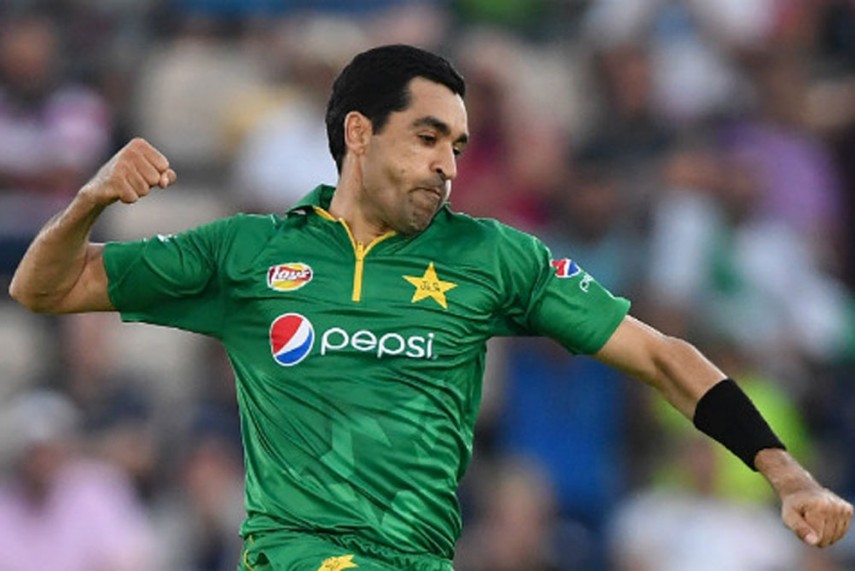
Karachi: Veteran Pakistan pacer Umar Gul on Saturday announced he will retire from all forms of cricket after the ongoing National T20 Cup, ending an international career spanning 17 years.
The 36-year-old Gul, who played his last match for Pakistan -- an ODI -- in 2016, featured for the Balochistan team in the National T20 Cup, which ends on Sunday.
His side lost to Southern Punjab in Rawalpindi on Friday to be out of the reckoning for the semifinals.
"With a very heavy heart and after a lot of thinking, I have decided to bid farewell to all formats of cricket after this National T20 Cup," Gul wrote on his Twitter handle.
"I have always played for Pakistan with all my heart and 100 percent of hard work. Cricket is and will always be my love and passion but all good things have to come to an end," he added.
Gul could barely hold back his tears as his Balochistan teammates gave him a guard of honour.
The pacer was diagnosed with a stress fracture of the lower back in 2004 after taking a five-for against India in a Test in Lahore and some years ago, he also suffered a knee injury, which hit his career badly.
The Peshawar-born Gul made his international debut in an ODI in 2003. He played his first Test that year itself. His last Test was against South Africa in 2013.
From 47 Test matches, Gul took 163 wickets at an average of 34.06. He also claimed 179 wickets from 130 ODIs, besides 85 wickets from 60 T20Is.
"Praying that the future will hold much more for me. Secondly, I would like to thank @TheRealPCB and all the coaches and people who have been a part of my cricketing journey. Special thanks to media, my fans and followers who made it all worthwhile n supported me at all times," he said.
Gul, who is serving as a member of the Pakistan Cricket Board's Cricket Committee, said he would like to contribute to the sport in other capacities.
"I have thoroughly enjoyed my cricket, which has taught me the values of hard work, respect, commitment and determination.
"During this journey, I have had the pleasure of meeting numerous people who have helped and supported me in some way. I want to thank all those people as well as my teammates and peers for their support," the PCB quoted him as saying.
Let the Truth be known. If you read VB and like VB, please be a VB Supporter and Help us deliver the Truth to one and all.
Karnataka School Edu Dept prohibits children from being made to dance to obscene songs
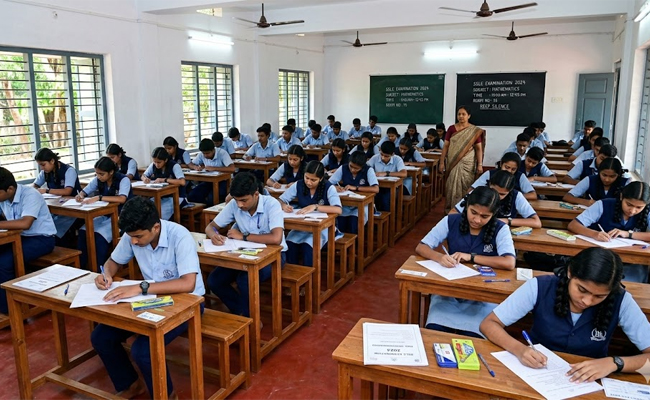
Bengaluru (PTI): The Karnataka School Education Department has issued a circular strictly prohibiting children from being made to dance to obscene songs in educational and cultural programmes.
It stated that such dances would negatively impact students' mental health and moral values. It will create indiscipline and harm the sanctity of education.
"All the Deputy Directors (Administration) of the state's School Education Department have been asked to take strict measures to prevent children or students from dancing to obscene songs in all government, aided and unaided schools in the state," the office of the commissioner of the School Education Department said in a recent circular.
"If it is found that children are being made to dance to obscene songs, appropriate action will be taken against the headmaster or management of such school," it added.
The department also listed certain measures in this regard, which include: strictly prohibiting children from being made to dance to obscene songs during educational and cultural programmes; selecting songs that are inspiring, positive, instilling national pride in children and reflecting the greatness, dignity, values, culture, and morality of the state.
Stating that the school headmaster and management are responsible for selecting songs and dances for cultural programmes, it said, they should also ensure that students wear decent clothes in dance or cultural programmes.