Pakistan win toss, elect to bowl against India in T20 WC
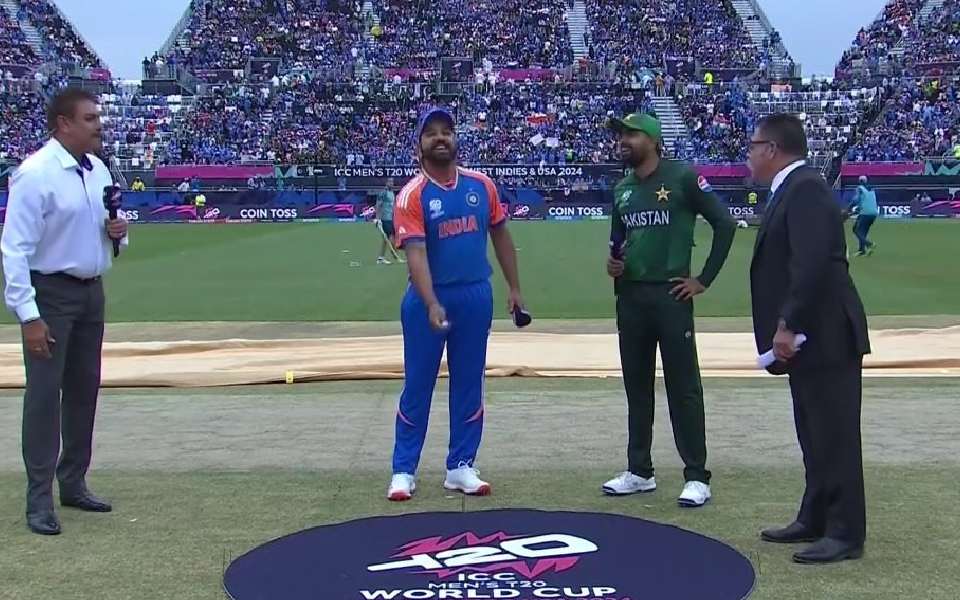
New York, Jun 9: Pakistan skipper Babar Azam won the toss and opted to bowl first against India in their Group A T20 World Cup match here on Sunday.
India began the tournament with a facile eight-wicket win over Ireland, while Pakistan were stunned by the USA in their first match.
India retained their playing 11 from the last match while Pakistan brought in Imad Wasim for Azam Khan.
Team: India: Rohit Sharma (captain), Virat Kohli, Rishabh Pant (wk), Suryakumar Yadav, Hardik Pandya, Shivam Dube. Ravindra Jadeja, Axar Patel, Jasprit Bumrah, Mohammed Siraj, Arshdeep Singh.
Pakistan: Babar Azam (captain), Mohammad Rizwan, Usman Khan, Fakhar Zaman, Shadab Khan, Imad Wasim, Iftikhar Ahmed, Shaheen Shah Afridi, Haris Rauf, Naseem Shah, Mohammed Amir.
Let the Truth be known. If you read VB and like VB, please be a VB Supporter and Help us deliver the Truth to one and all.
Xi, Trump reach series of new common understandings: China's foreign ministry
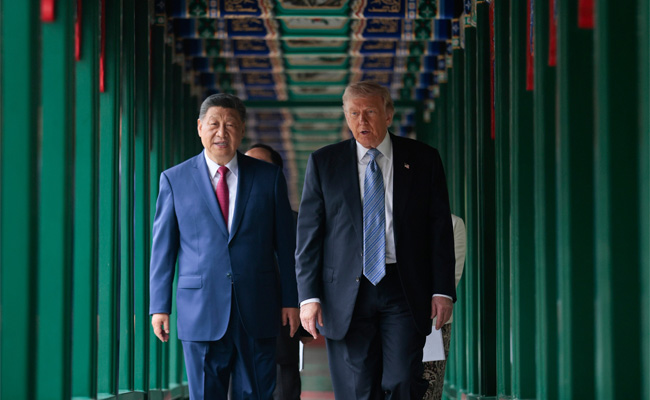
Beijing (PTI): Chinese President Xi Jinping and his US counterpart Donald Trump had an in-depth exchange of views on major issues concerning the two countries and the world, and reached a series of new common understandings, a Chinese foreign ministry spokesperson said Friday.
Xi and Trump, who is on a three-day visit to China, met twice on Thursday and discussed a range of bilateral and global issues.
Trump is due to leave on Friday after a luncheon meeting with Xi.
Summing up the outcomes of Trump’s visit to Beijing, a Chinese Foreign Ministry spokesperson said the two presidents had an in-depth exchange of views on major issues concerning the two countries and the world and reached a series of new common understandings.
They agreed on a new vision of building a constructive China-US relationship of strategic stability to provide strategic guidance for bilateral relations over the next three years and beyond.
The two presidents also agreed to promote the steady, sound and sustainable development of China-US relations, and bring more peace, prosperity and progress to the world, said a statement by the ministry’s spokesperson.
Trump visited China at the invitation of Xi.
The two presidents are meeting in person again for the first time since their Busan meeting last October, and it is the first visit to China by a US president in nine years, the statement said.
On Thursday, President Xi held a welcome ceremony and a banquet for Trump, held talks and visited the Temple of Heaven with him.
VIDEO | Beijing: On second day of bilateral talks, US President Donald Trump (@POTUS) thanks Chinese President Xi Jinping for 'incredible' China trip.
— Press Trust of India (@PTI_News) May 15, 2026
Trump says, "Thank you very much. This has been an incredible visit. I think a lot of good has come of it. We've made some… pic.twitter.com/7A7lbEzLdC